
An in-product sales assistant designed to lift trial-to-cart conversion and order value.
A prototype we built to show how we’d find and ship the AI layer for a product like this. The number is projected, modeled from how the workflow behaves, not a client result.
- Concept
- E-commerce
- Projected metrics
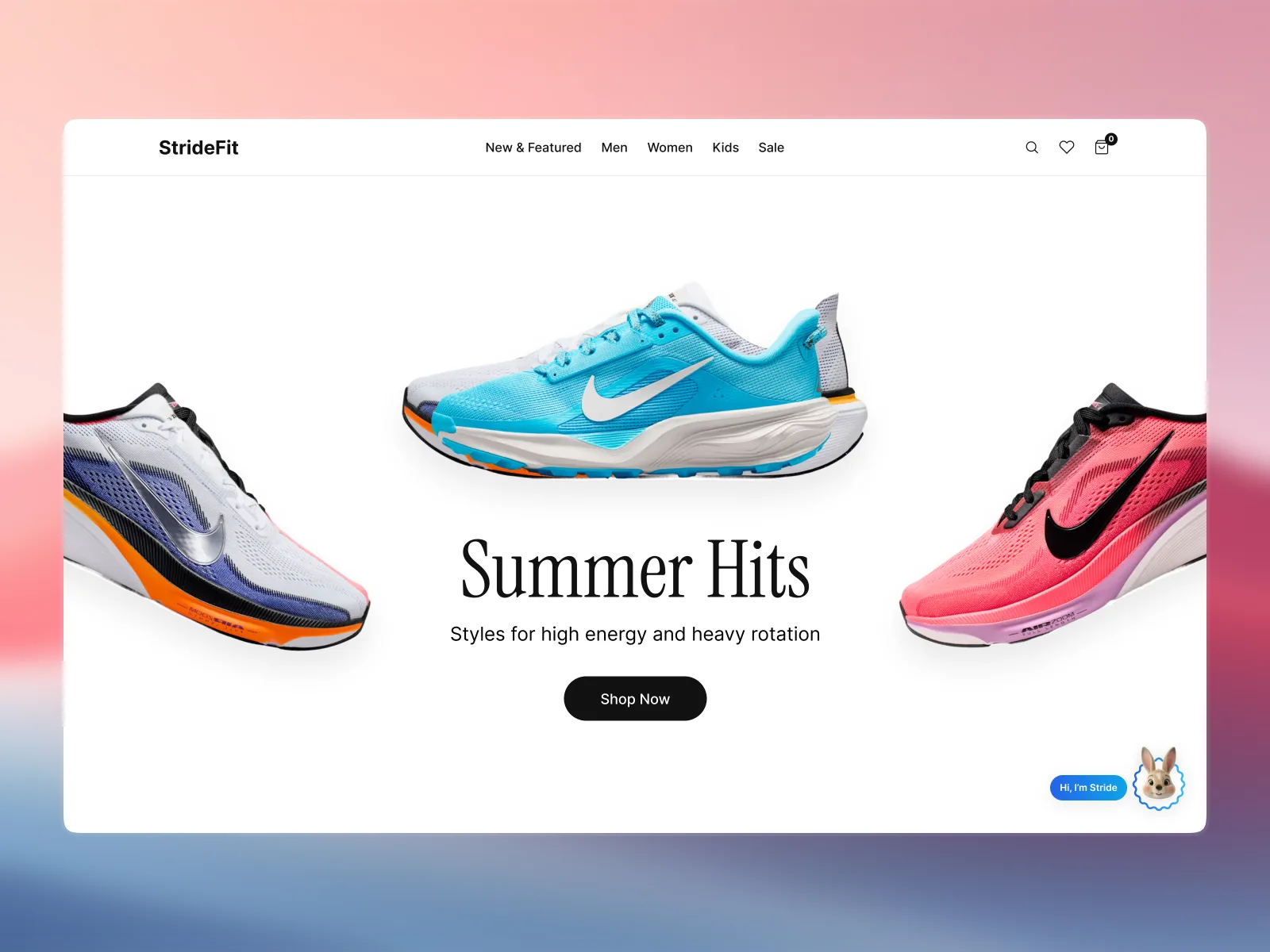
Turn hesitation into carts
A D2C e-commerce / sportswear-style product, mid-market catalog, ~2M monthly visitors, a checkout funnel that plateaus.
- Industry
- E-commerce
- Solution
- In-Product Sales Assistant
- Also designed to move
- Average order value
- Status
- Concept, metrics projected
Traffic shows up. Buyers don’t.
A store like this typically has the traffic and the catalog, but a flat conversion rate well below category average, and most of the people who add to cart walk away before checkout. The real failure is contextual: visitors browse, compare two similar products, hesitate on sizing, and leave with no intervention. The metric on the line is conversion rate and average order value, and a generic “customers also bought” carousel doesn’t answer the specific question a hesitating buyer is actually asking.
Where AI would actually change behavior, and where it wouldn’t.
The lever isn’t another recommendation carousel or an exit-intent discount, which tends to train bargain-hunting and quietly depress order value. It’s a sales partner that reads the moment a buyer is hesitating (repeated views, comparison browsing, cart idle) and addresses that specific concern in-context: which shoe fits their use case, how two products actually differ, what’s a sensible bundle. That’s where a modest, well-placed AI layer can move conversion. Where it can’t: manufacturing demand that isn’t there, or replacing a genuinely broken checkout flow.
- Left on the tableAnother recommendation carousel of 'customers also bought'
- Left on the tableAn exit-intent discount popup that trains bargain-hunting
- What we would buildAn in-product assistant that addresses the specific hesitation moment
An assistant that lives inside the product, not a chat widget in the corner.
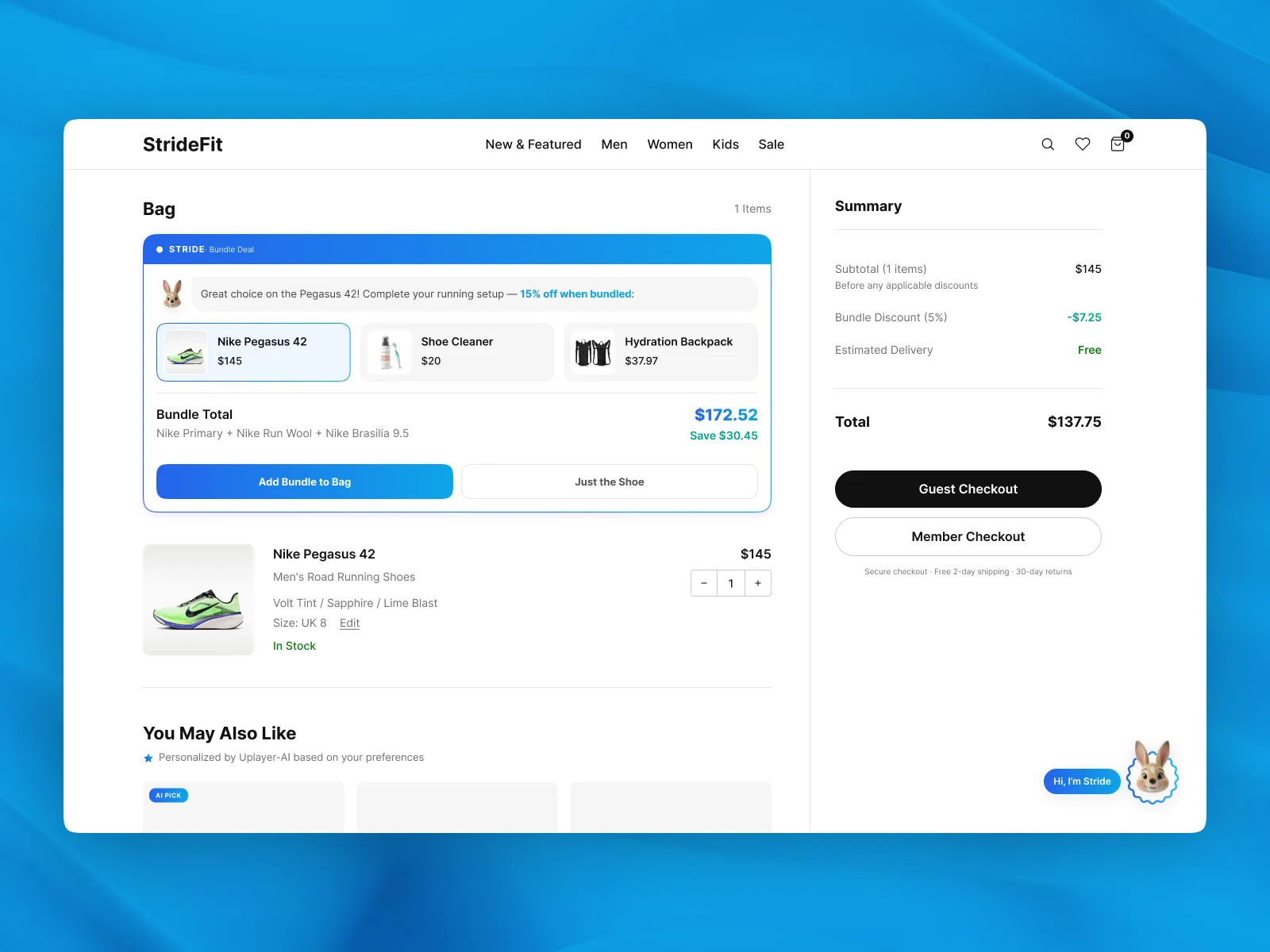
We designed an in-product assistant that engages at the exact moments buyers stall: a contextual suggestion window placed inline under the primary CTA, cross-session memory that reconnects a returning visitor to what they were comparing, and a bundle offer surfaced on top of the cart rather than buried below it. It reads intent signals (same product viewed three times, switching between products, cart idle) and responds with the specific help a store associate would give: a tailored comparison, a fit recommendation, a one-click complementary bundle. No overlays, no generic popups. The assistant is part of the page layout, present when useful and quiet when not.
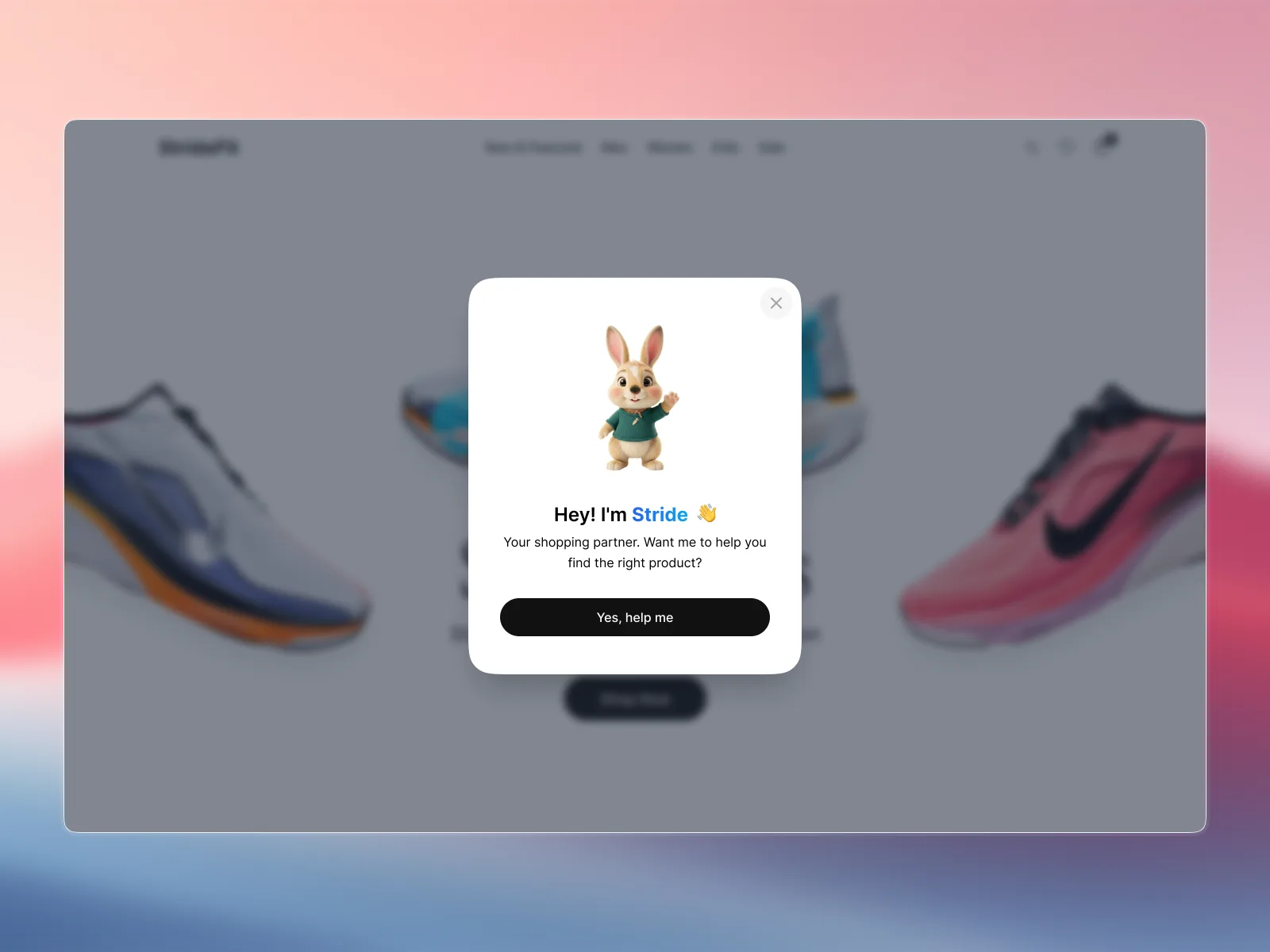
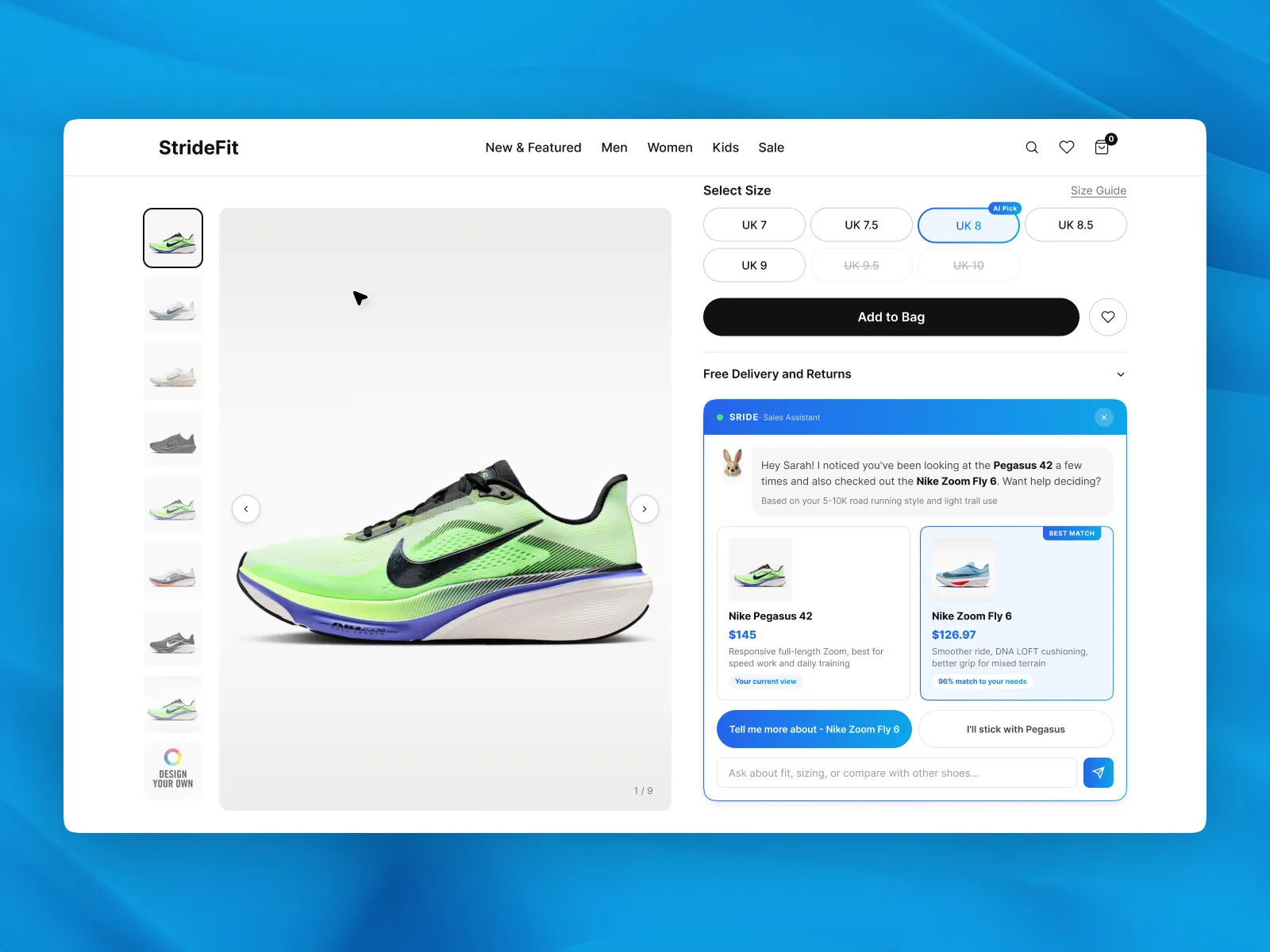
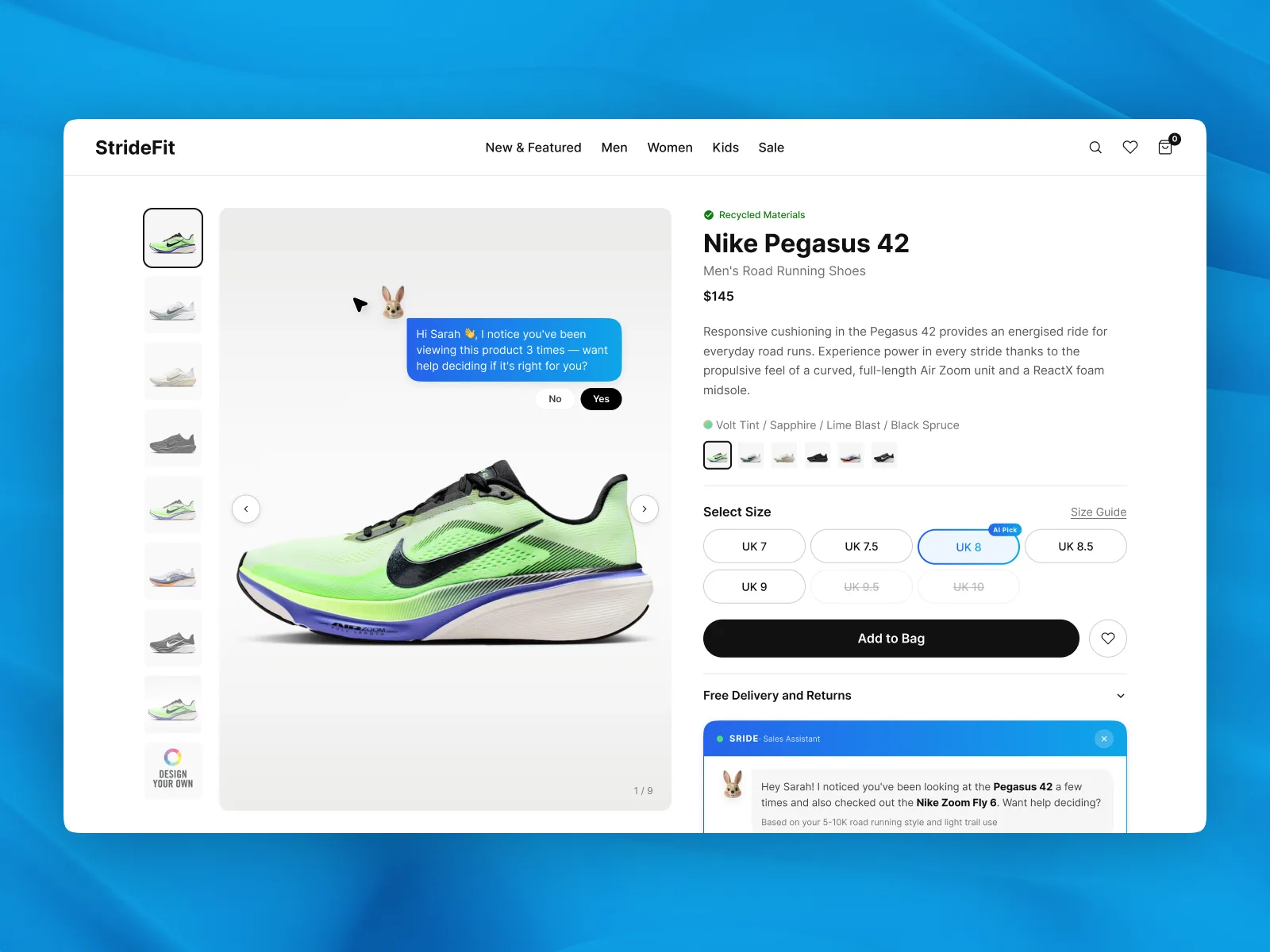
The same buyer, with the layer off and on.
Want this kind of thinking on your product?
Start with the AX Audit. In 14 days you get a ranked map, a projected number on a metric you already track, a working concept, and a clear stop list. If the audit does not find AI worth 3X the fee, you pay nothing.
What this layer is designed to move.
These figures are projected, modeled from how the workflow behaves, not measured against a live customer. In a real engagement, we set the target against a metric you already track, agree how we’ll measure it, and report the actual movement.
- ProjectedConversion rate (engaged visitors)Projected ~2x+ lift, modeled from how the workflow reduces the hesitation moments that drive abandonment
- ProjectedAverage order valueProjected +20-30%, modeled from in-cart bundle acceptance at the moment of intent
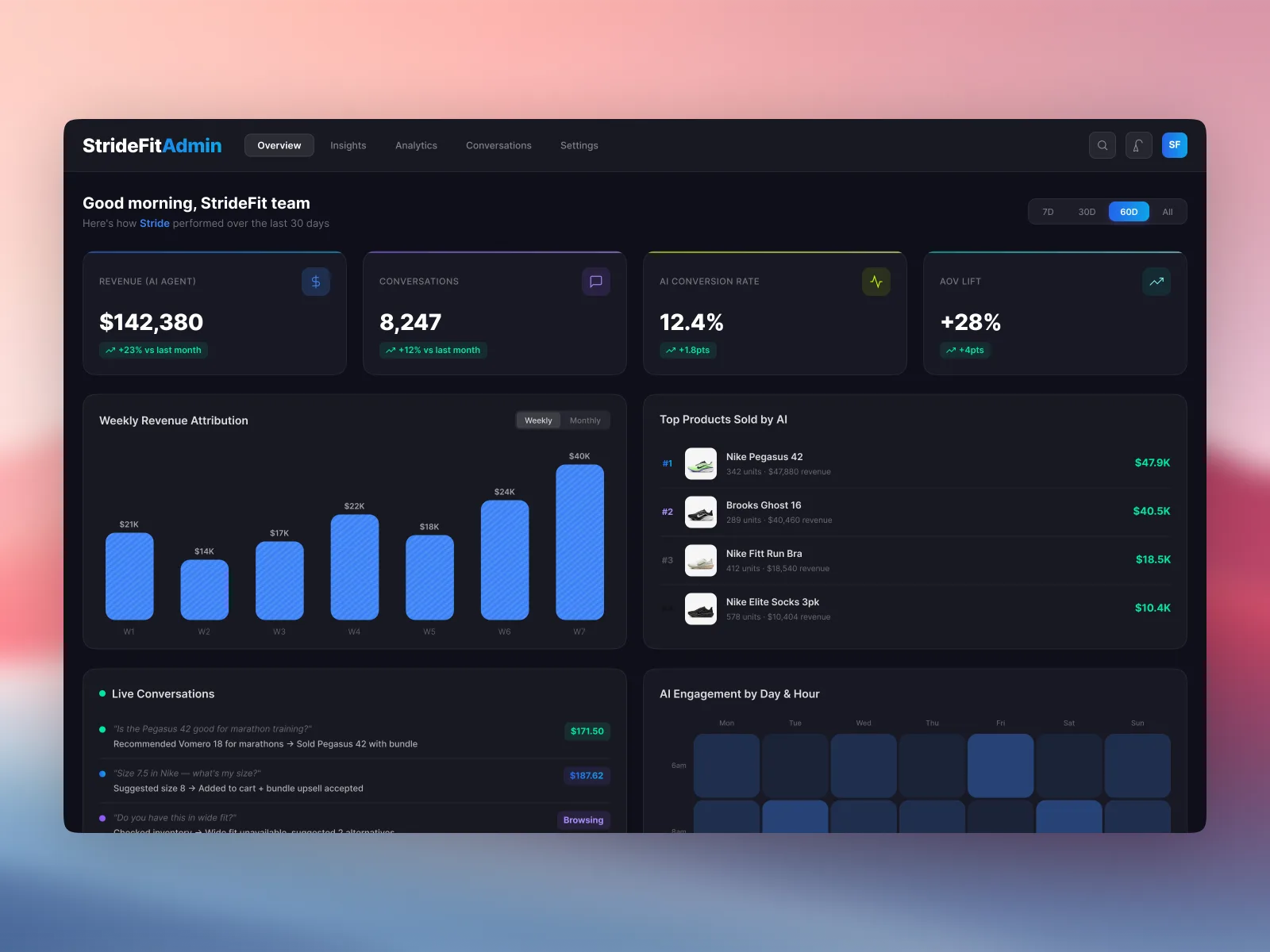
Reliable on top, untouched underneath.
The assistant sits as a thin layer above the existing catalog, cart, and checkout, no rip-and-replace of the store. Intent signals are read from behavior the store already emits; suggestions and bundles are generated from your product data and surfaced through simple, auditable pipelines. Where a recommendation could be wrong in a way that matters (fit, sizing, claims), it routes to human review or a clearly-marked fallback rather than improvising. Every engagement starts by mapping what data goes where, so the trust model is explicit before anything ships.
- No model training on your data.
- Simple, auditable pipelines.
- Human review and fallbacks where trust matters.
- A clear record of what data goes where.
One team, finding the opportunity, designing it, building it.
This is the whole process in miniature: start from a metric, find the one place the layer pays for itself, design the feature, build it on top of the product without risking the core, and tie it to a number you can check. The same strategy, design, and engineering team does all of it. No handoffs, no gaps for you to own.
Target
Conversion and order value. We aim for a ~2x lift in conversion for engaged visitors, projected.
Opportunity
The hesitation moment, when a buyer compares products or leaves a cart sitting idle.
Design
An assistant inside the product page and cart, not a chat widget in the corner of the store.
Build
Built on top of the store and its catalog, without replacing checkout or the existing flow.
Evaluate
Measure actual conversion and order value after launch and test them against the target.
Have a product problem? Let's talk.
Tell us what you are trying to improve and where the product is stuck. We will help you decide if an AI layer is worth building.
- NDA from the first conversation.
- Response within 24 hours, guaranteed.
- Founder-led from first call to handoff.
