
An integration assistant designed to cut time-to-first-API-call from ~20 minutes to a few.
A prototype we built to show how we’d find and ship the AI layer for a product like this. The number is projected, modeled from how the workflow behaves, not a client result.
- Concept
- SaaS
- Projected metrics
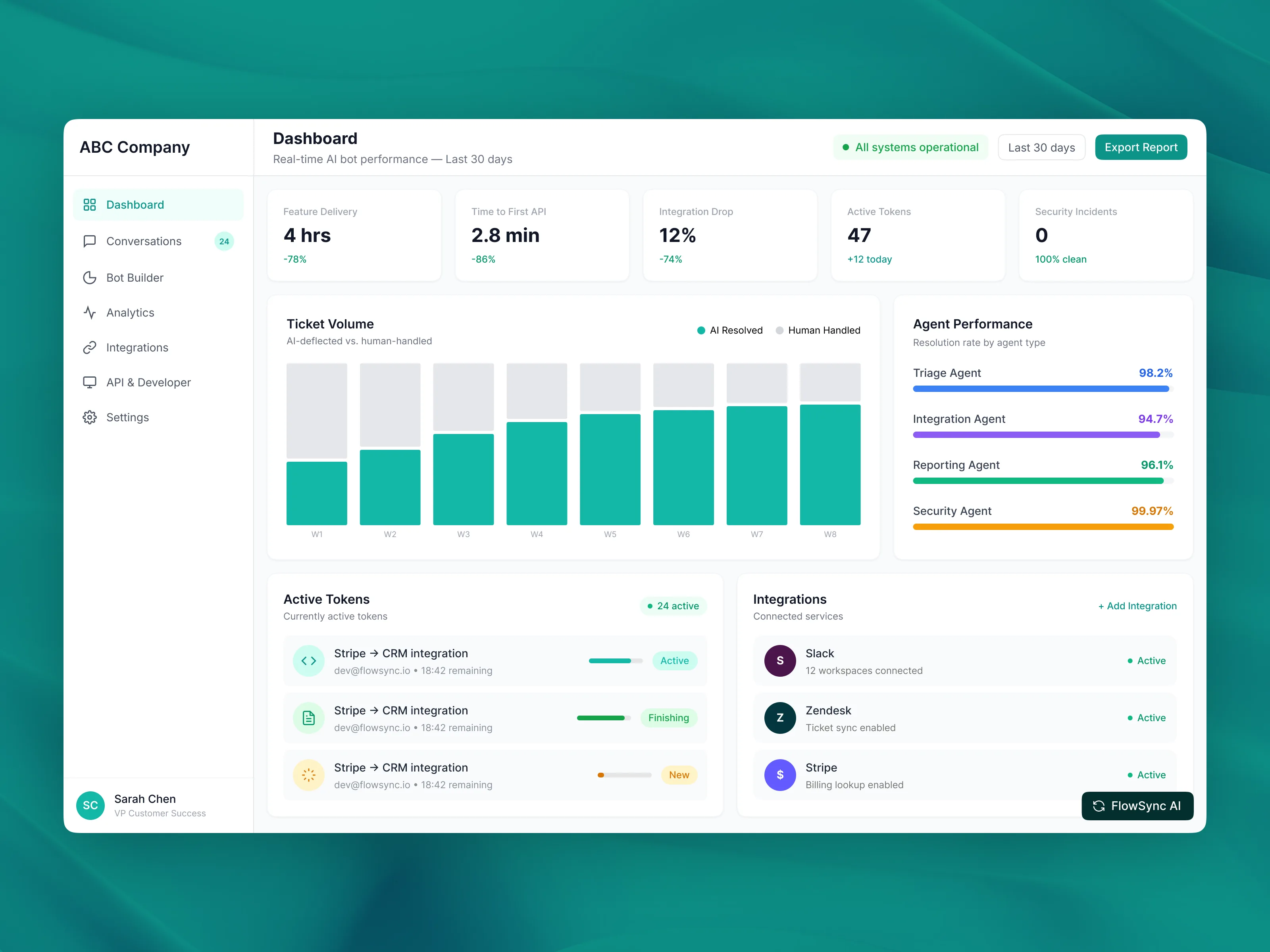
First API call in minutes
A B2B SaaS integration-platform-style product that connects applications and automates workflows.
- Industry
- SaaS
- Solution
- Integration Copilot
- Also designed to move
- Integration abandonment
- Status
- Concept, metrics projected
Developers stall before they ever make a successful call.
The product exposes a large API surface (roughly 180 endpoints and dozens of knowledge-base articles) and most attempts to integrate cross several tools before anything works. In our model the average time-to-first-API-call sits near 20 minutes, and a meaningful share of developers abandon before completing setup. The support team absorbs the fallout in the form of thousands of integration tickets a month, while executives wait on engineering for routine reports and exports.
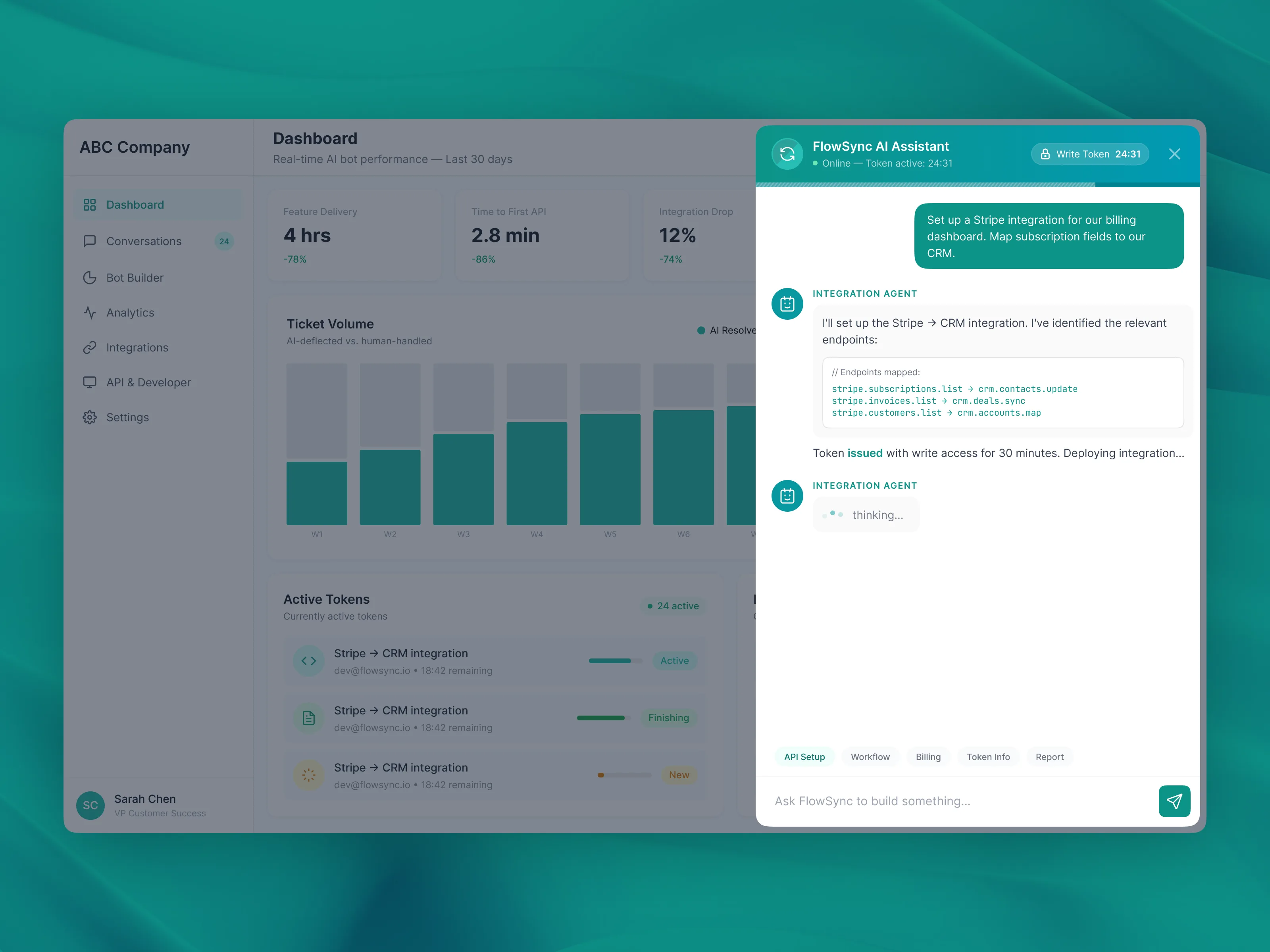
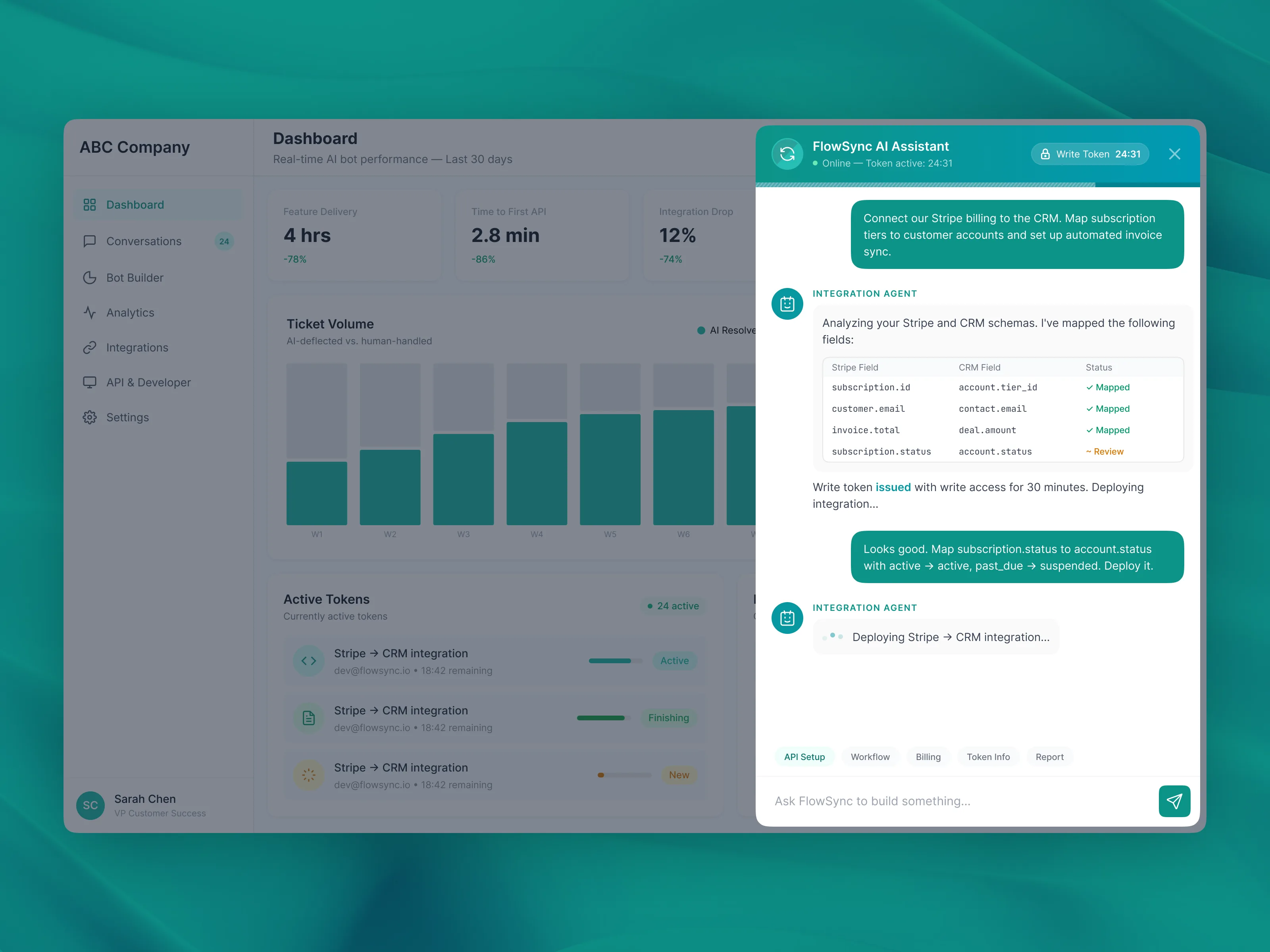
Where AI would actually change behavior, and where it wouldn’t.
The real lever is the hand-holding inside setup: understanding a natural-language request, generating a valid API call, executing it safely, and explaining the result. A conversational assistant can collapse the multi-tool shuffle into one surface and handle the bulk of repeatable integration requests. It won’t replace deep custom engineering work or judgment-heavy edge cases, those still route to humans, but it removes the friction that causes most abandonment.
- Left on the tableAuto-generate every integration end-to-end, no review
- Left on the tableAn autonomous agent that holds long-lived admin tokens
- What we would buildA guided assistant with short-lived, scoped tokens and human approval
A chat assistant that guides API integration and handles token setup.
The prototype pairs a natural-language chat interface with a visual dashboard for configuration. A developer describes what they want to connect; the assistant maps fields, sets up webhooks, and shows a live preview of the generated code. Underneath, a security layer issues short-lived write tokens, around 30 minutes, scoped to the request, auto-revoked on completion or expiry, so the assistant can act on the user’s behalf without holding standing privileges. A triage step routes each request, and a reporting path handles ad-hoc executive asks like “last month’s sales as a spreadsheet.” The whole thing is designed so the common 80%+ of integration requests resolve without a human in the loop.
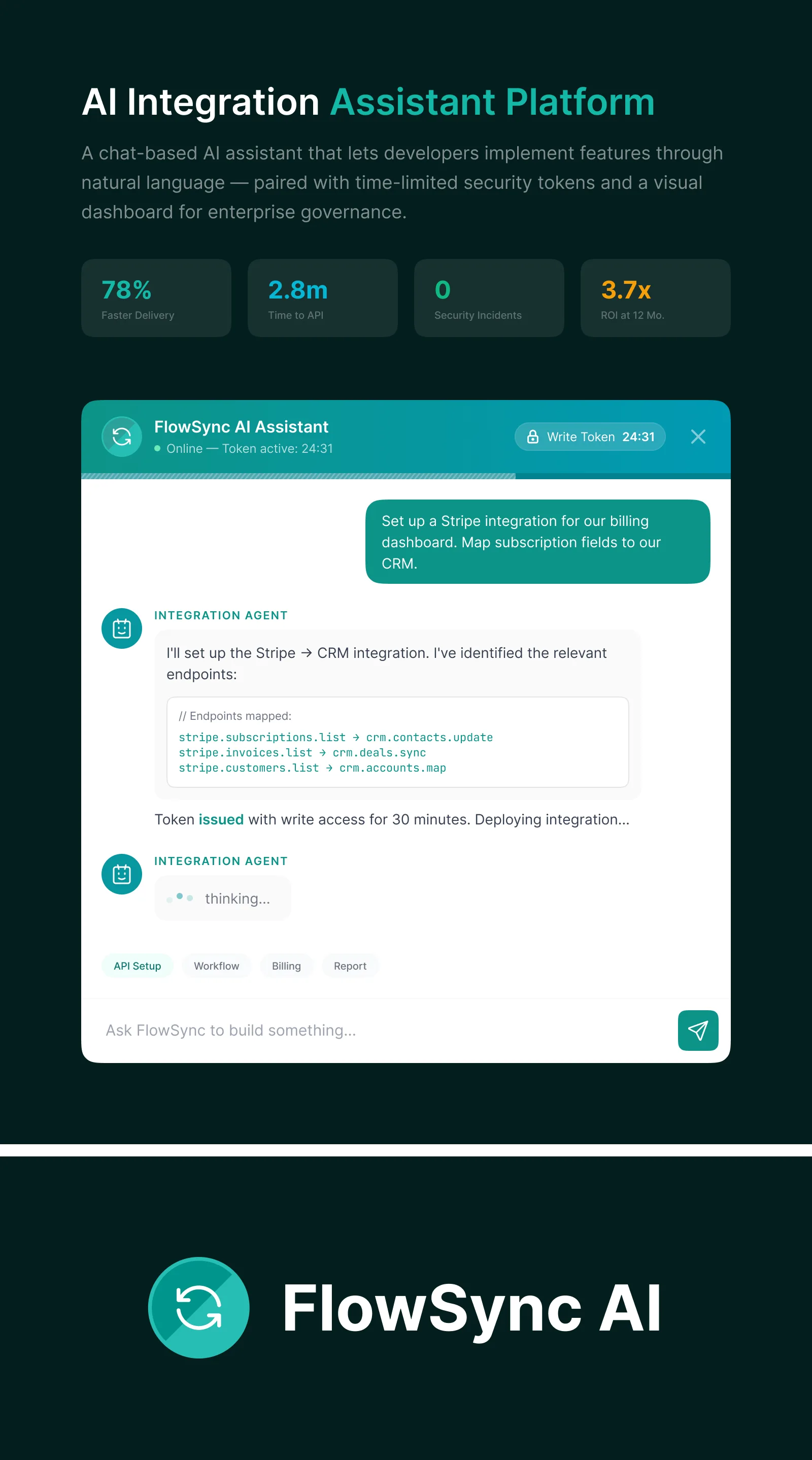
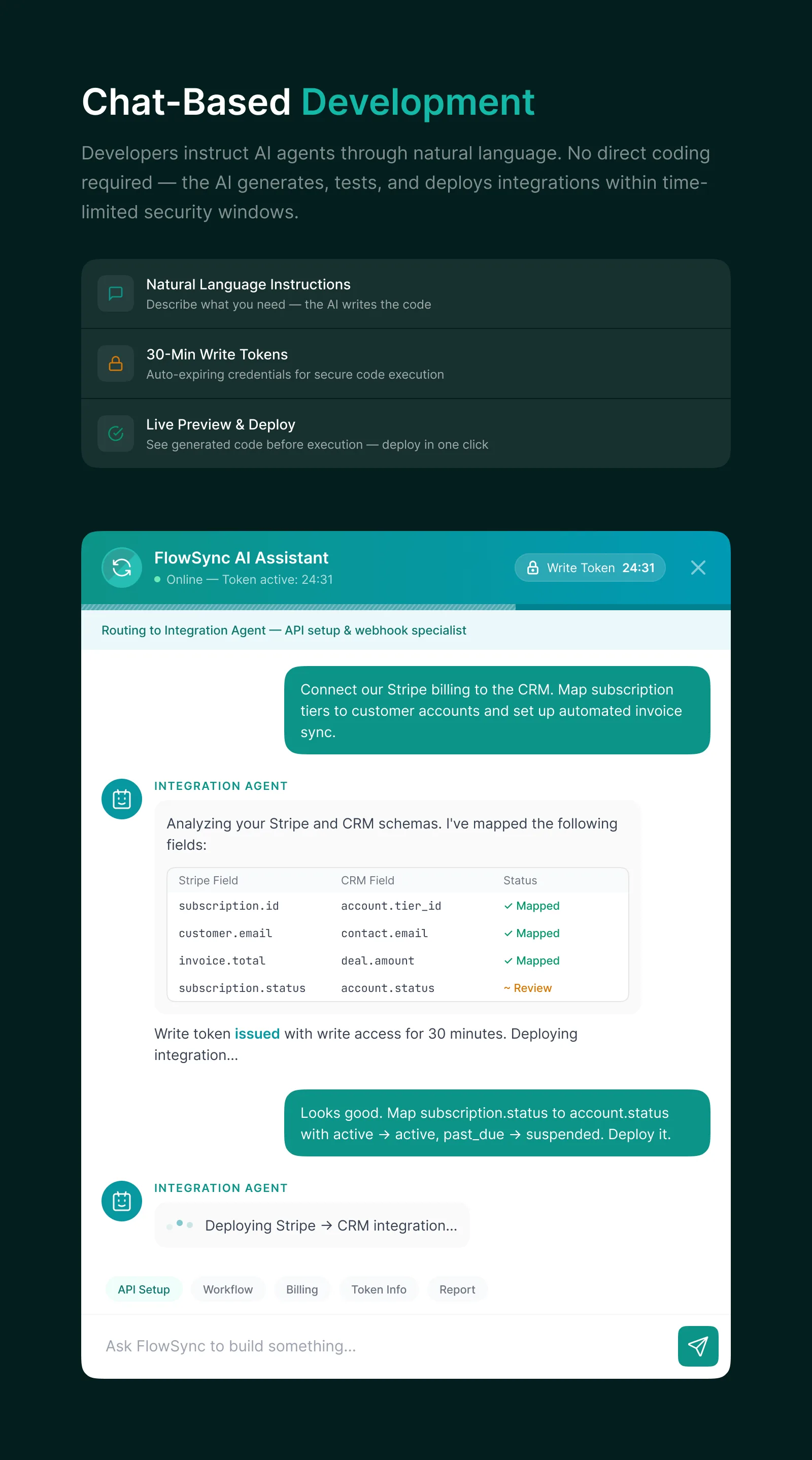
The same developer, with the layer off and on.
Want this kind of thinking on your product?
Start with the AX Audit. In 14 days you get a ranked map, a projected number on a metric you already track, a working concept, and a clear stop list. If the audit does not find AI worth 3X the fee, you pay nothing.
What this layer is designed to move.
These figures are projected, modeled from how the workflow behaves, not measured against a live customer. In a real engagement, we set the target against a metric you already track, agree how we’ll measure it, and report the actual movement.
- ProjectedTime to first API call~20 min projected down to ~3 min
- ProjectedIntegration abandonmentProjected to fall from ~47% to the low teens
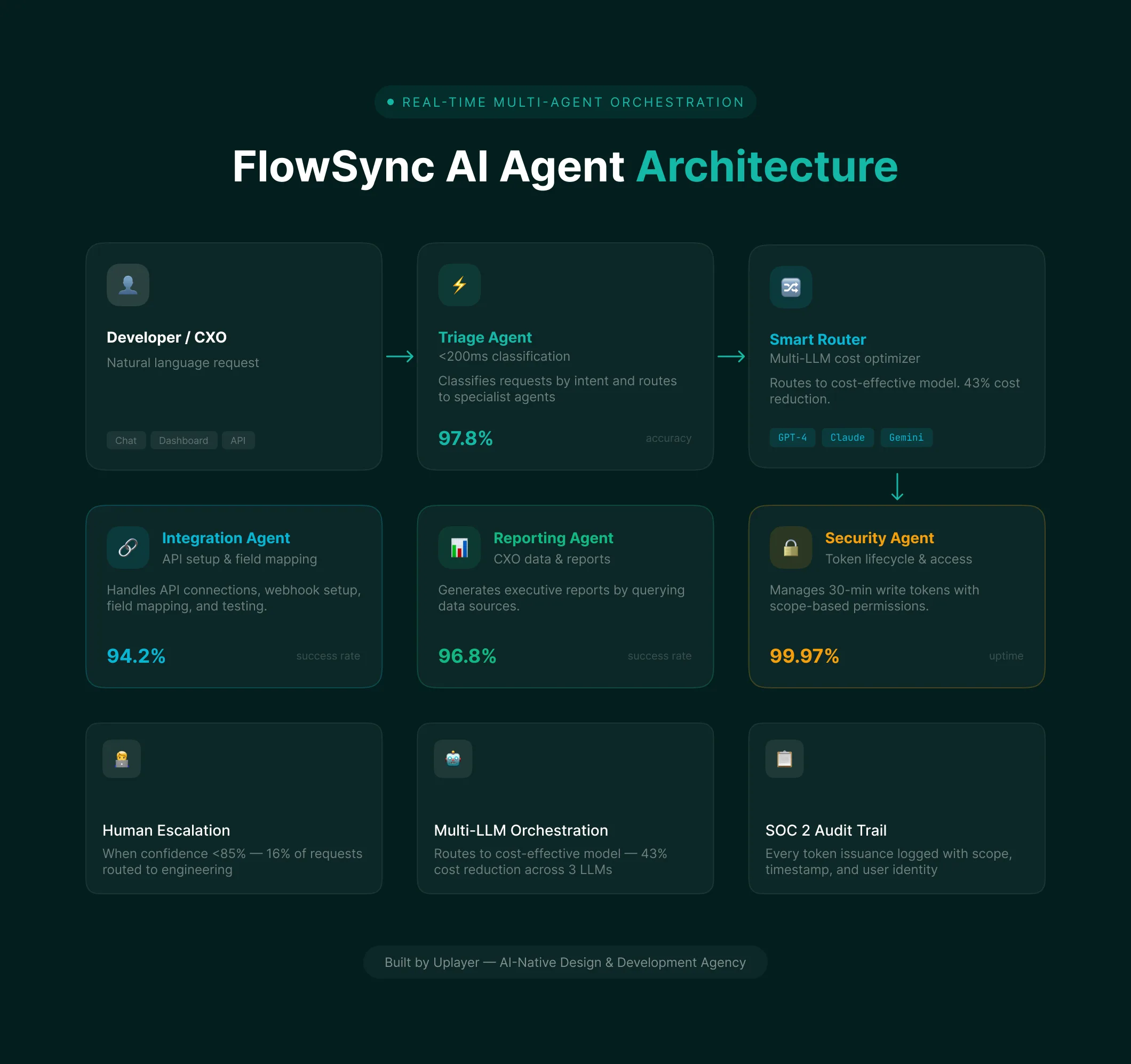
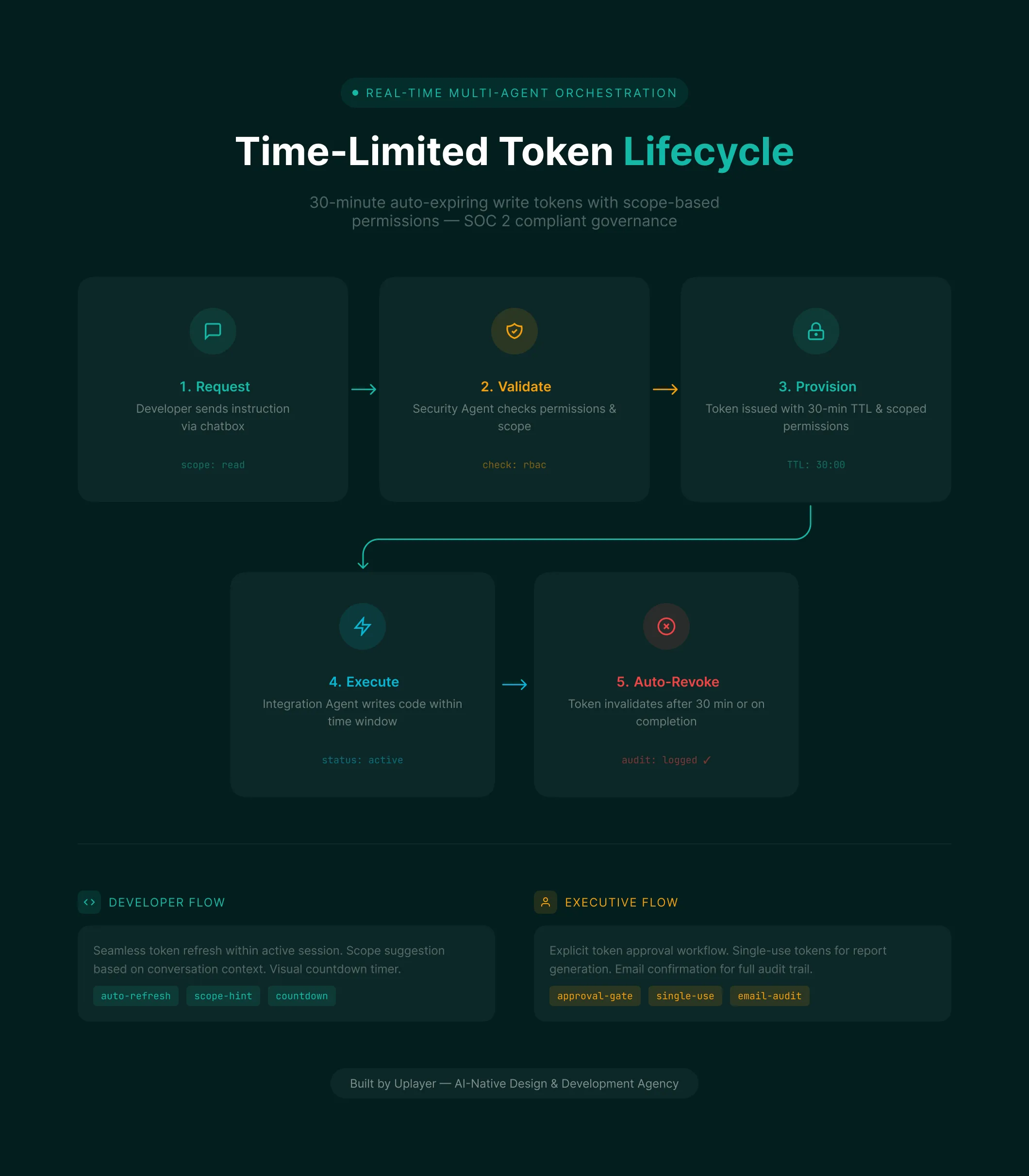
Reliable on top, untouched underneath.
The assistant sits above the existing API and does not rewrite your endpoints, schemas, or permissions model. Every action it takes runs through a short-lived, scoped token, so access expires by design rather than relying on someone remembering to revoke it. Pipelines are simple and inspectable: request, validate, provision, execute, auto-revoke, with a token audit log that shows what was accessed and when. Where trust matters, destructive writes, executive reports, a human approval step stays in the loop rather than being automated away.
- No model training on your data.
- Simple, auditable pipelines.
- Human review and fallbacks where trust matters.
- A clear record of what data goes where.
One team, finding the opportunity, designing it, building it.
This is the whole process in miniature: start from a metric, find the one place the layer pays for itself, design the feature, build it on top of the product without risking the core, and tie it to a number you can check. The same strategy, design, and engineering team does all of it. No handoffs, no gaps for you to own.
Target
Time to first API call. We aim to bring it from ~20 minutes toward ~3, projected.
Opportunity
Guided setup, where developers stall between the docs, the API client, and the dashboard.
Design
A chat assistant that previews each call and requests short-lived, scoped tokens.
Build
Built on top of the existing API, with human approval before anything writes data.
Evaluate
Measure the actual time to first call after launch and test it against the target.
Have a product problem? Let's talk.
Tell us what you are trying to improve and where the product is stuck. We will help you decide if an AI layer is worth building.
- NDA from the first conversation.
- Response within 24 hours, guaranteed.
- Founder-led from first call to handoff.
