
A triage layer designed to cut critical-patient wait time by ~90%.
A prototype we built to show how we’d find and ship the AI layer for a product like this. The number is projected, modeled from how the workflow behaves, not a client result.
- Concept
- Healthcare
- Projected metrics

See the sickest patients first
A healthcare patient-flow product running a high-volume clinic queue (60+ patients/day through a serial-number queue).
- Industry
- Healthcare
- Solution
- AI Triage Layer
- Also designed to move
- Critical cases missed
- Status
- Concept, metrics projected
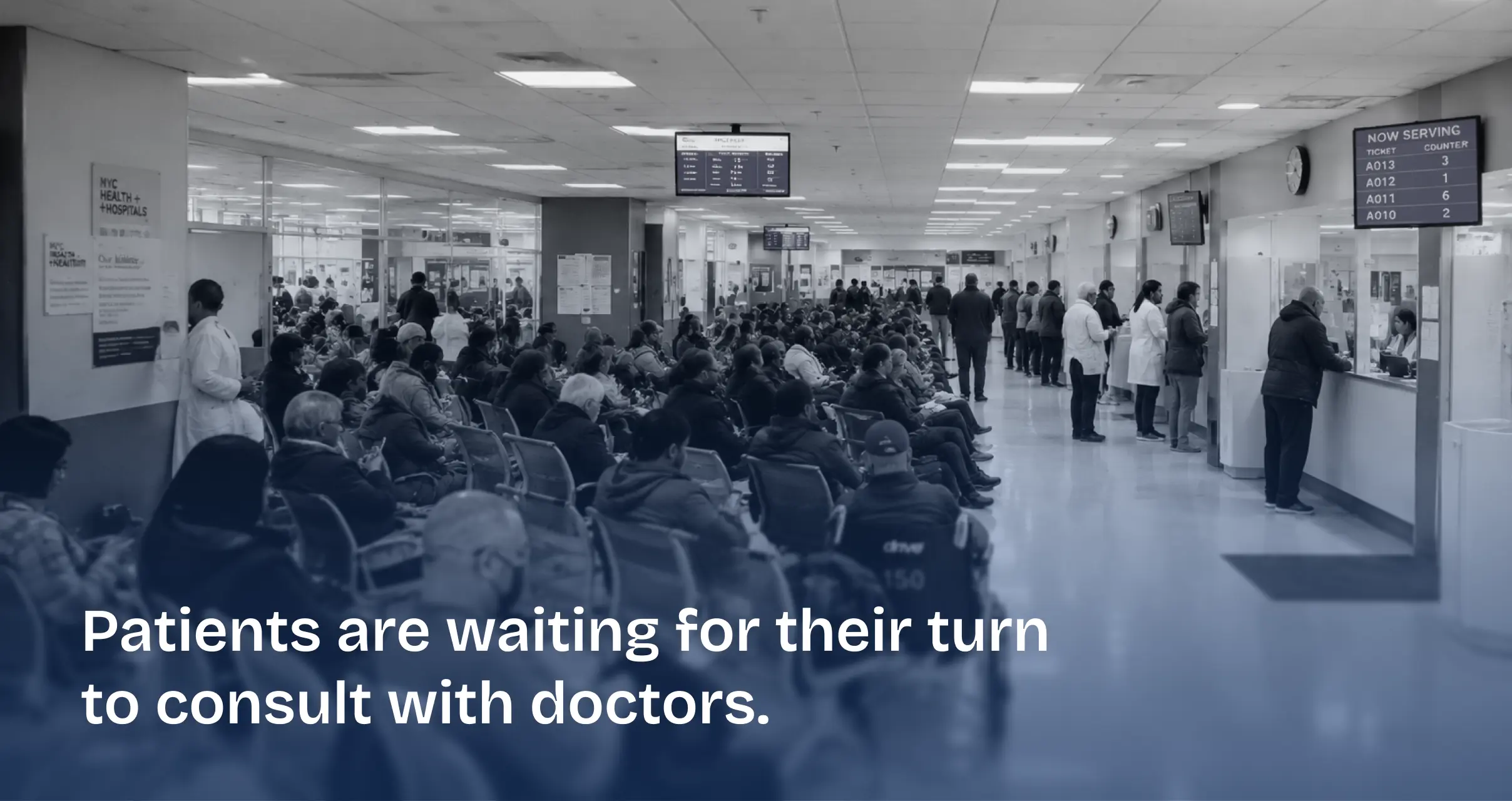
The queue is blind to clinical urgency.
Patients are seen in arrival order through a serial-number queue. Severity isn’t assessed until someone reaches the consultation room, lab reports and ECGs sit unread in patients’ bags, and there’s no mechanism to move urgent cases ahead. We’d expect a critical patient, say, serial 55 reporting chest pain, to wait two-plus hours behind prescription refills, and a handful of critical cases to be missed every week.
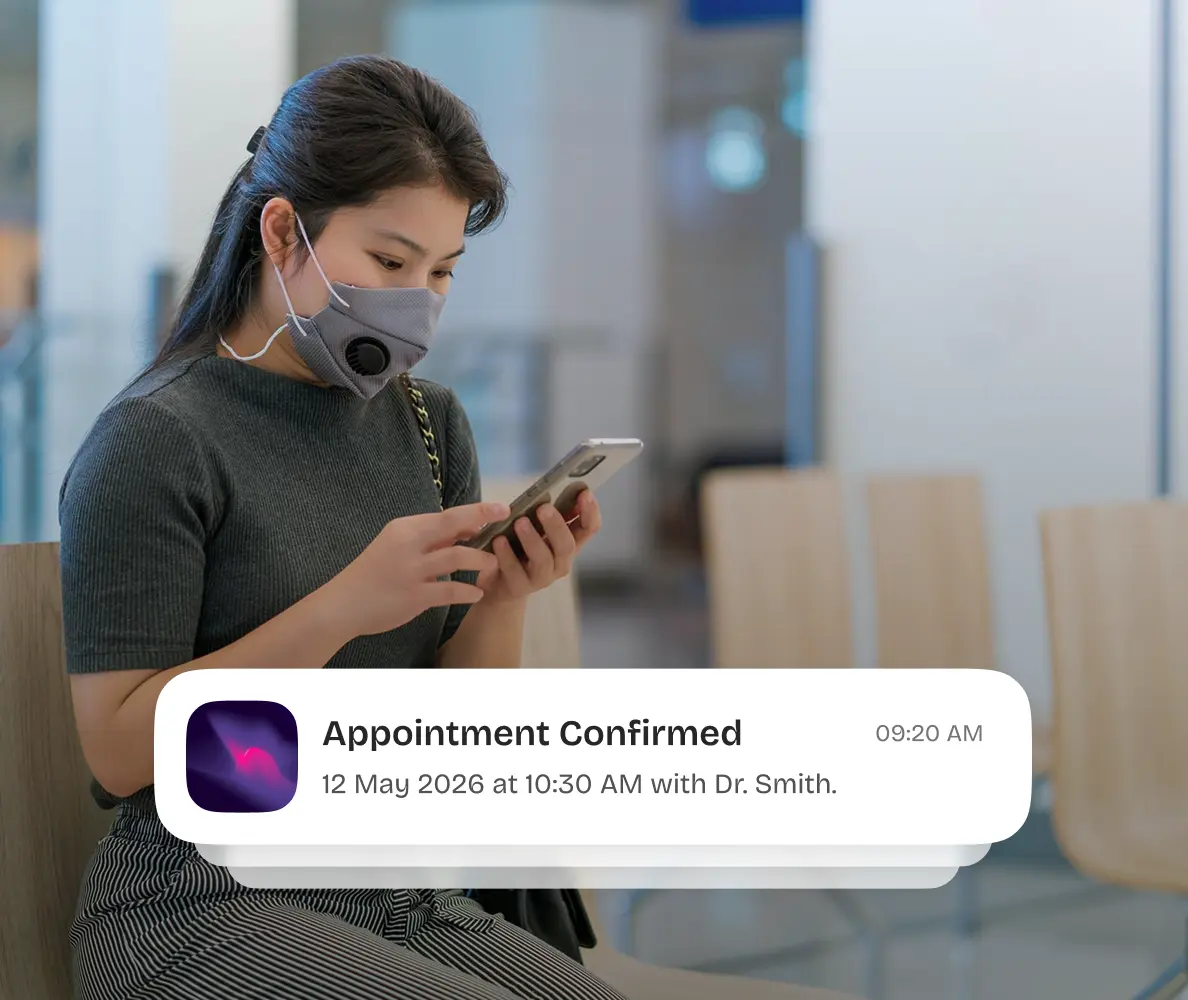

Where AI would actually change behavior, and where it wouldn’t.
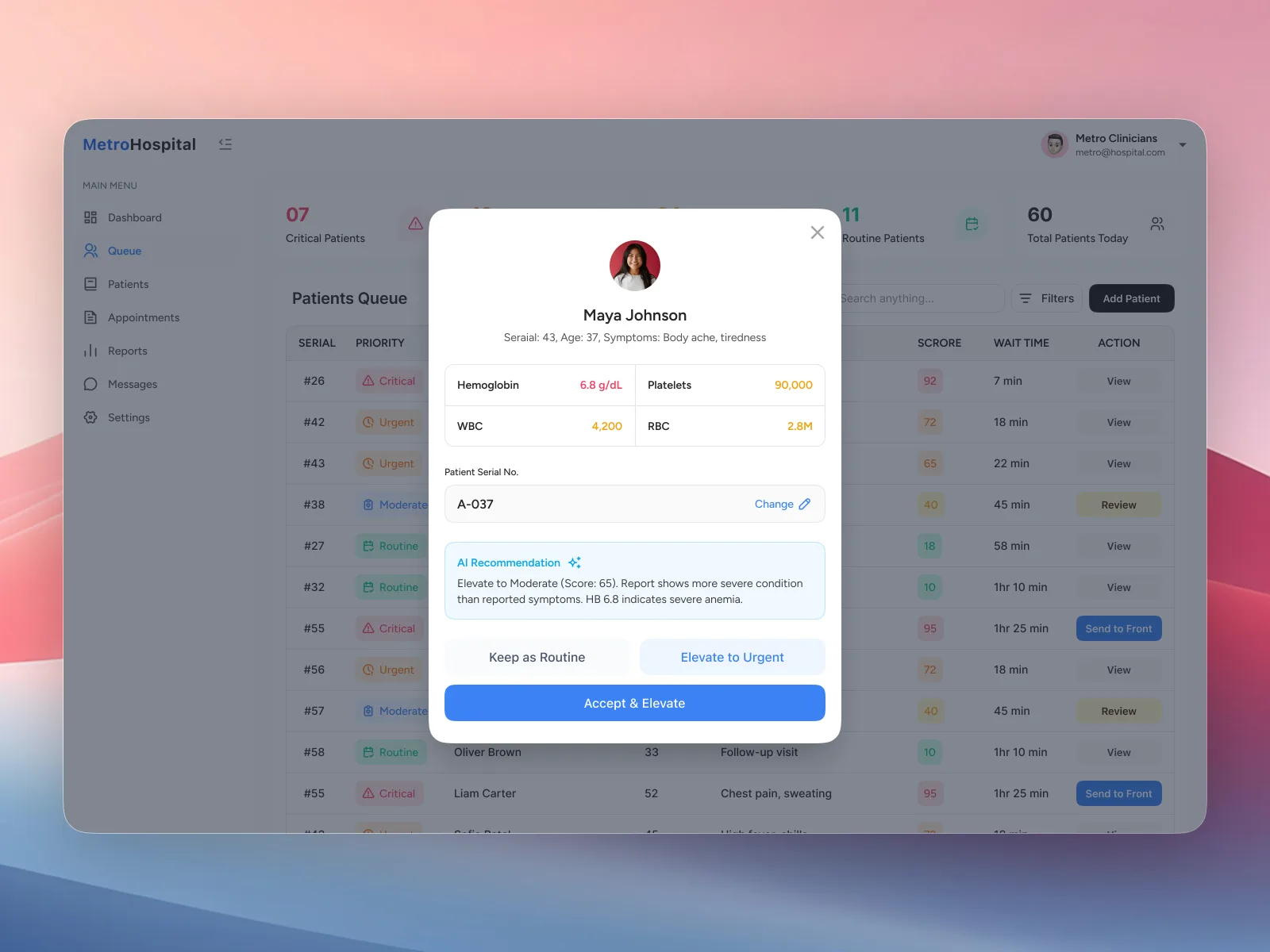
The one place the layer moves the number is at registration: score self-reported symptoms, read uploaded reports, and reorder the queue so the sickest are seen first. That’s the intervention. What we’d deliberately not build is autonomous diagnosis or anything that overrides the clinician, the doctor still validates every priority change, and the serial number stays as the tiebreaker.
- Left on the tableAn autonomous AI that diagnoses patients and overrides the clinician
- Left on the tableReplace the serial-number queue with a fully AI-run booking system
- What we would buildScore urgency at registration, reorder the queue, doctor still validates
An urgency layer on top of the existing serial workflow.
Three pieces sit above the queue: a symptom agent that classifies self-reported complaints against a scoring table, a document agent that OCRs and reads uploaded lab reports against normal ranges, and a queue agent that dual-sorts by priority then serial. Two inputs, symptoms and reports, get scored, cross-referenced, and used to reorder. The patient still holds a number; the system just decides when that number is called. Low-confidence classifications escalate to manual review rather than auto-deciding.
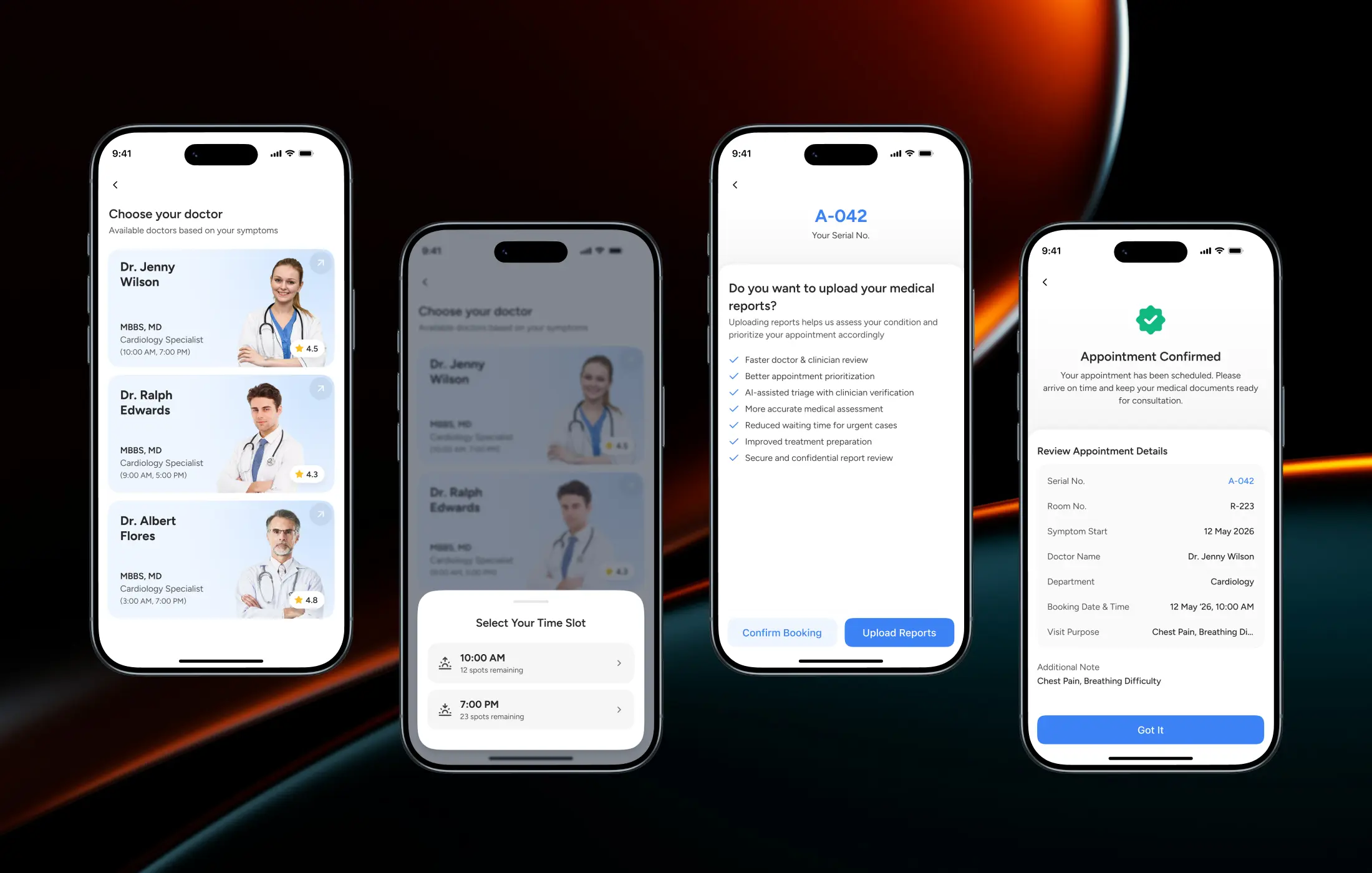
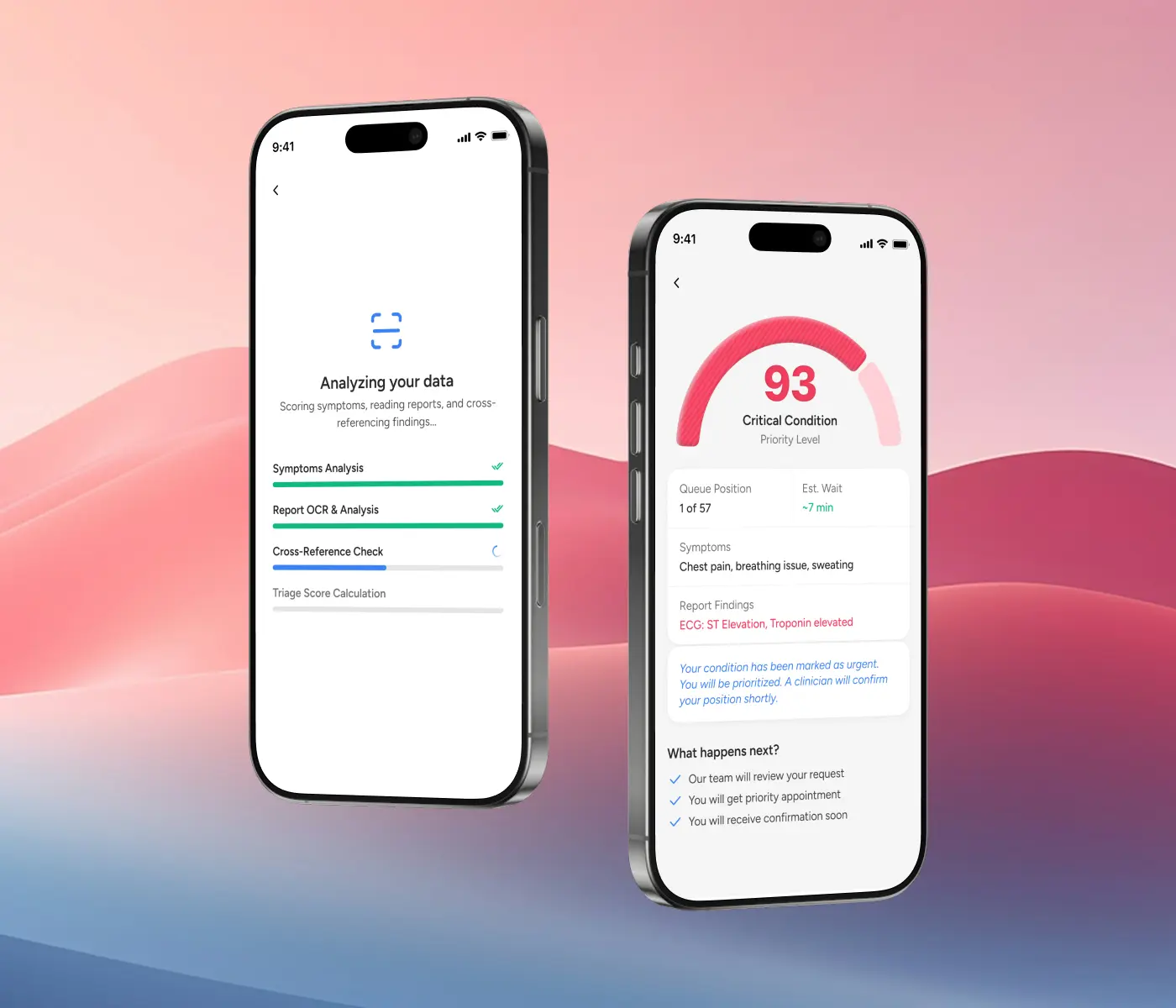
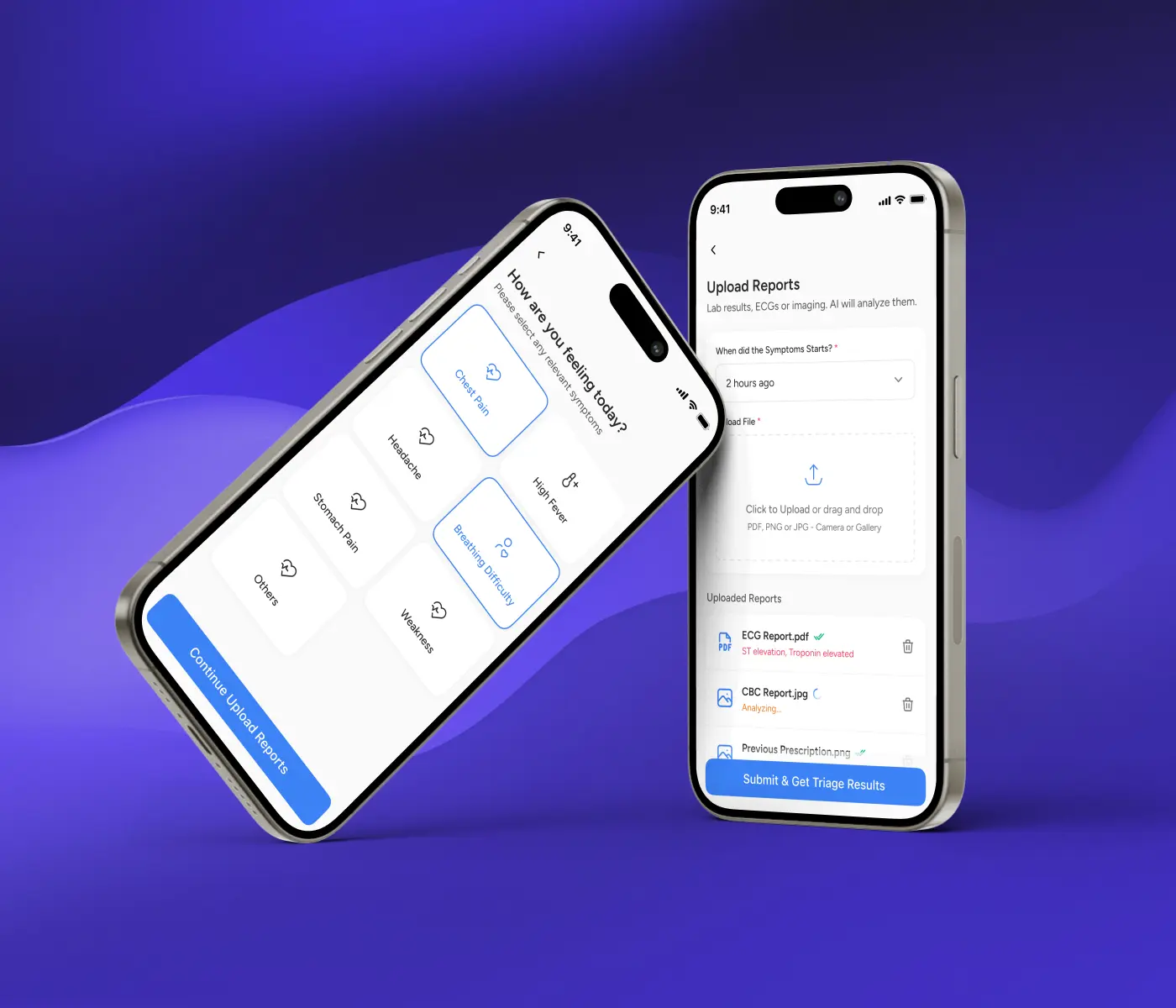
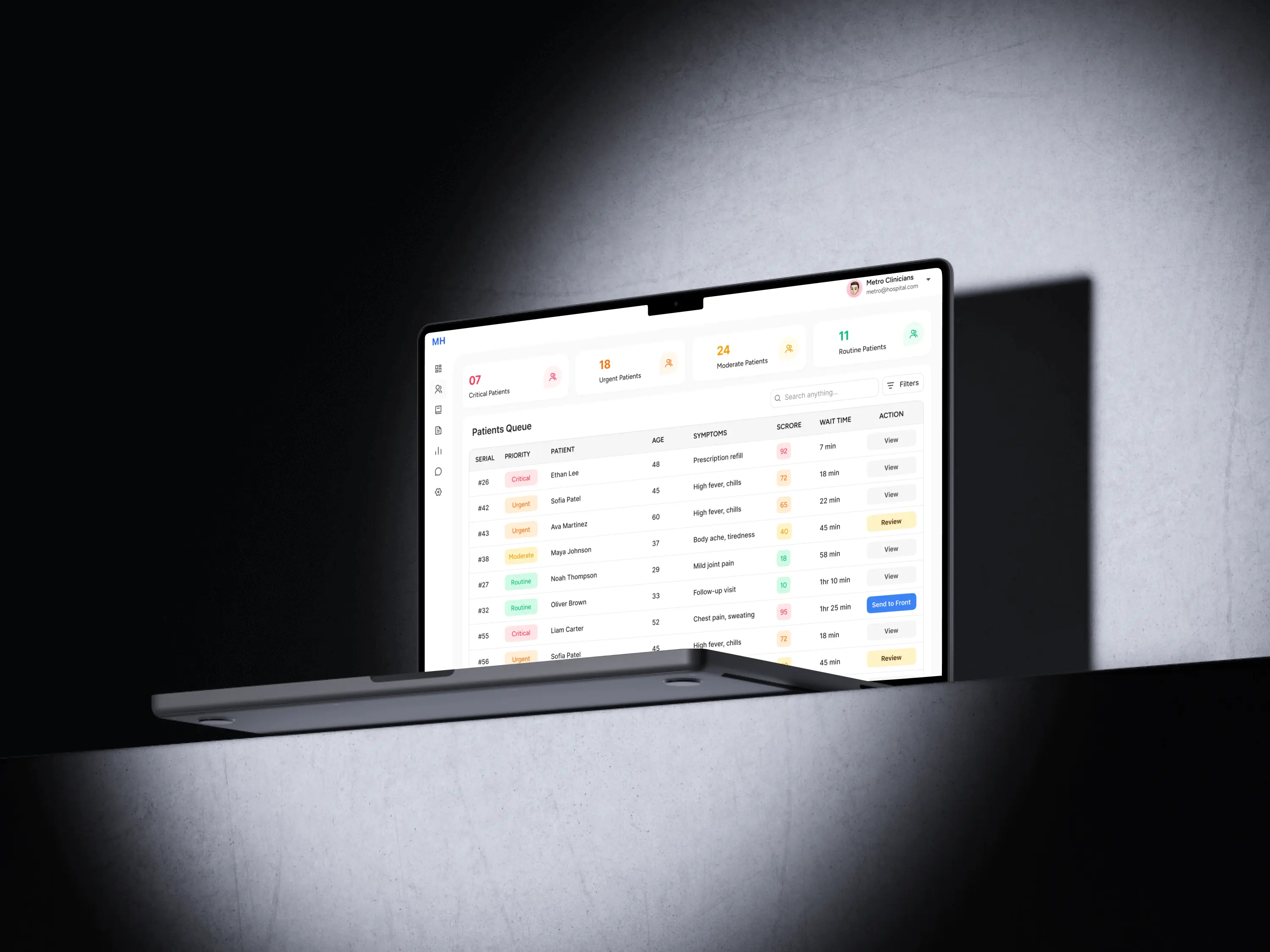
The same queue, with the layer off and on.
Want this kind of thinking on your product?
Start with the AX Audit. In 14 days you get a ranked map, a projected number on a metric you already track, a working concept, and a clear stop list. If the audit does not find AI worth 3X the fee, you pay nothing.
What this layer is designed to move.
These figures are projected, modeled from how the workflow behaves, not measured against a live customer. In a real engagement, we set the target against a metric you already track, agree how we’ll measure it, and report the actual movement.
- ProjectedCritical-patient wait time~90% reduction (projected), from ~110 min toward ~10 min
- ProjectedCritical cases missedProjected toward zero per week, with low-confidence cases escalated to manual review
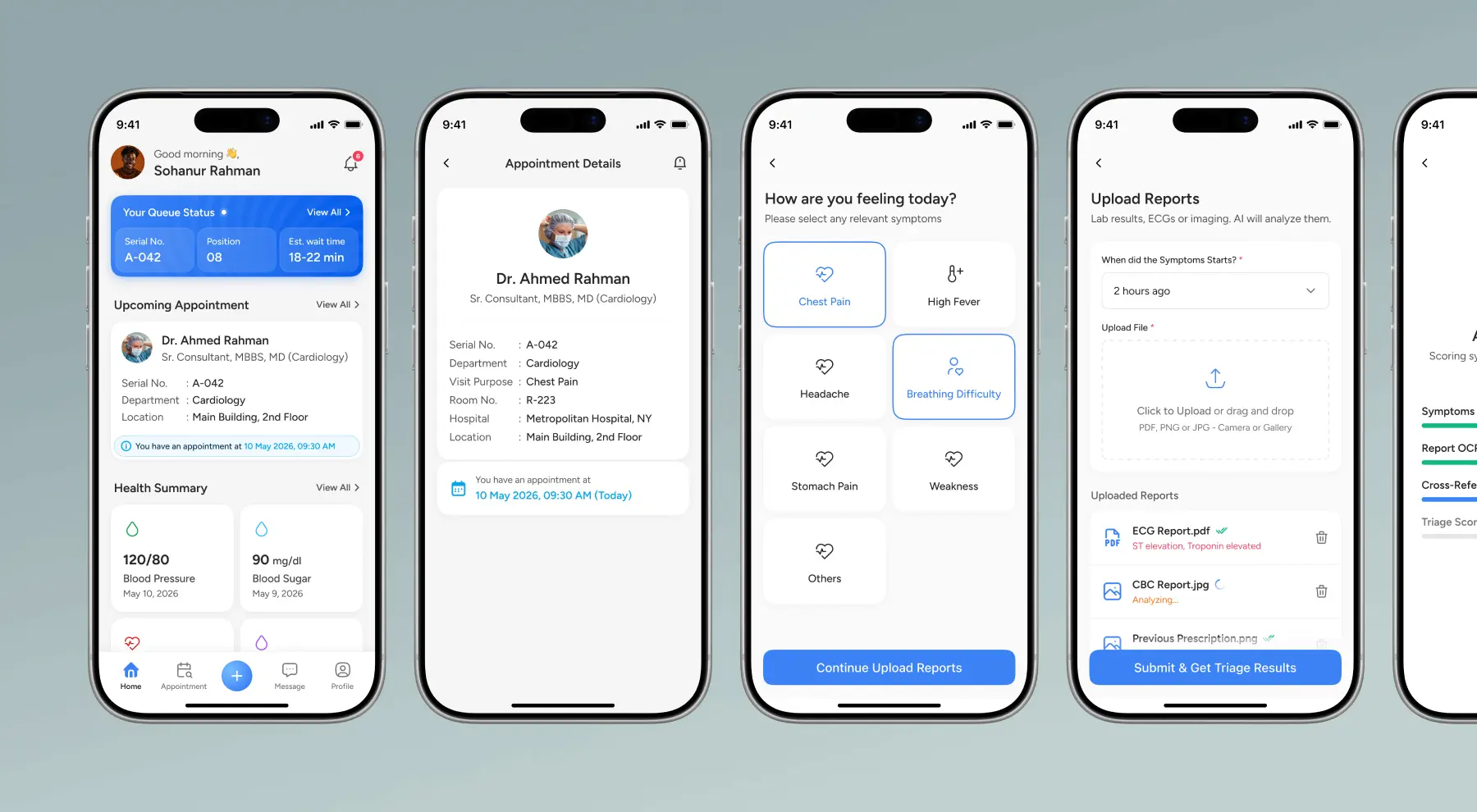
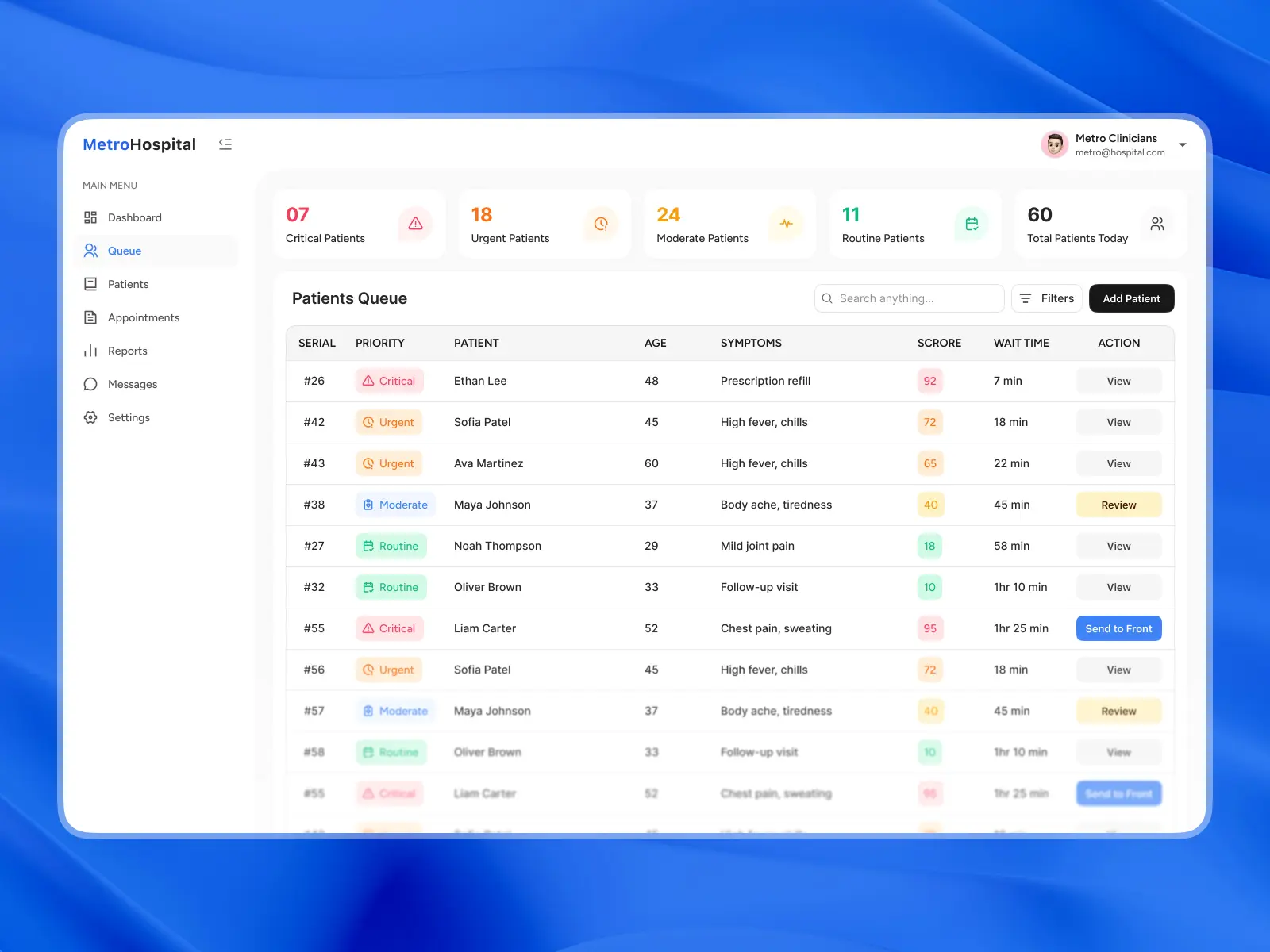
Reliable on top, untouched underneath.
The layer sits above the existing queue, not inside it, the serial workflow, the clinician’s authority, and the audit trail all stay intact. Sub-two-second scoring keeps the registration desk moving; doctor overrides feed back into the scoring rather than being ignored. Wherever the system is unsure, it escalates to a human instead of guessing, so trust is never placed on a single automated decision.
- No model training on your data.
- Simple, auditable pipelines.
- Human review and fallbacks where trust matters.
- A clear record of what data goes where.
One team, finding the opportunity, designing it, building it.
This is the whole process in miniature: start from a metric, find the one place the layer pays for itself, design the feature, build it on top of the product without risking the core, and tie it to a number you can check. The same strategy, design, and engineering team does all of it. No handoffs, no gaps for you to own.
Target
Critical-patient wait time. We aim to bring it from ~110 minutes toward ~10, projected.
Opportunity
Score urgency at registration from symptoms and uploaded reports, where queue order is decided.
Design
An urgency layer on the existing serial queue, with the doctor validating every priority change.
Build
Built on top of the queue, not inside it, so the serial workflow and audit trail stay intact.
Evaluate
Measure the actual wait time for critical patients after launch and test it against the target.
Have a product problem? Let's talk.
Tell us what you are trying to improve and where the product is stuck. We will help you decide if an AI layer is worth building.
- NDA from the first conversation.
- Response within 24 hours, guaranteed.
- Founder-led from first call to handoff.
