How to measure agentic AI ROI
Measure agentic AI ROI by completed-task value, not autonomy. A SaaS method that prices the reliability tax and tells you when an AI agent is worth it.
 Shahriar P. ShuvoAI ROI & Strategy7 min read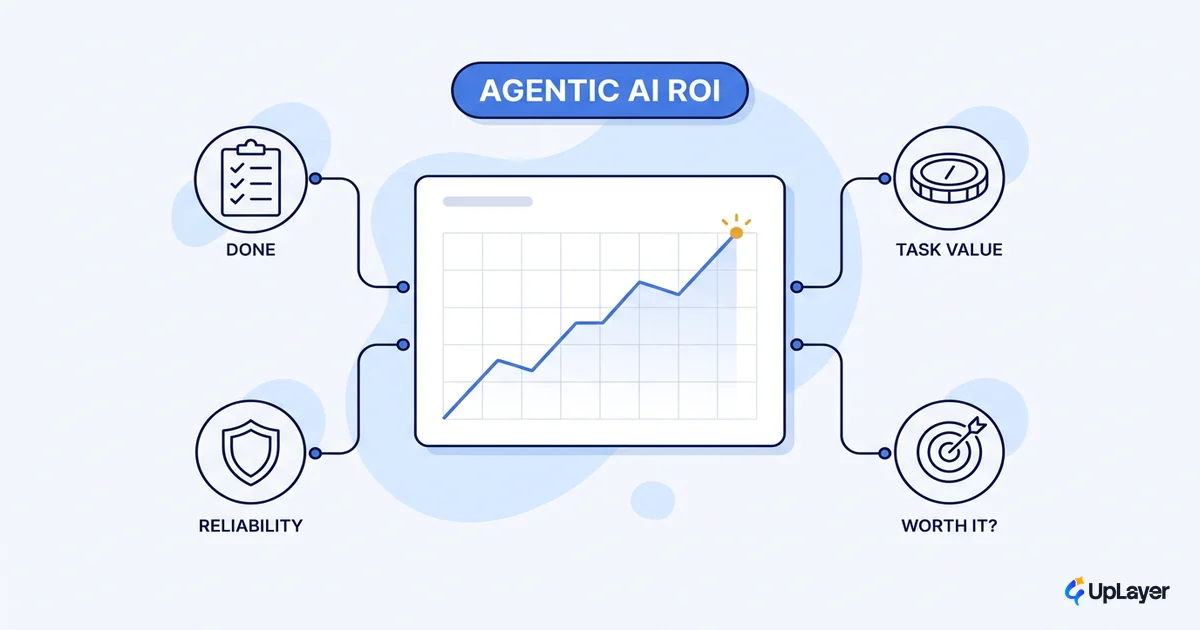
Most teams measure an agent by how autonomous it looks. That is the wrong number. Autonomy is a feature, not a return. The honest way to measure agentic AI ROI is the value of the tasks the agent actually finishes, minus the fully loaded cost of running it, including the cost of cleaning up when it gets things wrong.
An agent adds capability and risk in the same motion. A copilot suggests and a human commits. An agent acts on its own, so a mistake ships before anyone reads it. That changes the math. You are no longer paying for a feature that helps a person work faster. You are paying for outcomes, and you are absorbing the blast radius when an outcome is wrong.
This is the same discipline you would use to measure the ROI of any AI feature, with two extra line items that are specific to autonomy: task completion rate and the reliability tax. Get those two right and the agent either earns its place or it doesn't, on a number you can defend.
What agentic AI ROI actually measures
An agent's return is completed-task value minus fully loaded cost, divided by that cost. The unit is a finished task done correctly, not an action attempted and not a token spent.
The distinction matters because agents fail quietly. An agent that starts 100 tasks and finishes 60 of them correctly has not done 100 tasks worth of work. It has done 60, and it has created some amount of rework on the other 40. If you price the agent on attempts, every vendor demo looks like a win. If you price it on completed tasks, most agents look ordinary, and a few look excellent.
The macro picture backs this up. MIT's NANDA initiative found that the large majority of enterprise generative-AI pilots deliver no measurable impact on the P&L, with only about 5% reaching rapid revenue acceleration. The pilots that stall almost never failed on model quality. They failed because nobody tied the agent to a metric the business already tracked and then measured the delta.
So before you measure the return, name the metric the agent is supposed to move. Support resolution time. Onboarding completion. Tickets closed without a human. Pick one you already report on, set a baseline, and let the agent move it or not.
How do I measure agentic AI ROI step by step
To measure an agent's return you need five inputs, and only one of them is the model. The other four are where the real number lives.
| Input | What it is | Where to source it |
|---|---|---|
| Baseline metric | The number the agent should move, measured before launch | Your existing analytics or ops reporting |
| Task completion rate | Share of attempted tasks finished correctly, judged by your own checks | A graded sample of real agent runs |
| Value per completed task | What one correct outcome is worth in revenue saved or earned | Finance, or cost-per-task > agent-per-task |
| Fully loaded cost | Tokens, tools, orchestration, monitoring, and the human review time | Vendor invoices plus your own engineering hours |
| Reliability tax | The cost of detecting, escalating, and reversing wrong actions | Incident logs and rework hours |
Task completion rate is the input people skip, and it is the one that decides everything. The good news is that it is improving fast. METR's research on agent capability found that the length of tasks an agent can complete at a 50% success rate has been doubling roughly every seven months. The catch hides in that "50% success rate." Push the reliability threshold higher, to the 95% you would actually trust in production, and the tasks an agent can handle get much shorter and narrower. So when you measure how to measure ai roi for an agent, measure completion at the reliability you will actually ship, not the headline number.
The rest is arithmetic. Multiply completed tasks by value per task to get the gain. Subtract the fully loaded cost and the reliability tax. Divide by cost. That is your return for the period.
Reliability guardrails and the tax that breaks agent math
The reliability tax is the cost an agent imposes by being wrong, and it is the line item that turns a promising demo into a negative return. Reliability guardrails are how you keep that tax small enough that the agent still pays off.
Here is the trap. An agent that is right 95% of the time sounds production-ready. But if a wrong action is expensive to detect and reverse, that 1-in-20 error rate can swamp the value of the 19 it got right. A wrong refund, a bad calendar change, an email sent to the wrong customer: each one costs support time, trust, and sometimes money you cannot claw back. The blast radius of a wrong action is the variable that vendors never put in their ROI calculator.
This is why the benchmark numbers deserve a careful read. Anthropic reported a leading model scoring 49% on SWE-bench Verified, a strong result, but two things are worth noting. That score belongs to the whole agent system, the scaffolding plus the model, not the model alone. And the test is whether the agent can resolve a real GitHub issue so the repository's own unit tests pass, which is a high bar precisely because correctness is checkable. Most business tasks do not come with unit tests. You have to build the checks yourself, and those checks are part of the cost.
WARNING
An agent that looks more autonomous is not the same as an agent that returns more. Plenty of "agentic" features are a copilot with a louder label. Measure outcomes completed at the reliability you will ship, not the autonomy on the slide. This is the agent-washing trap, and it is how teams talk themselves into negative ROI.
Reliability guardrails (human-in-the-loop on high-stakes actions, confidence thresholds that escalate instead of guess, reversibility by design) are not overhead you bolt on at the end. They are part of the product, and reliability is an ROI lever in its own right. A slightly less autonomous agent that escalates the hard 10% often returns more than a fully autonomous one that gets those 10% wrong.
The AI ROI metrics that matter for an agent
The metrics worth reporting are the ones that price both the capability and the risk. Five carry the weight, and you can put all of them on one line for finance. These are the AI ROI metrics that actually matter for an autonomous feature, not the vanity counts.
- Task completion rate at your production reliability threshold, not at 50%.
- Cost per completed task, fully loaded, including monitoring and review.
- Escalation rate, the share of tasks handed back to a human, which is healthy, not a failure.
- Reversal or rework rate, the share of completed tasks that had to be undone or corrected.
- Projected ROI, the forward estimate you commit to before you build.
Put together, they give you a projected ROI you can defend in a review:
Projected agentic AI ROI (per period)
=
  ( tasks_completed_correctly x value_per_task )
  - ( token_and_tool_cost + orchestration + monitoring )
  - ( human_review_hours x loaded_hourly_rate )
  - ( reversal_rate x tasks_completed x cost_to_reverse )
divided by total_cost

Ship only if the result clears your hurdle rate
AND the reversal cost line is small enough to survive a bad week.
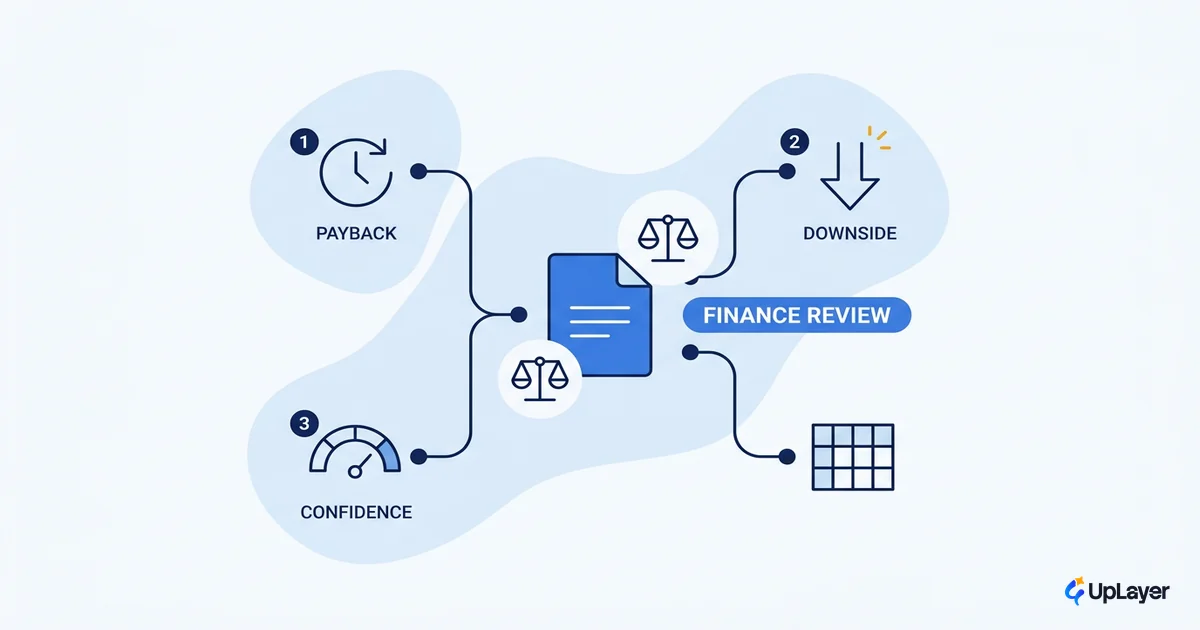
The reversal line is the one that separates an honest projected ROI from a hopeful one. Run the formula at your real error rate, not the demo's, and most "agentic" ideas fail the test. That is the point. The few that pass are worth building.
Across enterprise pilots, the gap between a working agent and a stalled one was rarely the model. It was whether anyone measured a real metric. The 95% that show no P&L impact mostly never set a baseline.
Is agentic AI worth it for SaaS
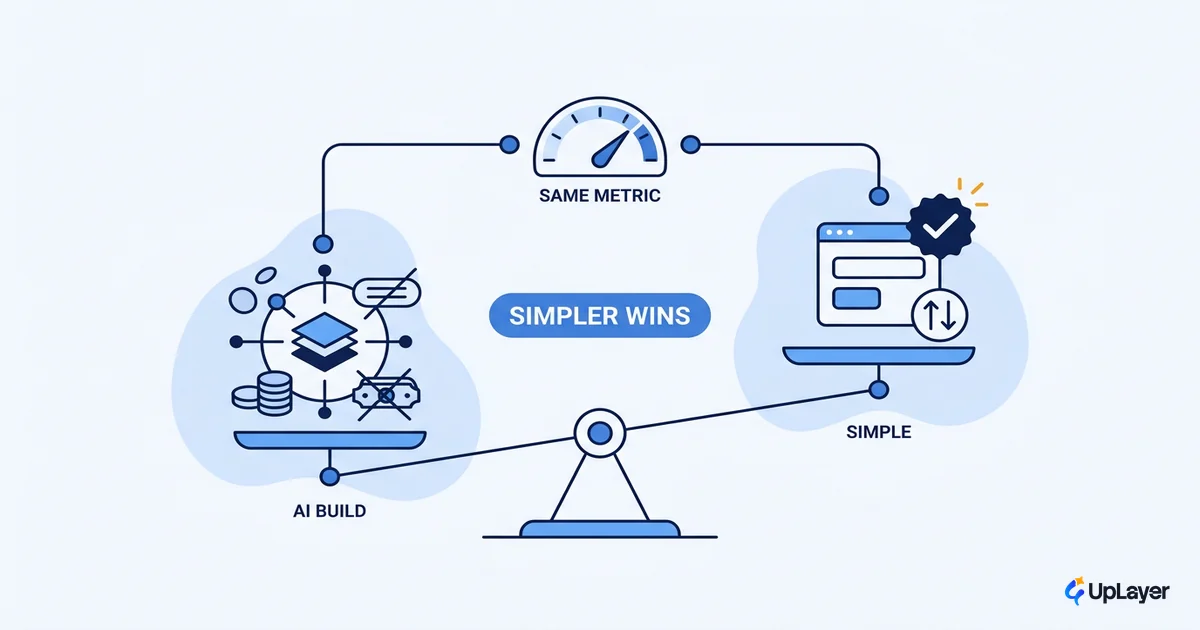
Agentic AI is worth it for SaaS when the value of correctly completed tasks clears the fully loaded cost plus the reliability tax, and not before. For a narrow, repeatable, checkable task with a clear baseline, an agent can pay off quickly. For a fuzzy, high-stakes, hard-to-verify task, a simpler supportive feature usually returns more for less risk.
So what metrics show agentic ai return in practice? The same five above, watched over a real measurement window. If completion holds at your reliability threshold, cost per completed task drops below your human cost per task, and reversals stay rare, the agent earns its place. If escalation climbs, reversals creep up, or the cost per completed task lands above the human baseline, you have a feature to fix or to kill. Killing an agent that does not pay off is a result, not a failure, and it is part of how you decide which AI features are worth building at all.
The honest answer to "is agentic AI worth it for SaaS" is that it depends entirely on the task, and the only way to know is to measure it against a metric you already track. Autonomy is never the reason to build. A defensible number is.
Agents are getting more capable every quarter, and the temptation to ship one because the demo is impressive will only grow. The teams that win will be the ones who treat agentic AI ROI as a number to prove, not a story to tell: completed-task value, minus the reliability tax, against a metric they already report. Build the agent that clears that bar, and skip the one that doesn't.
TIP
Not sure whether an agent will clear the bar in your product? How the AX Audit works. We find the single highest-ROI AI opportunity, project its impact on a metric you already track, and hand you a working concept demo in 14 days.