What AI driven product strategy gets wrong
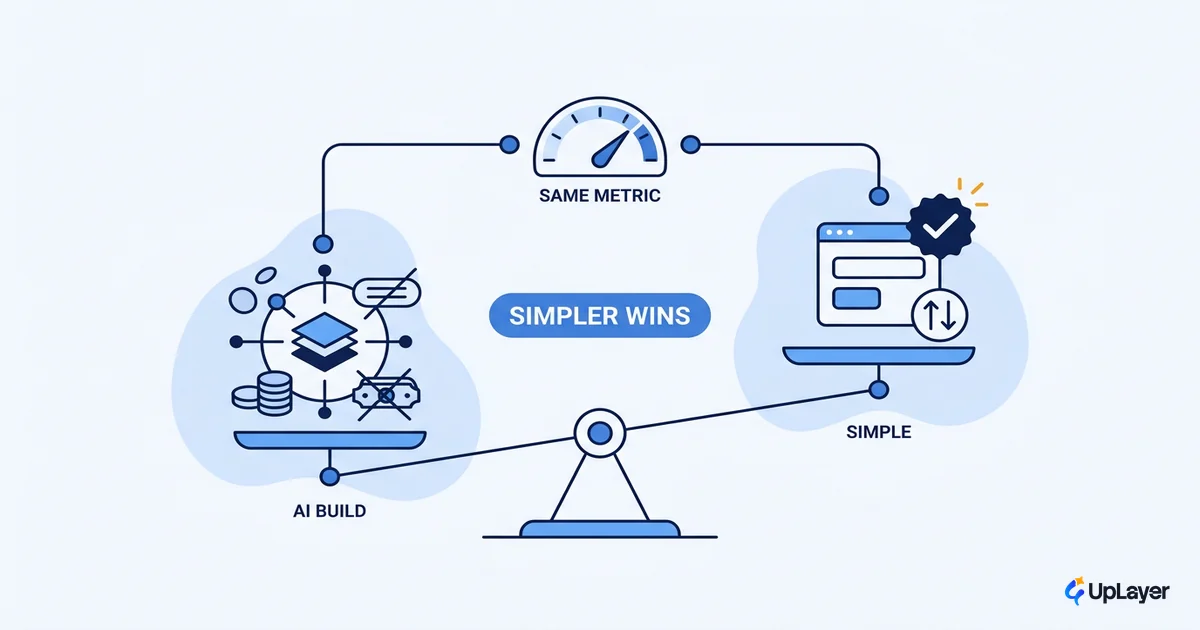
An AI driven product strategy puts the wrong word in charge. The metric drives the roadmap, and AI is just one tool that has to win on projected ROI first.
 Sohanur RahmanAI ROI & Strategy7 min read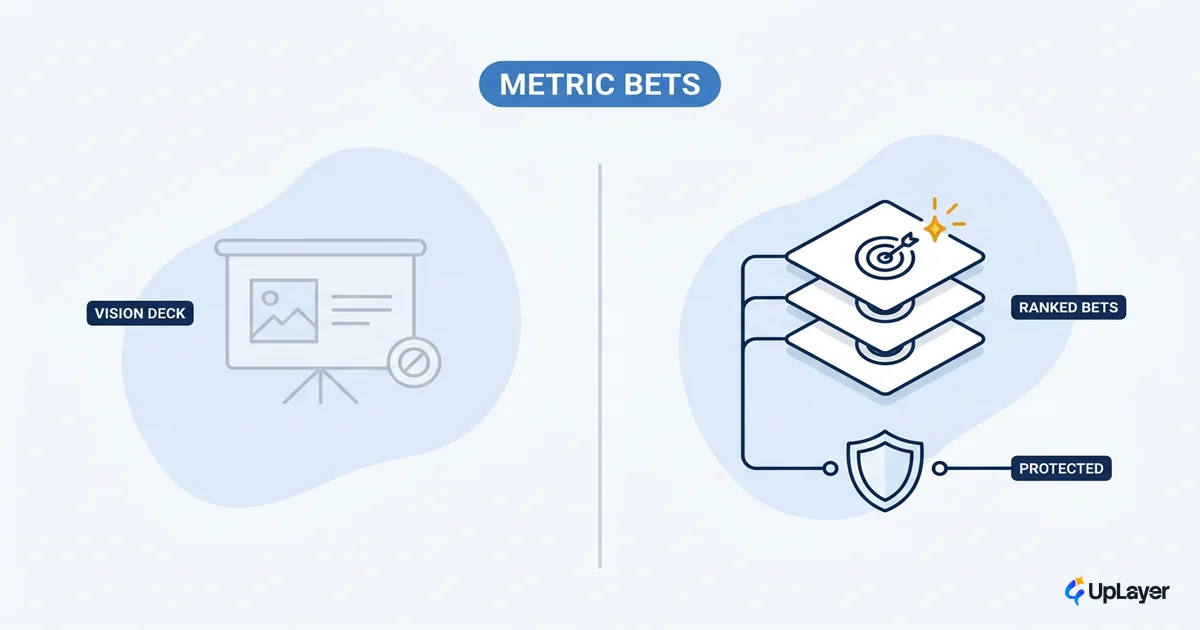
The phrase "ai driven product strategy" puts the wrong word in the driver's seat. Read it literally and it says the technology decides the roadmap. That is exactly the mistake that produced the AI chatbot nobody on your team opens anymore.
You know the situation. The board wants AI on the roadmap. A competitor shipped a copilot. So you shipped one too, and three months later it has moved no number you report on. The problem was not the build. The problem was letting AI drive instead of the metric.
Here is the position we hold, and the rest of this piece defends it. AI should not drive your product strategy. A metric you already track drives it, and AI is one candidate that has to win the bid against simpler builds. When you are ready to score those bids honestly, our guide on how to decide which AI features to build walks the full method. This piece is about why the framing matters in the first place.
What is AI driven product strategy, really
An AI driven product strategy is a plan for where artificial intelligence will create value in your product, ranked by impact and cost, so you build the few features that pay off and skip the rest. That is the useful definition. The common one, the one most articles repeat, puts AI at the center and asks what you can do with it. That order is backwards.
The cost of getting the order wrong is now well documented. Gartner predicts that at least 30% of generative AI projects will be abandoned after proof of concept by the end of 2025, citing escalating costs and unclear business value among the reasons. These were funded projects with executive sponsors. They still failed, because the strategy started with the model and never tied back to a number.
One in three generative AI projects is expected to be scrapped after the proof of concept, often because nobody could show the business value. (Gartner, 2024)
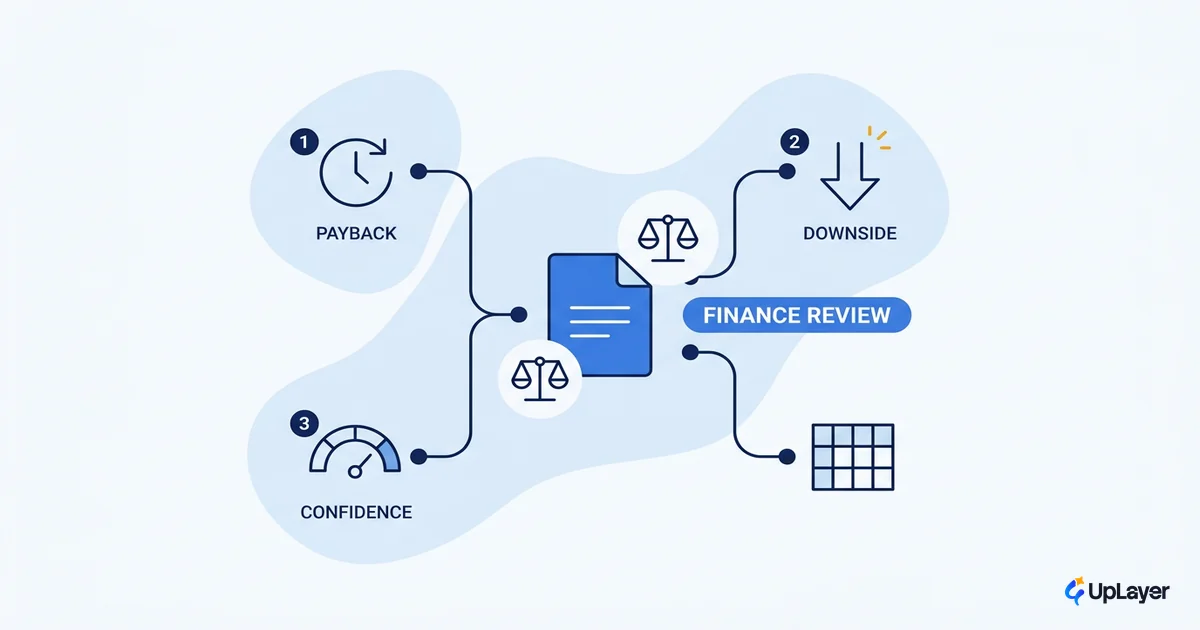
A real ai product strategy treats AI the way you treat any other engineering investment. You name the metric first. You estimate the lift. You compare it against the cost and against the non-AI option. AI only stays in the plan when the arithmetic survives.
Why "AI-driven" is the wrong frame
When AI is the subject of every sentence in your strategy, you optimize for shipping AI, not for moving the business. That is the feature-team trap, and it predates AI by a decade.
Marty Cagan draws the line cleanly. Feature teams are handed a roadmap of prioritized features to build and are measured on output, not outcomes. The best product teams are assigned a problem to solve and are measured on the result. An "AI-driven" mandate is a feature-team mandate wearing a 2026 costume. The feature is decided before anyone names the outcome.
This is also why the value never shows up. Gartner's survey of organizations across the US, UK, and Germany found that the hardest part is proving the value of AI, not deploying it. Deployment is easy now. Demonstrating that the deployment moved retention or activation is the part teams skip, and it is the only part that matters to your board.
Flip the subject of the sentence. Not "what can AI do for our product," but "which metric is stuck, and is AI the best tool to move it." Often it is not.
How is AI driven product strategy different from a normal one
Mostly it is not different, and that is the honest answer. The discipline is the same product discipline you already use: pick a metric, generate options, estimate impact and cost, build the winner, measure the delta. AI does not earn a separate process.
It does add three adjustments, and pretending otherwise is how teams get burned.
| What you score | A normal product bet | An AI product bet |
|---|---|---|
| Impact | Projected lift on one metric | Same, but the lift is often softer and needs an honest confidence discount |
| Build cost | Design plus engineering | Design, engineering, plus a pipeline and ongoing inference cost |
| Reliability | Mostly deterministic | Hallucination risk, so you budget guardrails and human-in-the-loop |
| Measurement | A/B or before-and-after | Same, plus an evaluation suite to know the model is behaving |
| Failure mode | Feature is ignored | Feature is wrong in public and damages trust |
The right column is the AI tax. It is real, it is recurring, and a normal feature does not carry it. Which means an AI feature has to clear a higher bar to win the same slot. That is not pessimism. That is the math that keeps you out of the 30% that gets scrapped.
The metric-first framework you can actually run
Here is the ai product strategy framework, stripped to its spine. It is the same scoring logic behind models like RICE, which combines reach, impact, confidence, and effort into one comparable number. We keep that lineage and anchor it to a metric you already report on, then apply the AI tax.
Score = (Reach × Impact × Confidence) / (Effort + AI_Tax)

Reach      = users or accounts touched per quarter
Impact     = projected movement on ONE named metric
             (churn, activation, conversion, expansion)
Confidence = your honest 0-1 discount on that projection
Effort     = design + engineering, in person-weeks
AI_Tax     = pipeline cost + guardrails + eval + inference
             (0 for a non-AI build)

Rule: an AI idea and a non-AI idea compete in the SAME list.
      The metric is fixed first. AI is never pre-selected.
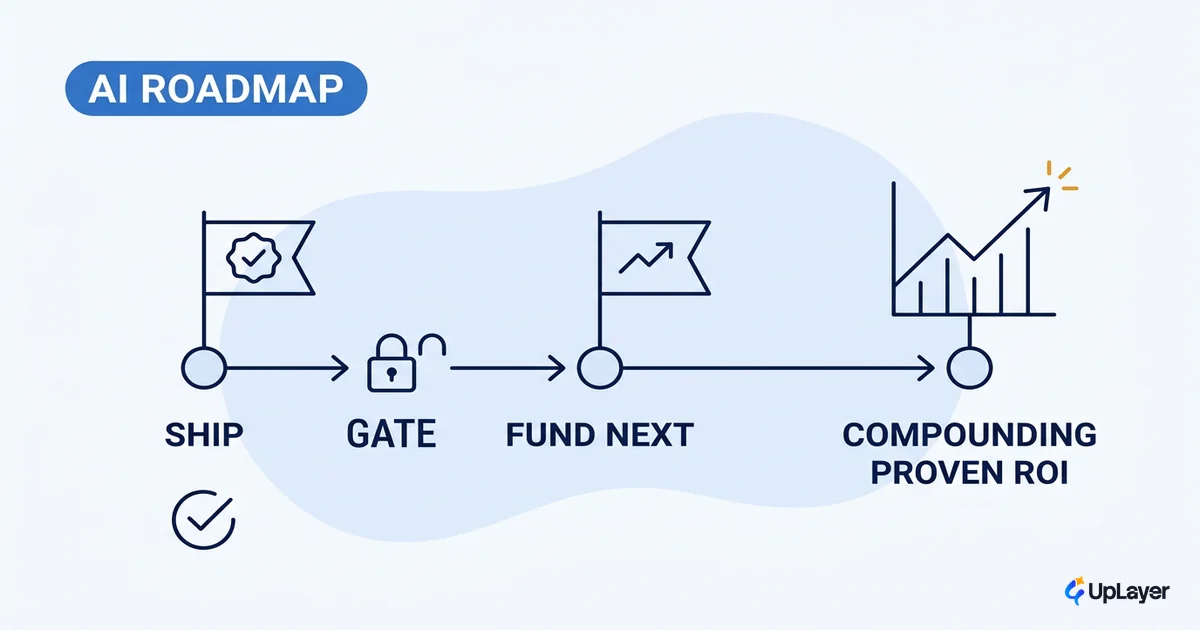
The point of the formula is not the precision. It is the order of operations. You name a metric you already track, you fix it first, then you let every idea, AI or not, compete to move a metric that already matters. The AI tax sits in the denominator so the technology has to earn its place rather than start there. When AI wins, you build it as the layer on top of the product that already works, never a model you bet the company on. When a checkbox or a better default wins, you build that instead and report the same lift for less money.
AI feature prioritization without putting AI first
Real ai feature prioritization means your AI ideas and your boring ideas live in one backlog, scored the same way. The moment you keep a separate "AI roadmap," you have already lost. A separate list implies AI gets graded on a curve, and a curve is how the chatbot got funded.
WARNING
A standalone "AI roadmap" is a red flag. It signals that AI features are exempt from the ROI bar every other feature clears. Merge the lists. If an AI idea cannot out-score a non-AI idea on the same metric, it does not ship.
Run the scoring honestly and two useful things happen. You can score AI ideas without the guesswork instead of debating opinions, and you build a documented case for the ones you kill. Most of what gets proposed belongs on the kill list. We keep a running catalog of the AI features you should not build for exactly this reason, because saying no on purpose is the discipline that protects the metric. Start every score by naming which metric the AI is supposed to move; if you cannot name it, the idea is not ready to score.
Should AI drive my product strategy?
No. The metric drives your product strategy. AI is one tool in the kit, and it earns a slot the same way a new dashboard or a faster onboarding flow does, by projecting a credible lift on a number you already report. Some quarters AI wins that bid. Many quarters it loses to something simpler, and that is a healthy outcome, not a failure of ambition.
This is the difference between betting the company on a model and adding a supportive layer on top of a product that already works. The first is a gamble. The second is product management with a new tool in the bag.
The teams that win the next two years will not be the ones with the most AI. They will be the ones whose ai driven product strategy was really a metric driven strategy all along, with AI earning its place one bet at a time. Put the number in charge, and the technology will tell you, honestly, when it is the right answer and when it is not.
TIP
Want to know which AI feature would actually move a metric you already track, before you spend a dollar building it? How the AX Audit works.