The AI readiness assessment most teams skip
An honest AI readiness assessment for SaaS teams: score your data, metric, and team capacity before you build, and know when to say not yet.
 Anamoul RoufAI ROI & Strategy7 min read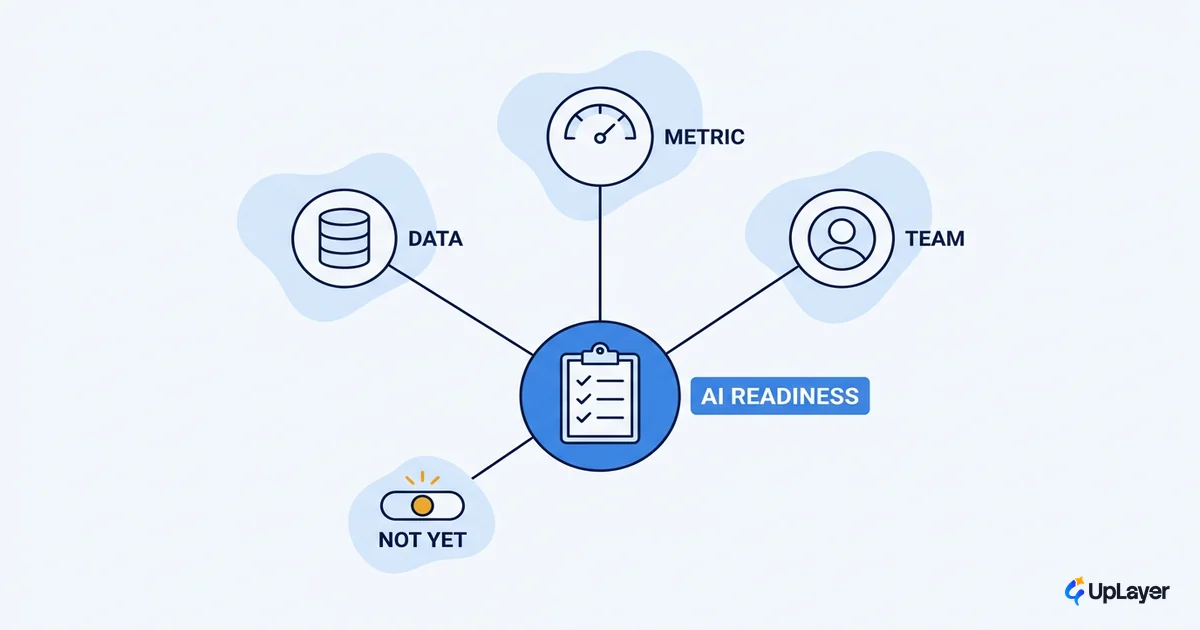
An AI readiness assessment is not a hype checklist. It is the audit that tells you whether to not build. Most teams skip it, ship anyway, and then quietly shelve the feature two quarters later. Gartner predicts at least 30% of generative AI projects will be abandoned after proof of concept by the end of 2025, citing poor data quality, escalating costs, and unclear business value. A readiness assessment done honestly catches all three before you spend a sprint.
We hold a plain view: readiness is about data, metrics, and team capacity to ship a layer, not a maturity score from a slide deck. The right assessment ends in one of three answers. Build now, fix two things first, or not yet. This piece gives you the three axes to score, a scorecard to run in half a day, and the honest cases where the correct call is to wait.
The whole point is to tie one AI feature to one metric you already track before anyone writes code. If you cannot name that metric, you are not ready, and no amount of model access changes that.
What an AI readiness assessment actually measures
A real ai readiness assessment measures three things: whether your data can feed the feature, whether you have a metric the feature is supposed to move, and whether your team can ship and maintain it. That is it. The enterprise maturity models add governance councils and ethics boards; useful at the Fortune 500, noise for a 40-person SaaS deciding on one feature.
The gap is stark because adoption is near-universal and proof is not. In 2024, 78% of organizations reported using AI, up from 55% the year before (Stanford AI Index, 2025). The same window produced the 30% abandonment forecast above. Almost everyone is building. Far fewer can show the number it moved.
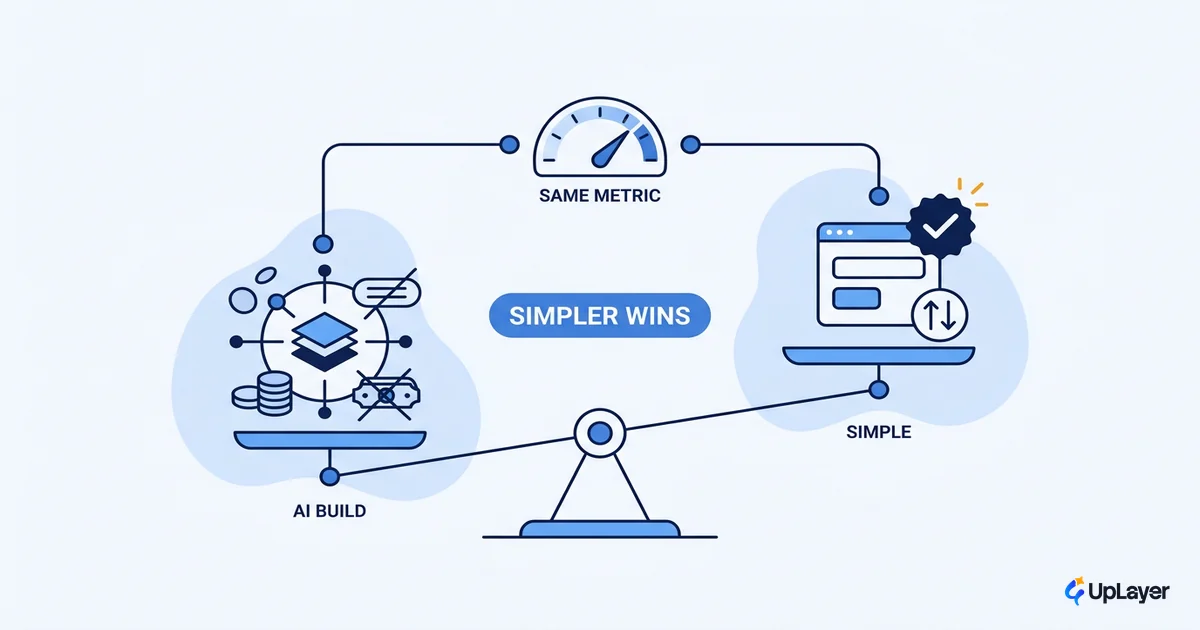
The cheapest AI feature is the one your readiness assessment talks you out of building.
Here is the difference between the checklist you will find on most ranking pages and the assessment that actually de-risks a decision.
| Generic readiness checklist | UpLayer's three-axis assessment |
|---|---|
| "Do you have an AI strategy?" | Which one metric should this feature move? |
| "Is leadership bought in?" | Is the data for that feature clean and accessible today? |
| "Have you appointed an AI lead?" | Can your team ship and maintain a supportive layer? |
| Ends in a maturity score | Ends in build / fix-first / not-yet |
| Built for portfolio transformation | Built for one feature decision |
The three readiness axes that decide whether you ship
Score each axis honestly. A high score on two and a zero on the third still means not ready, because the zero is the thing that kills the feature in production.
Data readiness. Does the data the feature needs exist, is it clean, and can you access it without a six-week pipeline project? An AI feature is only as good as the data under it. If the support-ticket history is unstructured and untagged, your "smart triage" feature has nothing to learn from.
Metric readiness. Is there a metric you already track that this feature is supposed to move? Retention, activation, time-to-value, conversion, expansion. If you cannot name it, you have a demo idea, not a feature. This is where an ai value framework earns its keep: it forces the metric before the model.
Team capacity. Can your team build this as a supportive layer on top of the core product, monitor it, and fix it when the model drifts? Capacity is not headcount. It is whether someone owns the feature after launch.
Readiness score (per axis, 0 to 2):
  0 = blocker        (missing data / no metric / no owner)
  1 = fixable        (known gap, < 2 weeks to close)
  2 = ready          (in place today)

Decision rule:
  any axis == 0          -> NOT YET
  total <= 3 (no zeros)  -> FIX FIRST
  total >= 4 (no zeros)  -> BUILD

Total possible: 6. Build only on a clean 4+.
The scoring is deliberately blunt. A single blocker overrides a strong total because the blocker is what shows up in the post-mortem.
How do I run an AI readiness assessment
Run it in half a day, with the people who own the data and the product. The output is a single page: three scores and a decision. Here is the sequence.
- Name the metric first. Pick the one metric the feature should move. Write it down before you discuss the feature. This order matters.
- Audit the data behind that metric. Is it captured, clean, and reachable? Pull a real sample, not a description of one.
- Define the feature as a layer. Sketch how it sits on top of the core engine so a model swap never takes the product down.
- Score the three axes using the rubric above, with evidence for each score, not vibes.
- Write the baseline for the metric today, so you can measure the delta later. No baseline, no proof.
WARNING
Define the metric before the model. A feature that demos well but cannot name the number it moves is the single most common reason AI projects get abandoned after proof of concept. The model is the easy part.
This is the core of a sane ai adoption strategy: decide what to build by what it can move, and refuse the rest. A good ai readiness assessment is the gate that makes that refusal defensible in a planning review.
Is my SaaS ready to add AI? A scorecard
Run your feature through this. Most teams land in "not yet" on their first idea, and that is the assessment working, not failing.
| Signal | Ready | Not yet |
|---|---|---|
| The metric | Named, already tracked | "It'll help users" |
| The data | Clean and accessible today | Needs a pipeline project first |
| The owner | One person owns it post-launch | "The team" owns it |
| The shape | A layer on top of the core | Rewires the core engine |
| The baseline | Measured before launch | Measured never |
The pattern that separates teams who capture value is not bigger models. McKinsey found that the high performers attributing real EBIT to gen AI tend to redesign workflows around it rather than bolt a feature on, and only a small minority of surveyed organizations reported meaningful financial impact at all. Readiness, in practice, is whether you can change the workflow, not just call the API. A focused ai opportunity assessment is how you find the workflow worth changing.
When the honest answer is "not yet"
Sometimes the assessment says wait, and saying it out loud is the most valuable thing the exercise produces. Not yet is not failure. It is a list of two or three fixes that turn a risky build into a safe one.
The honest "not yet" cases:
- The data is not there. Fix the capture and tagging first. A model cannot learn from data you do not have.
- No metric owns the outcome. Go find the metric, or kill the idea. A feature without a target number is theater.
- No risk controls. If a wrong answer from the feature reaches a customer with no guardrail, you are not ready. NIST's framework treats this as a core function: you manage the risk through Govern, Map, Measure, and Manage, not as a launch-week afterthought. Gartner names inadequate risk controls as a leading abandonment cause for a reason.
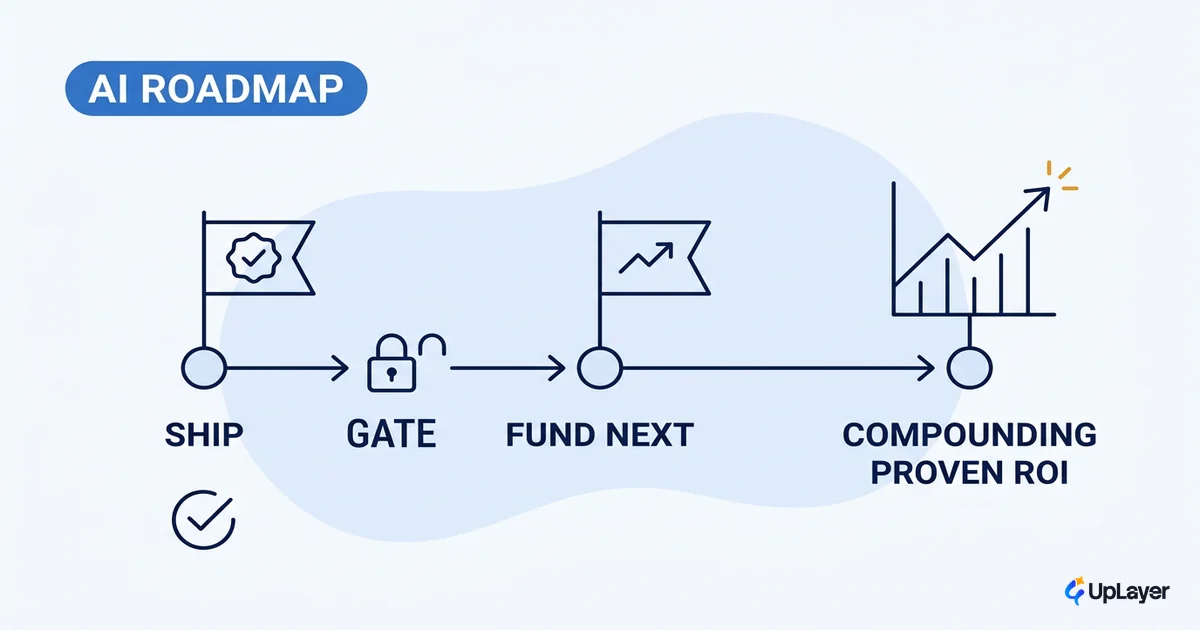
Treating "not yet" as a real outcome is how you de-risk the whole program. You spend the sprint on the feature that scored a clean build, not the one that demos well and ships nothing.
How this readiness assessment feeds your AI business case
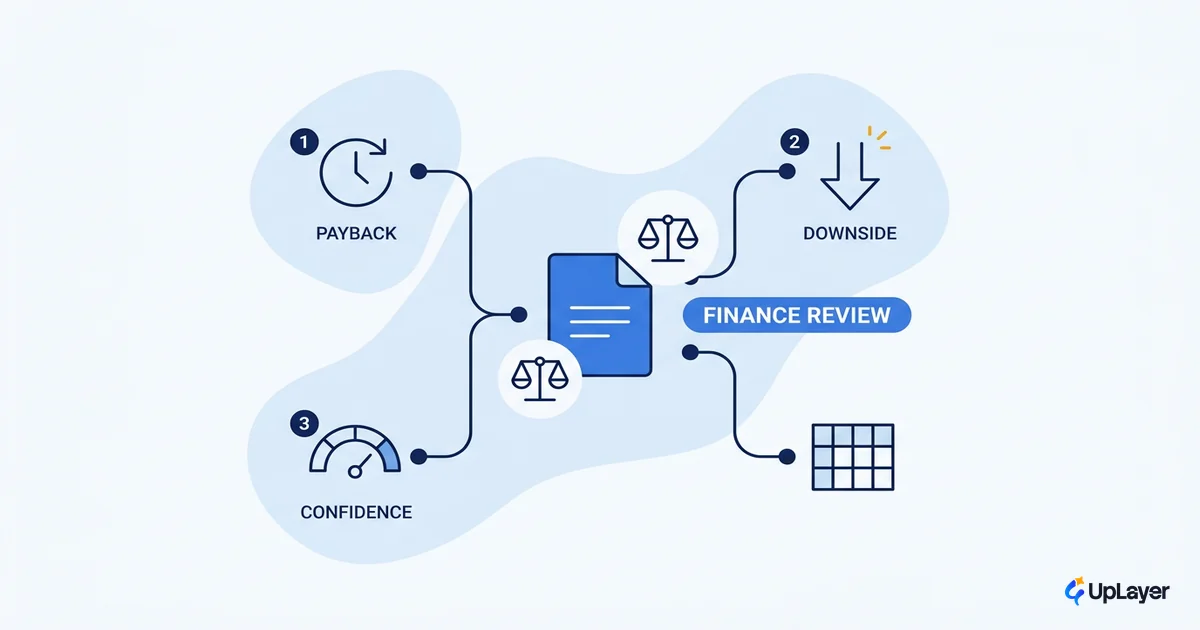
The scorecard is not the end. It is the evidence layer for the next document. A named metric, a measured baseline, a clean data audit, and a defined owner are exactly the inputs an AI business case needs to survive a finance review. Skip the readiness assessment and the business case is a wish; run it first and the case writes itself from your own scores.
That is the quiet advantage of doing an honest ai readiness assessment before you build. You enter the planning meeting with a metric, a baseline, and a defensible reason for either building now or waiting one quarter. The teams that skip this step are the ones explaining a shelved feature later. The ones who run it ship fewer AI features and get more from each.
TIP
Want this run for your product, with a metric, a baseline, and a build / not-yet call you can defend? How the AX Audit works.