How to run an AI opportunity assessment
An AI opportunity assessment finds where AI moves a metric you already track. Here is the repeatable audit that ranks every opportunity by projected ROI.
 Sohanur RahmanAI ROI & Strategy7 min read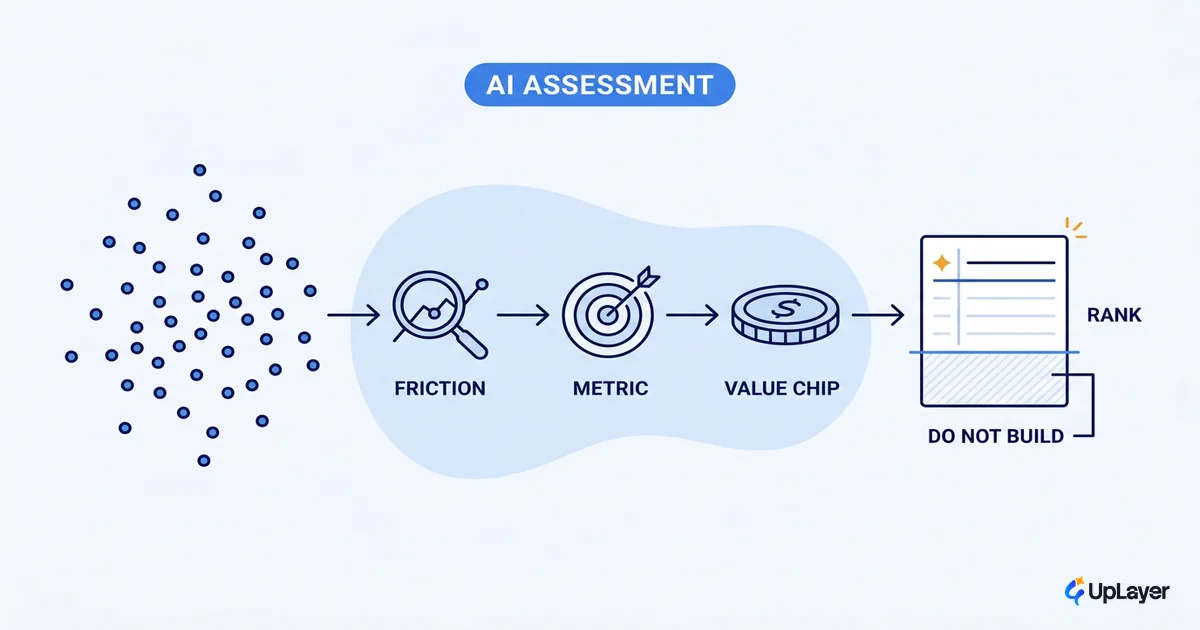
Most teams run an AI opportunity assessment backwards. They open a blank doc, brainstorm every place a model could go, and walk out with a long wish list. The list feels like progress. Then they build the most exciting item, ship it, and watch every number they care about stay flat.
A good assessment does the opposite. It produces a shorter list. Its most valuable output is the pile of things you decided not to build, ranked below the line on purpose. The job is not to imagine where AI could go. The job is to find where AI will move a metric you already track, and to cut everything else.
This is the repeatable audit. Five steps, one scoring sheet, and a clear rule for what stays and what gets killed. We'll tie every opportunity to a number, because the only AI feature worth shipping is one you can measure the ROI of an AI feature on before you write a line of code.
What is an AI opportunity assessment
It is a structured audit that finds where AI can move a metric you already track, then ranks each candidate by projected ROI. The output is two lists: a short stack of opportunities worth building, and an explicit "do not build" pile. It is a filter, not a brainstorm.
Adoption is no longer the differentiator. 78% of organizations reported using AI in 2024, up from 55% the year before, per Stanford's AI Index. When almost everyone has shipped something, the question stops being whether you use AI and becomes which opportunities you pick. That is the entire game.
The cost of skipping this step is well documented. Gartner projects that at least 30% of generative AI projects will be abandoned after proof of concept by the end of 2025, citing unclear business value among the top reasons. A project dies after the demo when nobody defined the number it was supposed to move. The assessment exists to define that number first.
WARNING
Define the metric before the model. If an opportunity can't name the number it moves and the size of the move, it is not an opportunity yet. It's a hope.
Why most AI opportunity hunts surface the wrong things
The common failure is a wish list dressed up as a strategy. Teams collect every plausible AI use case, mark them all "high potential," and pick by enthusiasm. None of those candidates were scored against a metric, so the list has no top and no bottom. Everything looks equally worth building, which means nothing is.
The data argues for focus. BCG found that only 26% of companies have built the capabilities to move past proofs of concept and generate tangible value. The companies that do win share one habit: they pursue about half as many opportunities as their less advanced peers, and they expect more than twice the ROI for it.
Leaders pursue, on average, only about half as many opportunities as their less advanced peers ... and they expect more than twice the ROI. (BCG, Where's the Value in AI?)
Read that twice. The winners are not the teams with the longest opportunity list. They are the teams that cut hardest. A real AI opportunity assessment is the cutting mechanism. If yours leaves you with more ideas than you started with, it failed.
How do I run an AI opportunity assessment
If you're asking how to find AI opportunities in my product without guessing, this is the answer: run it in five steps. The whole thing fits in a week for a product team that knows its own metrics. You don't need a data science org. You need honesty about what each AI candidate is actually worth.
- List the metrics you already track. Retention, activation, conversion, expansion, support cost. Not vanity metrics. The numbers your board asks about.
- Map friction to each metric. Where do users stall, churn, or wait? Each friction point is a candidate location for an AI feature, anchored to a metric it could move.
- Propose the smallest AI intervention per friction. A copilot, a summarizer, a triage step, a semantic search. Smallest version that could plausibly move the number.
- Score by projected ROI. Estimate the metric move, your confidence, and the build cost. Multiply and divide (formula below). This is where the list gets a top and a bottom.
- Cut everything below the line. Draw a threshold. Everything under it goes in the "do not build" pile, named and dated so it doesn't sneak back in next quarter.
Steps 2 through 4 are where teams cheat, so be strict. If you want this run specifically against an existing product surface, the same five steps become an AI opportunity audit for your SaaS that walks every screen and maps each friction point to a metric. The discipline of AI feature prioritization lives entirely in refusing to skip the scoring. An opportunity you can't score is an opportunity you can't rank, and an opportunity you can't rank is one you'll pick by gut.
Here is the scoring formula. Keep it this simple on purpose.
opportunity score = (metric_impact x confidence) / build_cost

metric_impact = projected change in the tracked metric, normalized to dollars
                (e.g. 2 point churn reduction = $X annual retained revenue)
confidence    = 0.1 to 1.0  (how sure are you the move happens at all)
build_cost    = design + build + ongoing reliability cost, in dollars

Build only opportunities above your threshold score.
Everything else is documented and shelved, not silently dropped.Score and rank every opportunity by projected ROI
The scoring sheet is the artifact the assessment hands back. One row per opportunity, sorted by score. It turns a debate about which AI feature is coolest into arithmetic about which one pays. A good AI value framework is just this table applied consistently to every idea, including the ones a senior person is attached to.
| Opportunity | Metric it moves | Projected impact | Confidence | Build cost | Score | Verdict |
|---|---|---|---|---|---|---|
| Churn-risk copilot for CSMs | Net retention | >$140k retained/yr (projected) | 0.6 | $24k | High | Build first |
| Onboarding summarizer | Activation | +6 pts activation (projected) | 0.5 | $18k | Medium | Build next |
| Semantic in-app search | Support cost | -12% tickets (projected) | 0.4 | $20k | Medium | Hold |
| Generative "ask anything" chatbot | None named | Unclear | 0.2 | $30k+ | Low | Do not build |
The numbers above are a Concept Demo of the method, framed as projected, not achieved. The point is the shape: the chatbot everyone wants is at the bottom because it has no named metric and the lowest confidence. That is the assessment doing its job.
TIP
Score the idea a senior person loves last, and out loud, against the same formula as everything else. If it survives the math, build it. If it doesn't, you just saved a quarter.
Is your product ready, or just willing
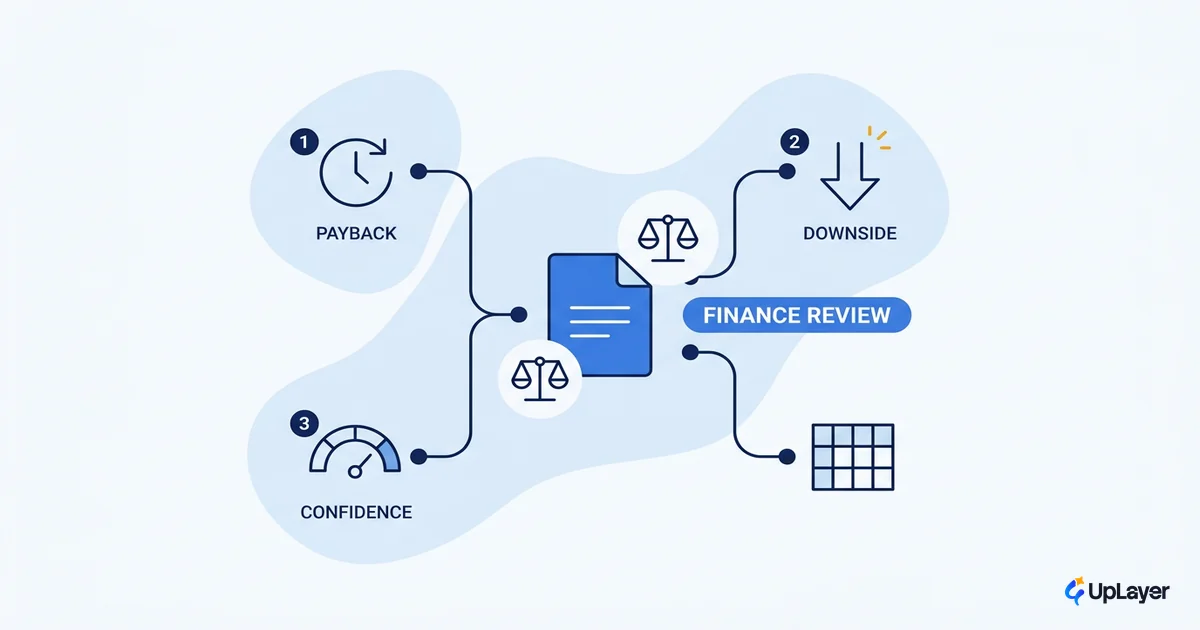
Readiness is a gate, not the goal. Before an opportunity earns a build slot, three things have to be true: the metric is instrumented so you can read the delta, the data the feature needs is actually accessible, and the surface can tolerate a wrong answer or has a human in the loop where it can't. An AI readiness assessment that stops at "do we have the data" misses the point. Readiness re-ranks the list. It doesn't replace it.
An opportunity with a huge projected impact and a broken metric pipeline drops down the list, because you won't be able to prove it worked. An opportunity on a high-trust surface (anything touching money, compliance, or irreversible actions) needs reliability guardrails priced into its build cost, which lowers its score. Readiness is how the projected numbers meet reality.
What the assessment should tell you not to build
The "do not build" pile is the highest-value output of the whole exercise. It is the part every vendor assessment quietly omits, because saying no to a build is saying no to revenue. We do it anyway, because shipping the wrong AI feature costs more than the build: it costs the trust users lose the first time the model is confidently wrong.
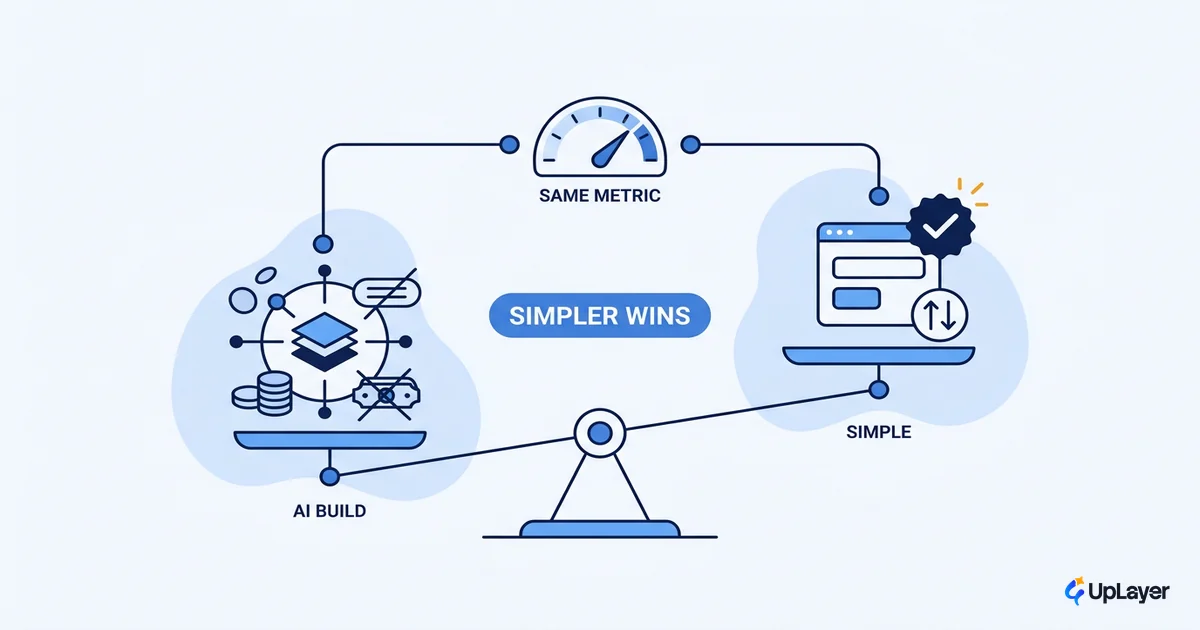
Three things usually belong below the line. Features with no named metric. Features where a simpler non-AI fix (a rule, a sort, a form) moves the same number for a tenth of the cost. And features on a trust surface where one hallucination does more damage than the upside is worth. Knowing what stays in this pile is the same skill as knowing how to decide which AI features to build; they are two ends of one ranked list.
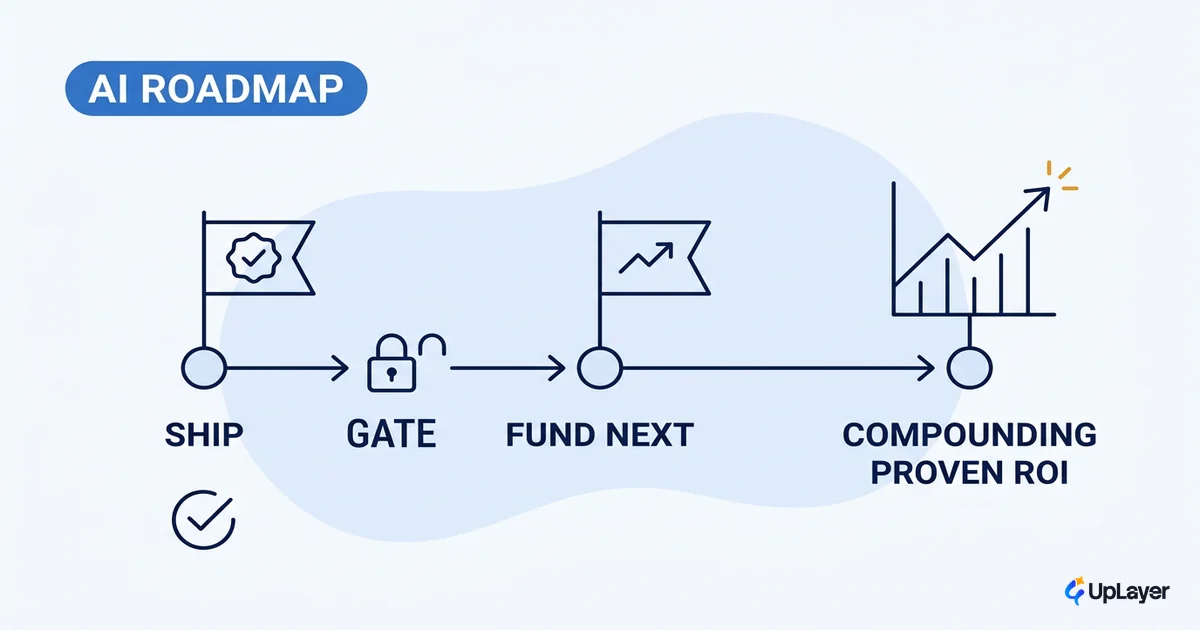
A finished assessment isn't a roadmap of everything AI could touch. It's a short, scored stack of what's worth building, a documented pile of what isn't, and a metric attached to every line. Run the AI opportunity assessment this way and the next AI feature you ship will be the one you can defend with a number, not a demo.
TIP
How the AX Audit works. We run the assessment for you, rank the candidates by projected ROI, and hand back the "do not build" pile too. Find AI worth 3x the fee, or it's free.