The ROI of AI: what return you should actually expect
The honest roi of ai for SaaS: where it pays off, where it stalls, and why most projections miss. A grounded view of returns you can defend in finance.
 Sohanur RahmanAI ROI & Strategy7 min read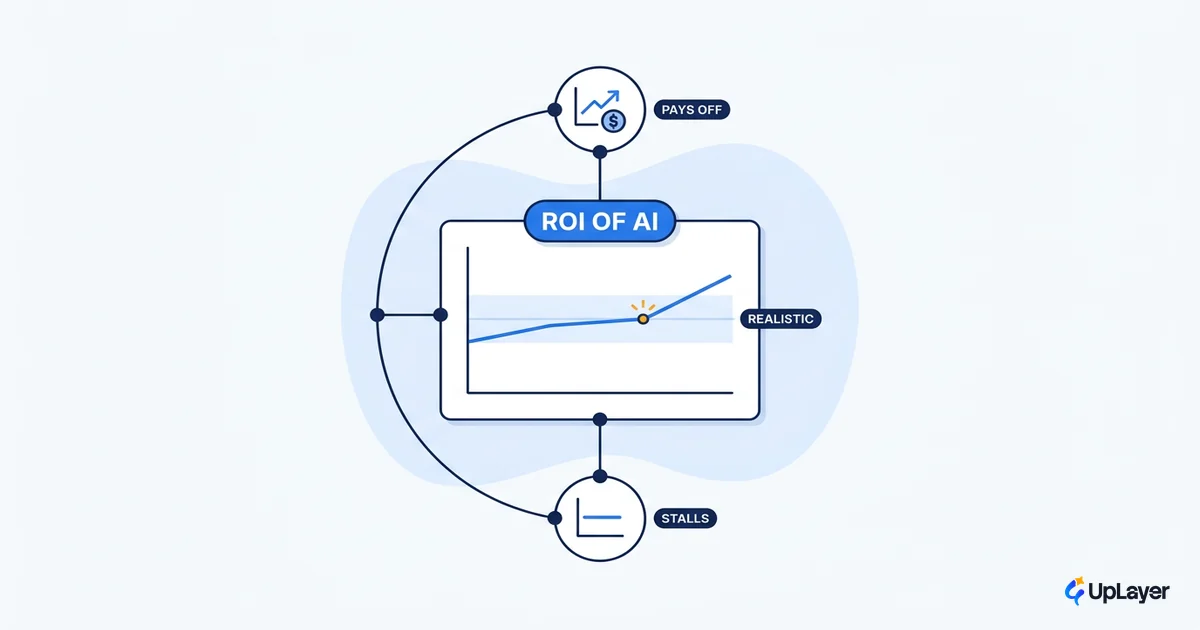
For most SaaS teams right now, the honest roi of ai is close to nothing, and that is the common case, not a freak result. The pressure to ship something with AI in it produces features that demo well, ship, and move no number anyone was watching. That is not a return. It is a cost wearing a roadmap.
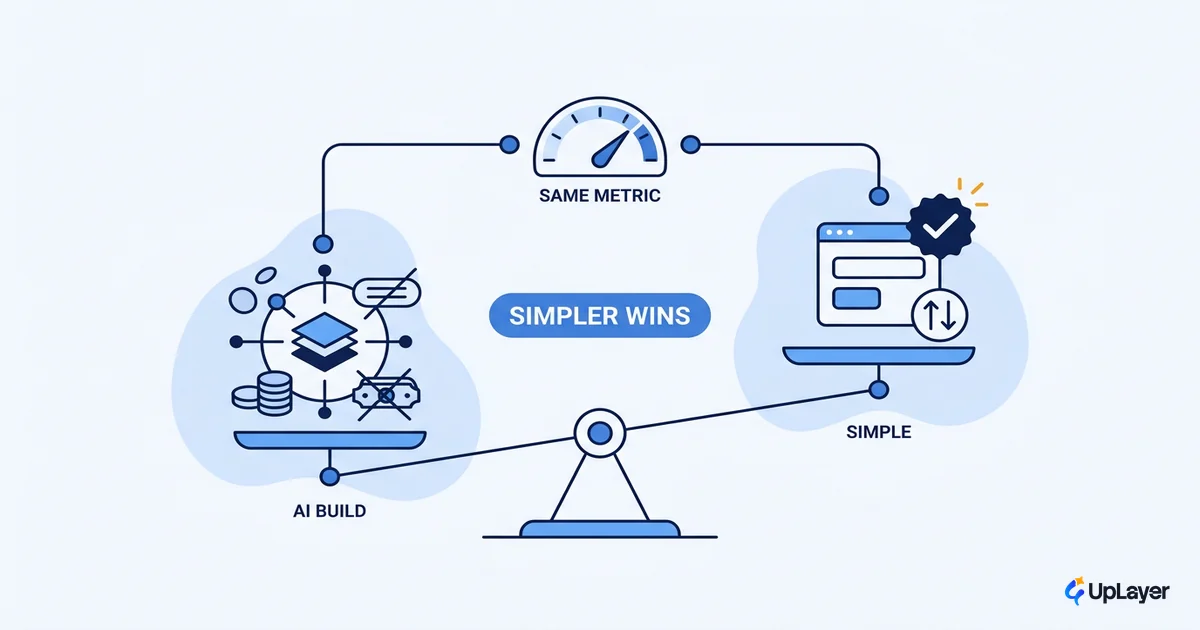
This is not an argument against building. The return is real. It is just narrow, concentrated in a small band of well-scoped features, and easy to miss if you measure the wrong thing. The teams that get a defensible return are the ones who measure the ROI of an AI feature against a metric they already track, then build only what clears the bar.
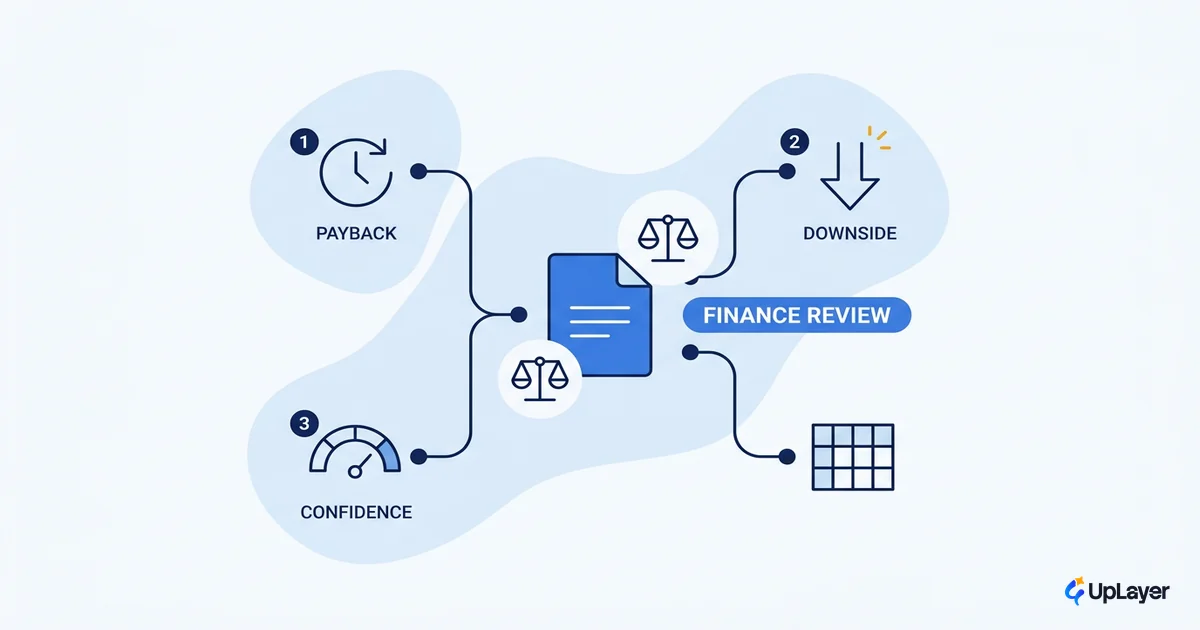
What follows is a grounded view: where AI pays off, where it stalls, why most projections are wrong, and how to set an expectation you could defend in a finance review without flinching.
What ROI can I expect from AI right now?
For most teams the realistic answer is little to nothing yet, and that is normal. The return is not evenly spread across every idea on the backlog. It sits in a narrow band of features that are scoped to a job, wired into a real workflow, and tied to a number the team already reports.
MIT's NANDA initiative found that about 95% of enterprise generative AI pilots delivered no measurable impact on profit and loss, while only about 5% reached rapid revenue acceleration. The study covered 300 public deployments, 150 leader interviews, and 350 surveyed employees. The gap held despite an estimated $30 to $40 billion poured into enterprise generative AI.
About 95% of enterprise generative AI pilots delivered no measurable impact on P&L. Only about 5% reached rapid revenue acceleration.
So your expected ai roi depends entirely on which side of that divide you build on. The number you should plan around is not the headline multiple from a vendor deck. It is the band you can credibly land in.
| Outcome band | Share of pilots | What it looks like |
|---|---|---|
| Rapid P&L impact | ~5% | Scoped feature, workflow-integrated, tied to a tracked metric |
| Internal value, no P&L move | varies | Useful tool, never connected to revenue or cost |
| No measurable impact | ~95% | Demoed, shipped, abandoned; no agreed success metric |
The takeaway is not that AI does not work. It is that the return is earned by a discipline most pilots skip, not handed out for adopting the technology.
Why most AI ROI projections are wrong
Most projections are wrong because they count the demo as the return and leave the cost side blank. A model that impresses a room is treated as proof of value, the build is assumed to be cheap, and no one agrees in advance on the number that would prove it worked.
The failure is rarely the model. Model capability keeps climbing on hard benchmarks, with double-digit percentage-point jumps year over year on reasoning and coding tests. The bottleneck is upstream of the model: the feature was never scoped to a job, never integrated into a workflow, and never measured. A capable model pointed at a vague goal still returns zero.
A real ai cost benefit analysis has to carry the full cost, not just the API bill:
ROI = (value of the metric delta) - (total cost) / (total cost)

total cost = build + integration + reliability/guardrails
           + ongoing inference + maintenance + monitoring

projected roi is honest only when:
  1. the metric existed before the feature
  2. the cost line includes keeping it reliable, not just shipping it
  3. you wrote down how you would read the number first
A forecast that only counts the upside, or that invents a metric to fit the feature, is not a projection. It is marketing aimed at your own budget. The fix is unglamorous: name the metric before the model, and price the cost of keeping the feature reliable, not just the cost of launching it. Reliability is the line item that quietly sinks most returns, because a feature that hallucinates in front of a customer costs trust you cannot buy back at the API price.
Where the roi of ai actually pays off
The roi of ai pays off in a predictable place: a specific job, integrated into an existing workflow, tied to a metric the team already tracks. That is the pattern behind the 5% that work. Everything outside it tends to produce a tool people admire and no one's dashboard notices.
WARNING
The strongest return often comes from refusing to build. If a feature cannot name the metric it will move before you write a line of code, the honest projection is zero. Saying no to that build is where the return on the rest of your roadmap comes from.
Good roi on ai investments tends to share three traits:
- Scoped to one job. Draft this reply, classify this ticket, summarize this thread. Narrow problems have measurable outcomes.
- Wired into a workflow people already use. Value shows up where the work happens, not in a separate AI tab nobody opens.
- Tied to a metric you already track. If the feature is meant to move a metric, that metric has to exist and be watched before launch, not invented after.
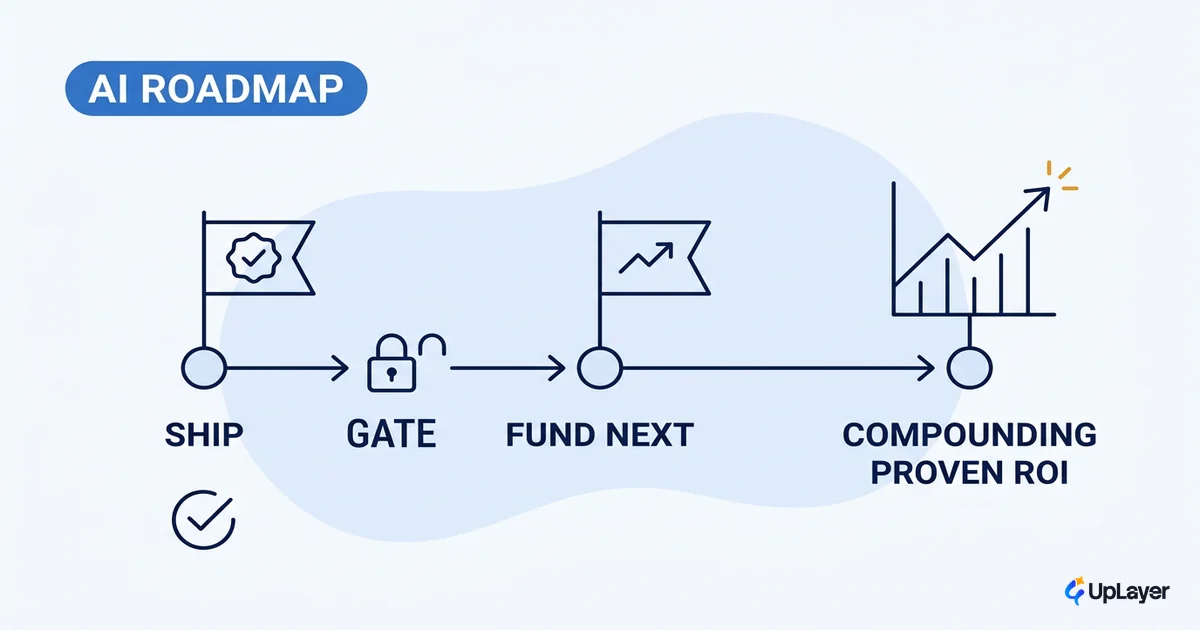
This is also a prioritization problem, not just a build problem. Before you commit budget, decide which AI features to build by scoring each idea against the number it would move and the full cost to move it. The ones that cannot show a number do not get built. That filter is what keeps you out of the 95%.
Is AI worth the investment for SaaS, and how long until it pays off?
AI is worth the investment for SaaS when a feature is scoped to move a metric you already track, and it is a poor investment when it is adopted to look current. The question of whether it pays is settled before the build, by whether you can name the number and price the full cost.
How long until it pays off depends on the metric's own cycle, not the model. A feature aimed at support deflection or response time can show a delta in weeks, because those numbers turn over fast. A feature aimed at retention or expansion revenue reads on a slower clock, so the payback window is longer and the early signal is noisier. The model does not set that timeline. The metric does. Plan the budget review around the metric's cadence, not the launch date, and you stop mistaking a slow-reporting win for a failure.
Before any of this, run an honest AI readiness assessment: do you have the data, the workflow, and a tracked metric to read against. If those are missing, the payback window is not long, it is undefined, because there is nothing to measure the return against.
NOTE
A useful default: if you cannot describe, in one sentence, the metric the feature will move and how you will read it, the projected roi is not "to be determined." It is zero until that sentence exists.
The honest expectation is not a headline number. It is a defensible delta on one metric, net of the full cost to build and keep the feature reliable. Most pilots return nothing because they skip that discipline; the few that work do the unglamorous part and pick a job, integrate it, and measure it. Set the expectation there, plan the roi of ai around a number you already watch, and refuse the builds that cannot show one. That refusal is where the return actually comes from.
TIP
Want a grounded projection before you commit a budget? How the AX Audit works. In 14 days you get an AI Opportunity Map, a projected ROI on a metric you already track, and a working concept demo of your top opportunity.