AI adoption challenges and how to get past them
The real AI adoption challenges are trust, reliability, and unclear value, not access. Here is a shippable fix for each one your product team can run.
 Anamoul RoufAI Adoption & Trust7 min read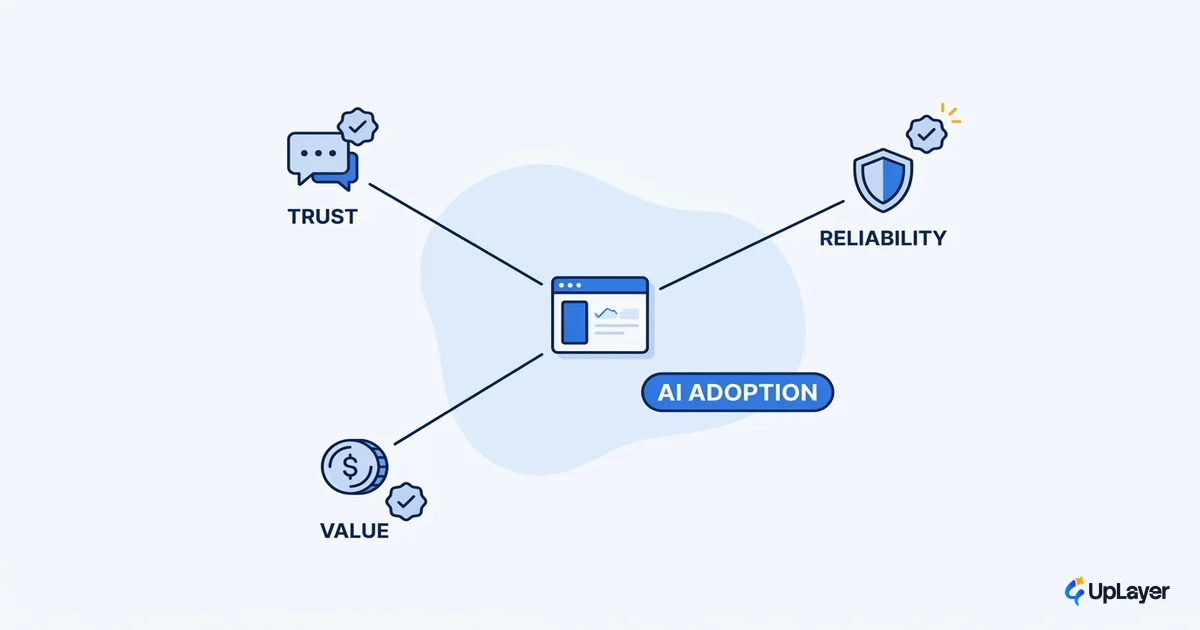
AI adoption is not failing because the technology is weak. Most companies already have it. The hard part starts after the feature ships, when users decide whether to trust it and the team tries to prove it moved a number. That gap, between "we shipped AI" and "it earned its place," is where the real AI adoption challenges live.
We hold an unpopular view about this. Most AI is theater. The pressure to "do AI" produces features that demo well, ship, and move nothing, and then the post-mortem blames the model. The model is usually fine. What broke was trust, reliability, or the decision about what to build in the first place. This piece names the actual blockers and pairs each one with a concrete fix a product team can ship this quarter, not a slide about organizational readiness. If you want the broader playbook, start with our guide to increasing AI adoption in your product; this post zooms in on what goes wrong and how to get past it.
Why does AI adoption fail when the tech already works
Adoption is near-universal. Provable return is rare. That gap explains the failures, even when the underlying model is perfectly capable.
The access problem is solved. 78% of organizations reported using AI in 2024, up from 55% the year before, according to Stanford's 2025 AI Index. Buying the capability is no longer the bottleneck. The bottleneck is what happens next.
MIT's 2025 study, The GenAI Divide, found that roughly 95% of enterprise generative AI pilots produced no measurable impact on profit and loss. The researchers traced the failures to integration and a learning gap, not model quality.
Gartner reached a similar conclusion from the other direction, predicting that at least 30% of generative AI projects would be abandoned after proof of concept by the end of 2025, citing unclear business value as a leading cause. So the pattern is consistent across the data: teams can get AI into the product, but most of them cannot show it changed anything. The challenge is not the build. It is the value step.
What are the biggest challenges in AI adoption
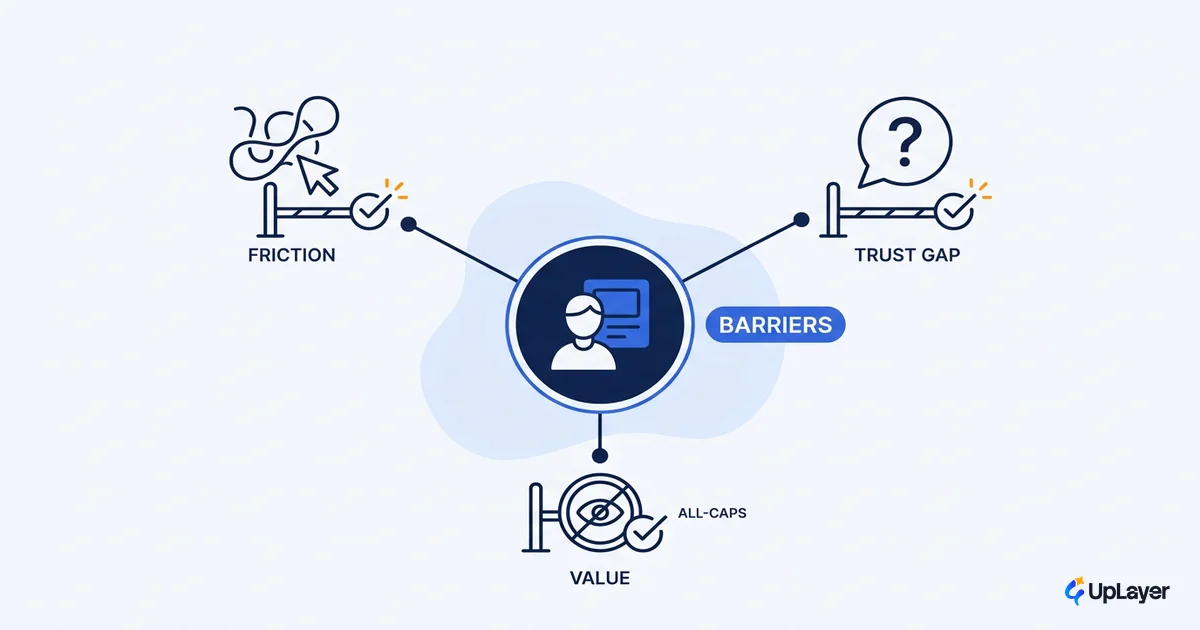
When you sort the survey data, the barriers that slow adoption cluster around proving value, earning trust, and finding expertise, not getting access to a model. Ranked by how often they kill a feature, these are the challenges of ai adoption that decide whether it survives its first month. The good news is that each one has a product fix, not just a culture fix, and you can read the wider list in our piece on the barriers to AI adoption and how to remove them.
| Challenge | Why it blocks adoption | The product fix |
|---|---|---|
| Unclear value / no ROI | The feature was built to "add AI," so there is no number it was meant to move | Name one metric you already track before you name the model. If it moves nothing, kill it |
| User trust and reliability | One confident wrong answer and users stop opening the feature | Reliability guardrails plus human-in-the-loop on high-trust actions |
| Change fatigue / workflow fit | The feature sits beside the work instead of inside it, so people route around it | Ship into the existing flow; reduce clicks, do not add a new tab |
| Data readiness | Fragmented or messy data makes outputs look unreliable, which reads as a broken feature | Scope to the data you can trust today; expand the surface area later |
| Skills gap | Teams can prompt a model but cannot evaluate, monitor, or maintain it in production | Treat evaluation and monitoring as part of the build, not a later phase |
The common thread across these ai implementation challenges is that none of them is "the model is not good enough." They are decision and design failures. That is encouraging, because decision and design are things a product team controls.
User trust is the adoption tax you pay after launch
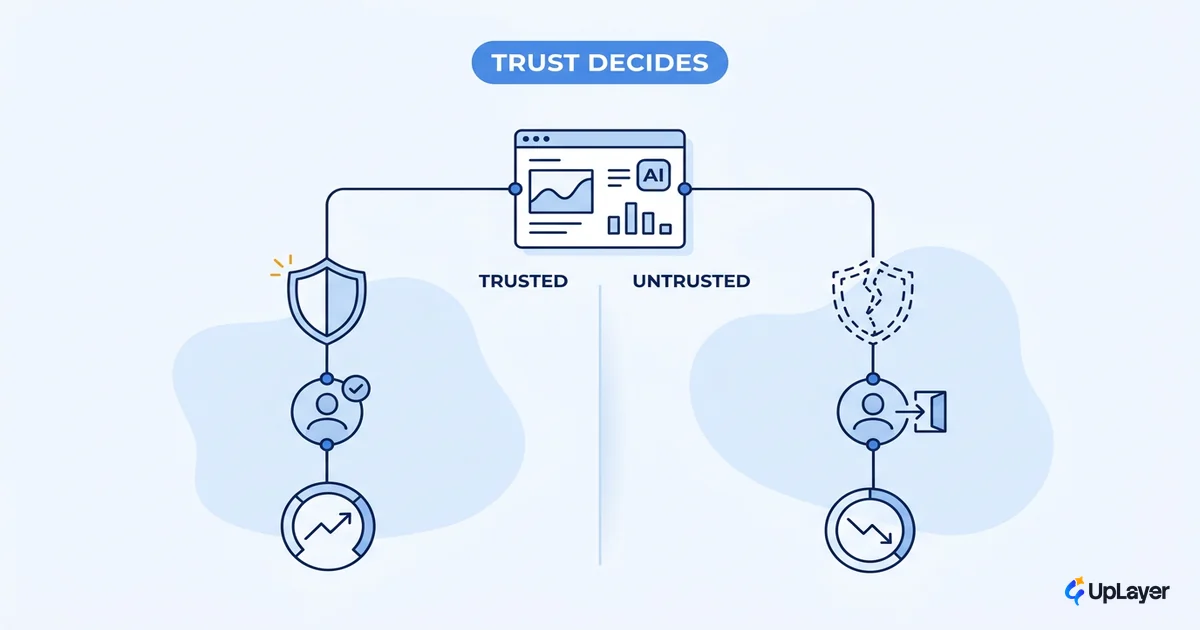
Here is the mechanism most roadmaps ignore. AI user trust is not granted at launch. It is spent down with every interaction, and a single bad one costs more than ten good ones earn.
Users arrive skeptical. The U.S. public is more concerned than excited about AI, Pew Research found, and that caution walks into your product with them. So when your feature returns a confident wrong answer, the user does not file a bug. They quietly decide the feature cannot be relied on, and usage decays. The adoption chart and the trust curve move in opposite directions, and only one of them shows up in your dashboard.
The fix is reliability, designed in, not bolted on. Add guardrails that keep the feature from answering when it should defer, and put a human in the loop on any action where a wrong answer is expensive. We go deeper on the first half in how to build user trust in AI features, and on the cost of skipping it in shipping AI without guardrails. The short version: a feature users trust gets used, and a feature that gets used is the only kind that can move a metric.
WARNING
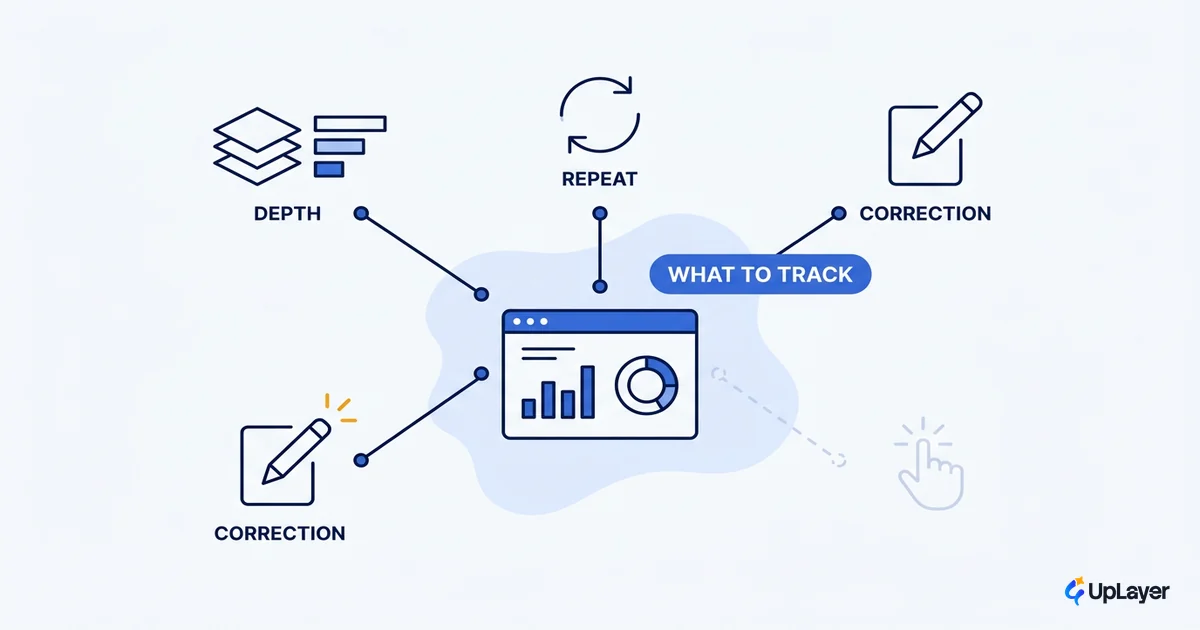
Adoption metrics hide trust erosion. Usage can climb for a week while trust quietly collapses underneath it. Track the failure rate and the deflection rate, not just opens.
How do you overcome AI adoption challenges
You overcome them by refusing to start with the model. Start with the number, ship the smallest thing that can move it, and prove the delta before you expand. Overcoming ai adoption challenges is a sequence, not a mindset.
The adoption-fix loop (run per feature)

1. PICK ONE metric you already track   (retention, activation, conversion, expansion)
2. BASELINE it                          record where it sits before launch
3. SHIP the smallest version            one surface, one flow, guardrailed
4. GUARDRAIL trust                      defer when unsure; human-in-the-loop on high-stakes
5. MEASURE the delta                    metric_after - metric_before, against run cost
6. EXPAND or KILL                       scale what paid off; cut what did not
Notice that the first four steps happen before you care about model sophistication. That ordering is the whole point. The teams that get stuck do step three first and try to reverse-engineer a metric afterward. The teams that get past it decide what to move, then build the least amount of AI that moves it.
TIP
Define the metric before the model. If you cannot name the number a feature is supposed to move, you are not ready to build it, and shipping anyway is how pilots become the 95% that move nothing.
Common questions about getting AI adopted
What are the biggest challenges in AI adoption
Unclear value, user trust and reliability, change fatigue, data readiness, and the skills gap. Notice that none of them is "the model is not good enough." They are decision and design problems, which is why a product team can fix them without retraining anything. The one that quietly does the most damage is the first: a feature built to "add AI" with no metric attached has nothing to prove and nothing to defend in the next planning cycle.
Is AI user trust a technical problem or a design problem
Both, and the order matters. The technical half is reliability, keeping the feature from giving confident wrong answers. The design half is what the feature does when it is unsure: defer gracefully, show its sources, or hand off to a person. Teams that treat AI user trust as purely a model-accuracy issue miss the larger half, which is the experience around the answer.
How fast can a product team see results
Faster than most expect, because the fix is a sequence, not a rebuild. Pick the metric, baseline it, ship a guardrailed slice into the existing flow, and you can read a directional delta within a normal measurement window. The slow part is never the model. It is the decision about what was worth building, which is why most overcoming ai adoption challenges work happens before a line of feature code is written.
What this means for your next AI feature
The next AI feature you ship will not be judged on how clever the model is. It will be judged on whether users trust it enough to keep opening it and whether you can point to a number that moved. Treat trust and measurement as part of the build, scope tightly to what your data and your users can support today, and the AI adoption challenges that sink most teams become a checklist you can clear before launch instead of a post-mortem you write after.
The fastest way to get past these blockers is to decide what is worth building before you build it. That is exactly what our audit does.
TIP
How the AX Audit works. We find the single highest-ROI AI opportunity in your product, project its impact on a metric you already track, and tell you what not to build. The 3X Guarantee: it finds AI worth 3x the fee, or it is free.