How to run an AI cost benefit analysis
An AI cost benefit analysis weighs the full lifetime cost of an AI feature against its projected benefit. Here is the method, cost ledger, and kill rule.
 Shahriar P. ShuvoAI ROI & Strategy7 min read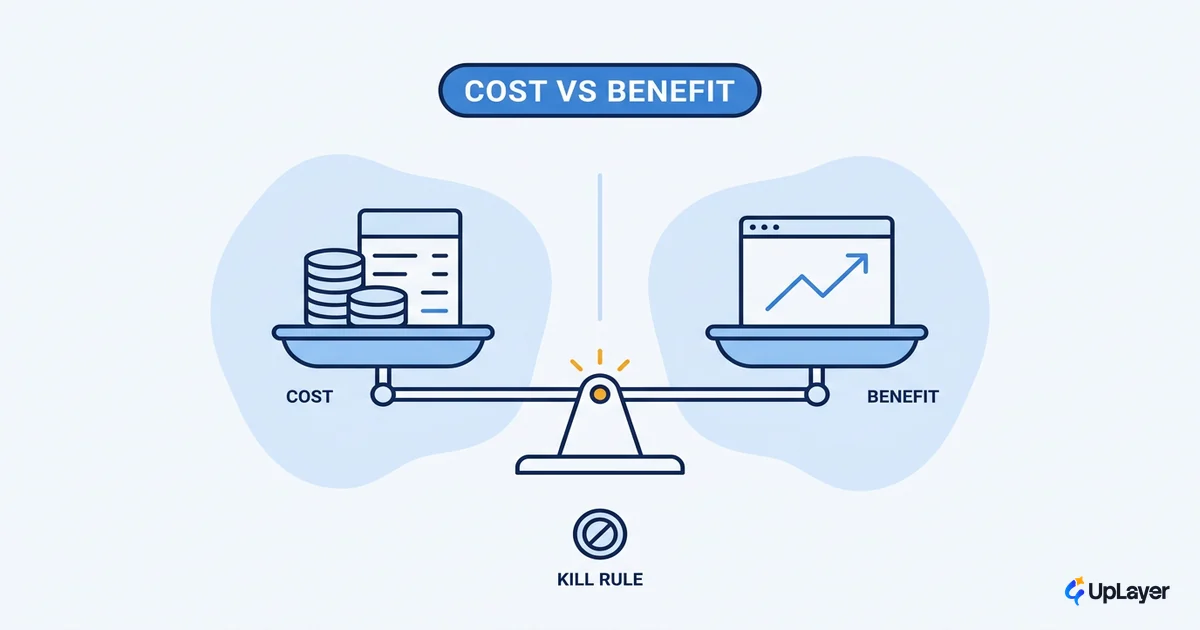
The build quote is not the cost. A demo costs a weekend; the feature costs you every month it runs. That gap is why most teams skip the math, ship the AI feature, and only learn the real number when the inference bill and the maintenance load arrive together. A proper AI cost benefit analysis closes that gap before you commit a roadmap slot.
The method is not complicated. You count the full lifetime cost of the feature on one side, you project its benefit against a metric you already track on the other, and you compare. What makes it hard is honesty: the costs are recurring and easy to undercount, the benefits are easy to inflate, and the most useful answer is often "do not build it." This post gives you the cost ledger people forget, a formula that respects the recurring meter, and a kill rule. It pairs with the cornerstone on how to measure the ROI of an AI feature, which owns the benefit side in more depth.
What an AI cost benefit analysis actually measures
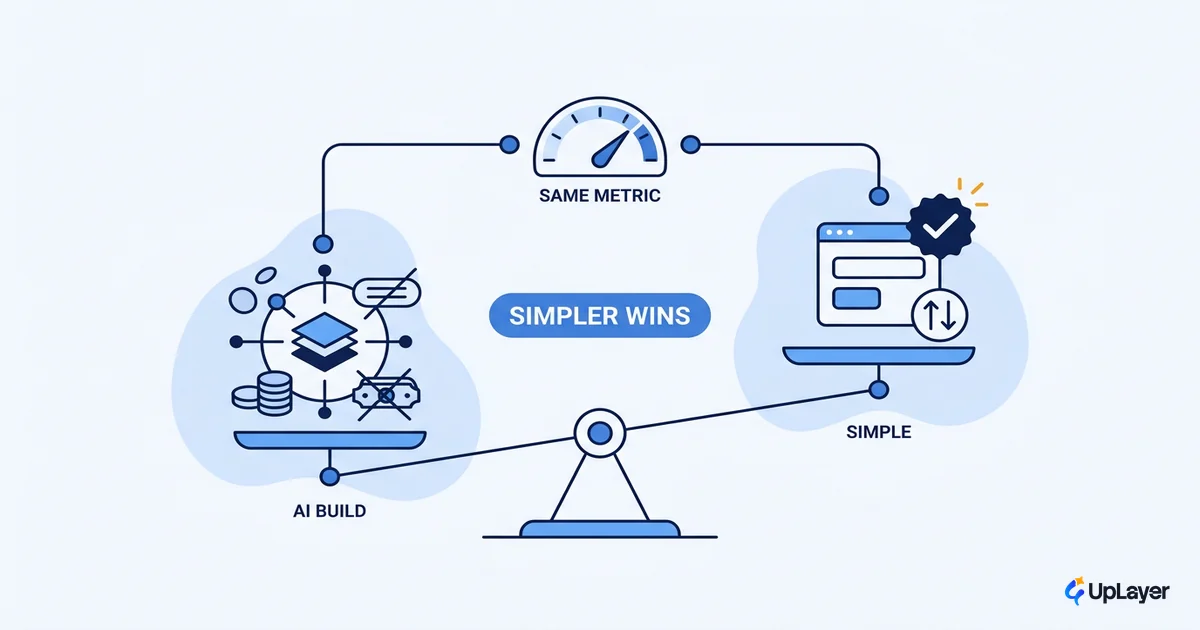
An AI cost benefit analysis weighs the full lifetime cost of an AI feature against its projected benefit to one metric your team already tracks. That is the whole job. The trap is treating it like a textbook cost-benefit analysis, which assumes a one-time spend you pay once and recover over time. AI is not that. The model meter never stops, the feature drifts, and the thing you are weighing changes shape after launch.
This matters because unmeasured value is what kills AI work, not bad models. Gartner projects that at least 30% of generative AI projects will be abandoned after proof of concept by the end of 2025, citing escalating costs and unclear business value among the top reasons. A cost benefit analysis is the discipline that catches both of those before you spend, not after.
So the analysis has two columns and one rule. Column one is the full cost. Column two is the projected benefit, expressed in the units of a metric you can already see in your dashboards. The rule is that column two has to beat column one by a margin wide enough to survive being wrong.
What costs go into an AI cost benefit analysis
Here is the question that decides the whole exercise: what costs go into AI cost benefit analysis? Most ledgers stop at the build quote. The build quote is the smallest number on the page. The full ledger has five lines, and four of them recur.
| Cost line | What it covers | Why it gets missed |
|---|---|---|
| Build | Design, engineering, and integration to ship v1 | It is the only number on the vendor quote, so teams treat it as the total |
| Model and inference | Per-call API or hosted-model cost, scaling with usage | Cheap in the demo, then it scales with every active user |
| Evaluation and guardrails | Eval suites, human-in-the-loop review, anti-hallucination checks | Invisible until a wrong answer reaches a customer |
| Maintenance and model churn | Re-tuning, prompt upkeep, re-testing after every model swap | A provider deprecation can force an unplanned rebuild |
| Risk and being wrong | Support load, churn, and trust damage when the feature errs | Hard to price, so it is set to zero, which is always wrong |
Counting the bottom three lines is how you actually de-risk the decision. The financial burden is not theoretical. Gartner puts the cost of deploying generative AI approaches at $5 million to $20 million at the enterprise scale, and the math is getting worse for newer, more autonomous features. Gartner separately expects over 40% of agentic AI projects to be canceled by the end of 2027, again pointing to escalating costs and unclear value. Your numbers will be smaller than enterprise numbers, but the shape is the same: the recurring lines dominate the one-time line over any horizon that matters.
WARNING
The demo is cheap and the feature is not. If your cost benefit analysis prices only the build and treats inference, evaluation, and maintenance as rounding errors, you are not analyzing the feature you are about to run. You are analyzing the one you are about to demo.
Projecting the benefit against a metric you already track
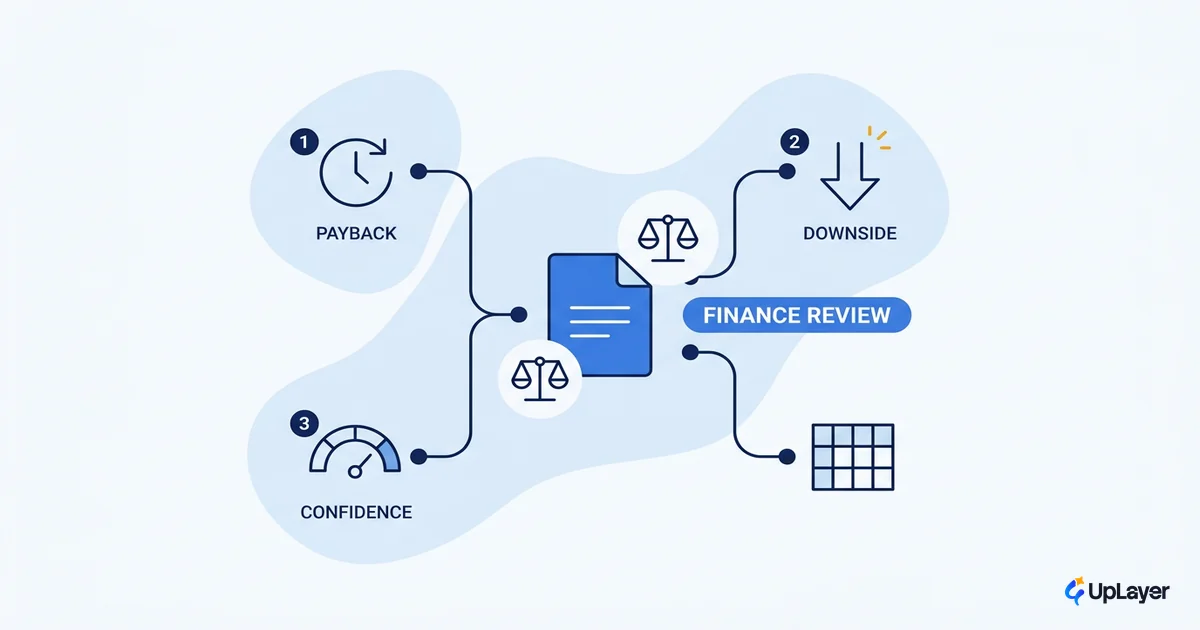
The benefit column is where optimism creeps in, so anchor it to something you can verify. Pick one metric you already track, churn, activation, conversion, or expansion, estimate the delta the feature would move it, then convert that delta to dollars. This is the projected roi that turns a hunch into an AI business case finance can read.
Two honesty checks keep the projection grounded. First, discount for adoption: a feature only moves a metric for the users who actually use it, so a 5% potential lift at 40% adoption is a 2% real lift. Second, anchor your base rate to reality. BCG found that only 26% of companies have built the capabilities to move beyond proofs of concept and generate tangible value, which means the default outcome is no measurable benefit at all. Project against that base rate, not against the vendor's best case.
Only 26% of companies have developed the capabilities to move beyond proofs of concept and generate tangible value. The other 74% have not, yet. Source: BCG, Where's the Value in AI? (2024).
Sizing the benefit well is the harder half of the work. The AI business case you build here is only as good as the metric you tie it to, which is exactly why the cornerstone on measuring AI ROI starts with one metric and one delta rather than a story.
The formula: roi on ai investments, counted honestly
Once you have a full cost ledger and a discounted benefit, the formula is simple. The only thing that makes it honest is including the recurring cost across a real time horizon, usually twelve months, instead of a single build figure.
Projected net benefit
  = (annual_benefit × adoption_rate)
  − build_cost
  − (monthly_run_cost × 12)        # inference + eval + maintenance
  − expected_risk_cost

ROI on AI investment
  = projected_net_benefit ÷ (build_cost + monthly_run_cost × 12 + expected_risk_cost)

Example (illustrative, projected, not a client result):
  annual_benefit     = $300,000 churn reduction
  adoption_rate      = 0.40
  build_cost         = $60,000
  monthly_run_cost   = $4,000   → $48,000 / yr
  expected_risk_cost = $15,000

  net = (300,000 × 0.40) − 60,000 − 48,000 − 15,000 = −3,000
  ROI = −3,000 ÷ 123,000 ≈ −2%   → this feature does not clear the bar
That worked example is the point. With a generous benefit and a modest cost, the feature still lands underwater once you count the recurring lines. A generic AI ROI calculator hides this because it tends to compare a one-time cost against an annual benefit and skips the adoption haircut entirely. Counting roi on ai investments honestly means the recurring meter and the adoption rate both stay in the equation.
Is the AI feature worth the cost? A kill rule
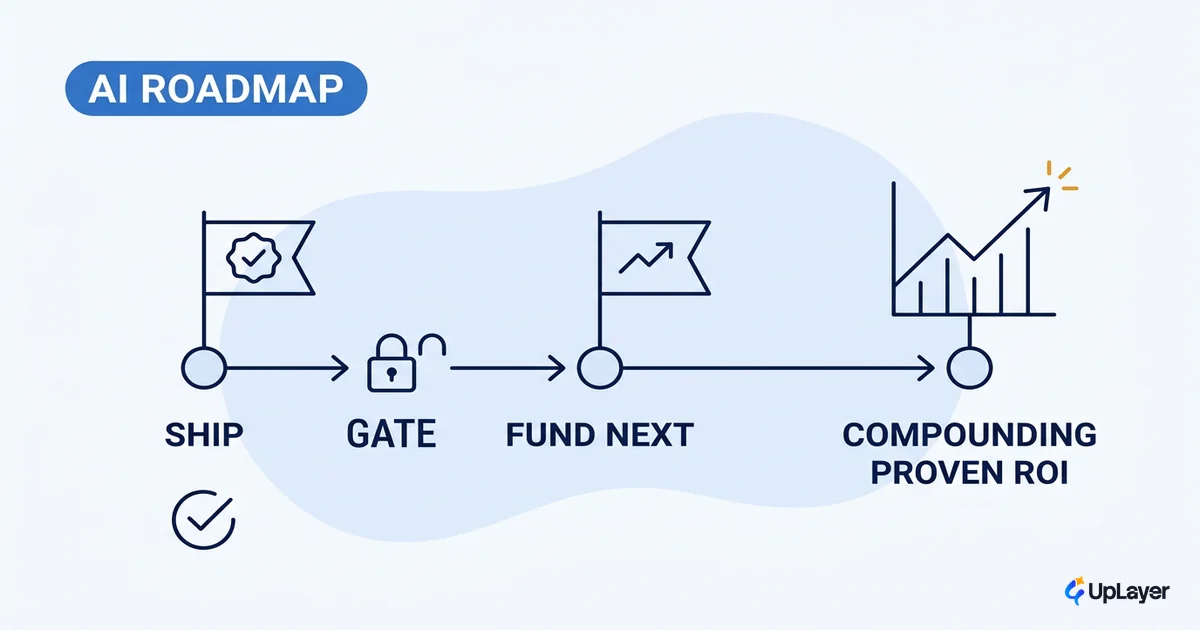
So, is the AI feature worth the cost? Set the threshold before you run the numbers, then let the numbers decide. A clean rule: the projected net benefit has to clear a multiple of the full cost, say 3x, within the horizon. If it does not, you do not build it. This is the same logic behind our 3X Guarantee, the audit has to find AI worth at least three times its fee or it is free.
The uncomfortable part is that the honest output of a good analysis is frequently no. That is a feature of the method, not a failure of it. Deloitte's research on the barriers to scaling AI keeps pointing at the same thing: proving and realizing value, not building the model, is where programs stall. Saying no to the features that lose the math is how you protect the budget for the one that wins it. The full price of getting this wrong is its own topic, covered in the cost of building the wrong AI feature.
How do I do an AI cost benefit analysis
If you want the short version of how do i do an ai cost benefit analysis, run these six steps in order:
- Pick the metric. One number you already track and want to move.
- Build the cost ledger. All five lines, with the four recurring ones counted over twelve months.
- Project the benefit. Estimate the delta, convert to dollars, then discount for adoption.
- Run the formula. Net benefit, then ROI against the full cost.
- Apply the kill rule. Clear the threshold or do not build it.
- Set a review date. Re-run the analysis against actuals once the feature is live.
Treat this as a Concept Demo on paper before it is a feature in production. The projection is a claim you will check, not a story you will tell.
A disciplined AI cost benefit analysis does not make AI cheaper. It makes the decision honest, so the features you ship are the ones whose projected benefit beats their full cost, and the ones that lose the math never reach your roadmap. Count the whole cost, tie the benefit to a metric you already track, and let the number decide.
TIP
Want this run on your own product, with the cost ledger and projected benefit done for you? How the AX Audit works.