The AI cost benefit analysis most teams skip
An honest ai cost benefit analysis prices the full bill of a wrong AI feature: sunk build, maintenance, opportunity cost, and lost user trust.
 Anamoul RoufAI ROI & Strategy7 min read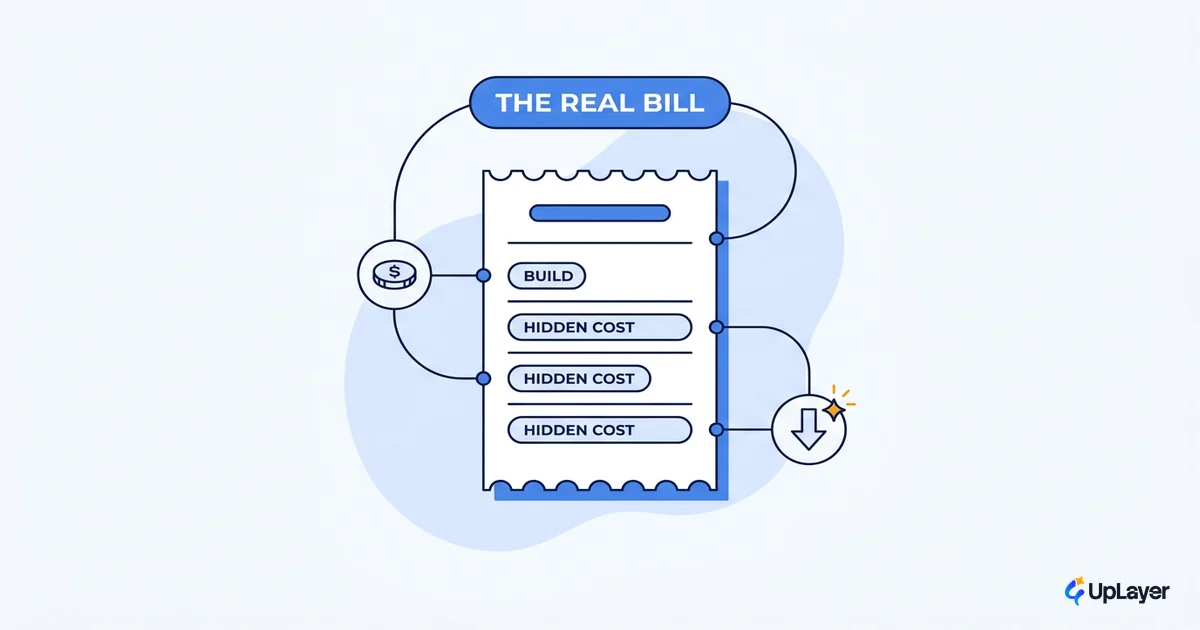
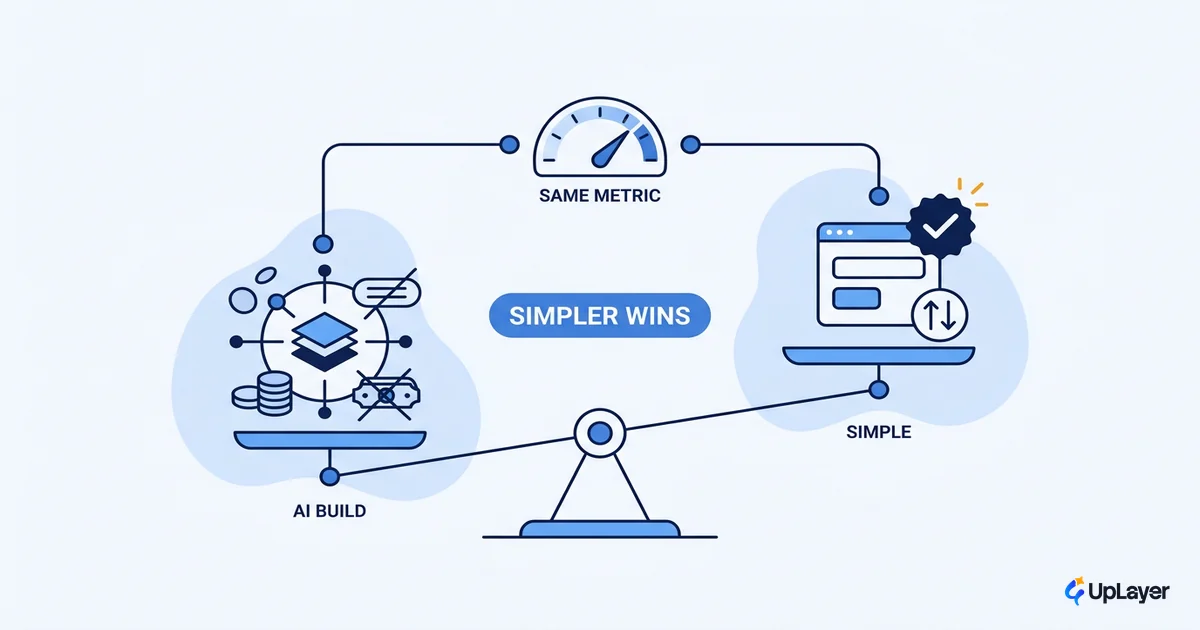
When a team prices an AI feature, they argue about the build estimate: engineering weeks, model spend, infrastructure. That number is the one line item everyone can see, so it gets all the attention. It is also the smallest number on the real bill.
The full cost of a wrong AI feature has four parts. The build is one of them. The other three (maintenance, opportunity cost, and lost trust) never make it onto the estimate, and together they dwarf the part you budgeted for. A proper ai cost benefit analysis prices all four before a line of code is written, because the expensive mistake is rarely poor execution. It is building the wrong thing well.
This is the case for treating selection, not delivery, as the place AI bets are won and lost. Most of what follows is loss-framed on purpose: you cannot decide what to build until you can honestly price what happens when you build the wrong thing.
What a wrong AI feature actually costs you
A wrong AI feature bills you in four layers, and only one of them shows up on the build estimate. The build is the cheapest and the most visible. Maintenance, opportunity cost, and trust are larger, arrive later, and rarely get attributed back to the original decision.
The scale of the abandonment problem is not a rounding error. Gartner predicts that at least 30% of generative AI projects will be abandoned after the proof of concept by the end of 2025, citing poor data quality, weak risk controls, escalating costs, and unclear business value. Most of that spend is sunk. Almost none of it is priced before the build starts.
Here is the bill most teams never write down:
| Cost layer | Shows on the build estimate? | Who feels it | When it hits |
|---|---|---|---|
| Sunk build | Yes | Engineering, finance | During and just after the build |
| Maintenance drag | Rarely | Engineering, on-call | Every quarter the feature lives |
| Opportunity cost | Never | The whole roadmap | The quarter you could have shipped something that moved a metric |
| Lost trust | Never | Users, support, sales | The next time you ship anything AI |
The question that should drive the decision is not "what does it cost to build this?" It is "what does a failed ai feature cost?" once you add the three invisible rows. Answer that honestly and most candidate features stop looking cheap, which is exactly why deciding which AI features to build matters more than how well you build them.
The sunk build is the cheapest part of the bill
The build invoice is the number teams over-index on because it is the only one they can quote. It is also the one that matters least. Engineering weeks and model spend are real, but they are bounded and one-time. The damage of a wrong feature is unbounded and recurring.
Worse, the build rarely buys the outcome it promised. BCG's survey of 1,000 executives found that only 26% of companies have developed the capabilities to move beyond proofs of concept and generate tangible value. The other 74% are paying full build cost for a fraction of the value, or for none of it. So when someone asks how expensive is the wrong ai feature, the build estimate is the floor, not the bill. Treating it as the whole cost is how teams talk themselves into bets that never had a path to payback.
This is exactly why an honest cost-benefit pass belongs before the build, not after. If the visible number is the smallest one, optimizing it is optimizing the wrong thing.
Opportunity cost: the feature you did not ship
The largest line item is the quietest: every quarter spent building the wrong AI feature is a quarter not spent on something that would have moved a metric you already track. Opportunity cost never appears on an invoice, which is exactly why it goes unmanaged.
The base rate here is brutal. Pendo's feature adoption research found that 80% of features are rarely or never used, with just 12% of features driving 80% of daily usage. An AI feature is not exempt from that distribution; the novelty makes it more tempting to build and no more likely to be adopted. Ship into the unused 80% and the engineering quarter is gone, and so is the retention or activation gain the same quarter could have bought.
This is why protecting roi on ai investments starts with selection, not delivery. The cheapest feature to maintain is the one you correctly chose not to build, and choosing well is the single highest-leverage decision in the entire process.
Trust is the cost you cannot refund
A flaky AI feature does not just fail to help. It teaches users not to trust the next one. That is the only line item on the bill you can never refund, because it compounds across every AI feature you ship afterward.
When an assistant hallucinates, a summary is wrong, or a classifier misfires on a high-stakes action, the user does not file a bug. They quietly stop using AI features in your product, and they tell their team to do the same. You pay that cost on the next launch, when adoption is lower than the projection said it would be and nobody can point to why. This is why supportive AI patterns lean on reliability guardrails and human-in-the-loop on high-trust actions: the point is to protect the trust account, not just to ship the feature.
The discipline that follows is unglamorous. Sometimes the right move is killing a feature that is not paying off before it erodes more trust than it earns. A feature that costs you the next three launches is not free just because it already shipped.
WARNING
A wrong AI feature built flawlessly costs more than a right one built clumsily. Execution quality cannot save a feature nobody needed, and a polished feature that misfires on real users damages trust faster than a rough one nobody notices.
How to run an AI cost benefit analysis before you build
An ai cost benefit analysis is worth running only if it prices all four cost layers against a metric you already track, before code exists. A spreadsheet that lists build cost against a vague "efficiency" benefit is theater. The version that de-risks the bet looks more like this:
Projected net value of an AI feature

  projected_benefit = baseline_metric x expected_lift x adoption_rate x value_per_unit

  full_cost = build_cost
            + (annual_maintenance x years_live)
            + opportunity_cost        # value of the next-best feature you skip
            + trust_risk_reserve      # discount for adoption you lose on a miss

  projected_roi = (projected_benefit - full_cost) / full_cost

  Decision rule:
    Ship only if projected_roi clears your bar AFTER subtracting
    opportunity_cost and trust_risk_reserve, not before.
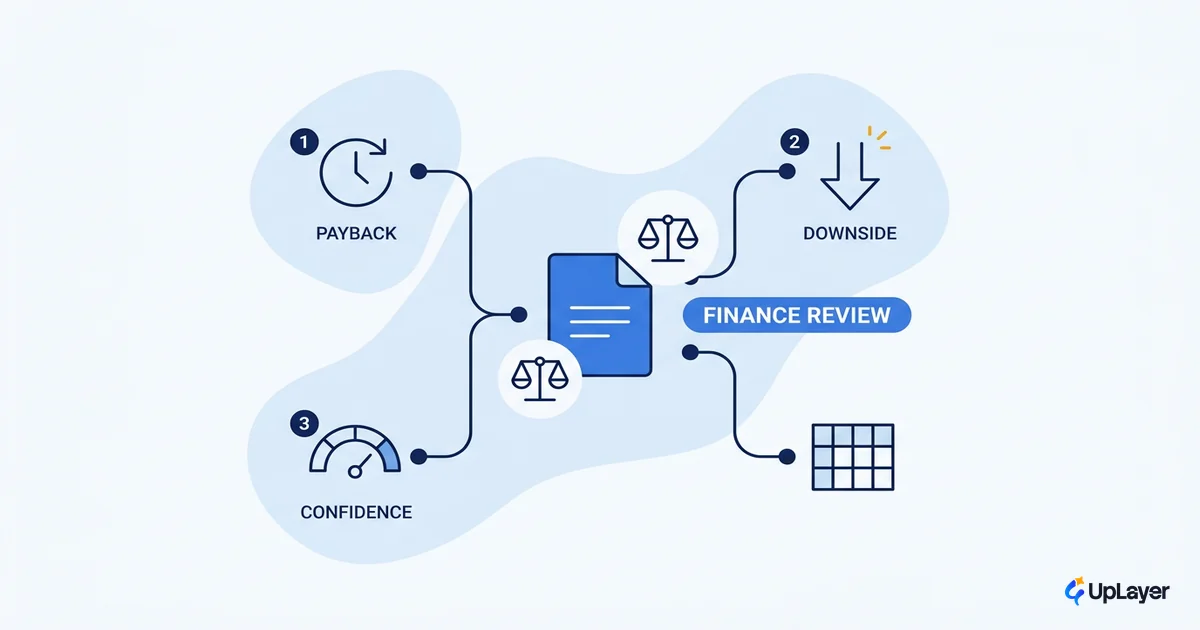
The two numbers everyone forgets are opportunity_cost and trust_risk_reserve, and they are the two that flip most "obvious yes" features into a no. Tie baseline_metric to retention, activation, or conversion, something you measure today, so the projection is auditable instead of aspirational. Done this way, the analysis becomes the spine of an AI business case finance will sign off on: a projected ROI that survives review because it priced the downside on purpose.
TIP
Run the analysis on the feature you are most excited about first. Enthusiasm is the cheapest way to skip the opportunity-cost row, and the feature you most want to build is the one most likely to escape scrutiny.
Why selection beats execution
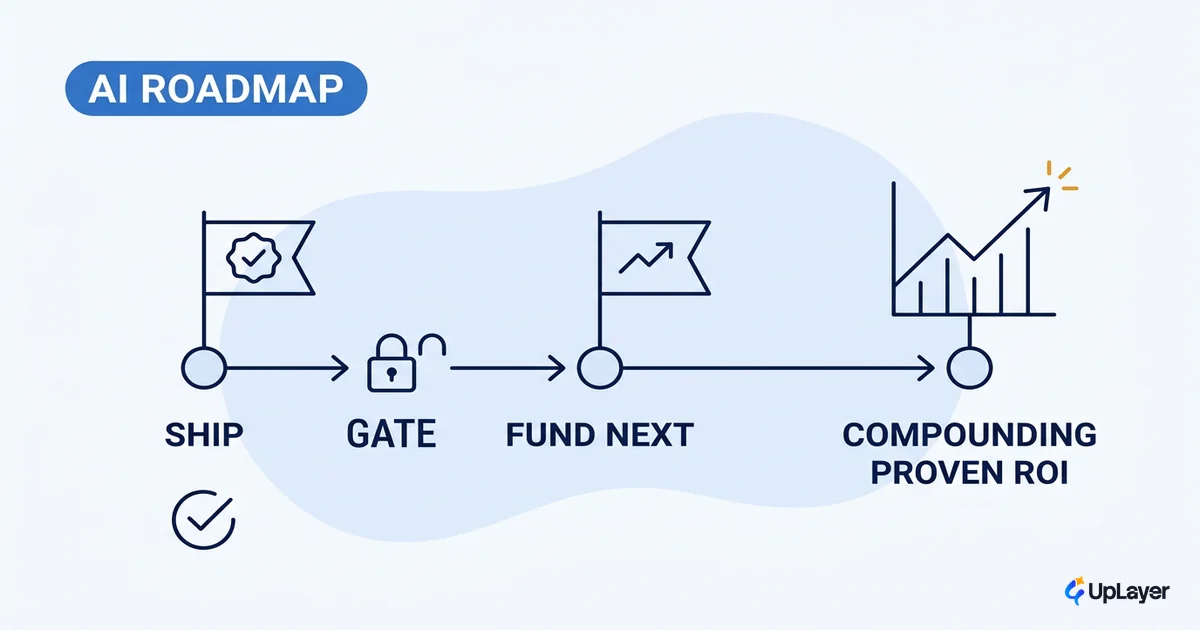
The cheapest way to avoid the full bill is not to build the wrong thing better. It is to not build it at all. Selection is where the money is won and lost, because every cost layer past the build estimate is triggered by a single decision: choosing to ship this feature instead of another.
This reframes the whole question of which AI features to build and, just as importantly, the AI features you should not build. The teams that protect their roadmap are not the ones with the best engineers. They are the ones willing to subtract opportunity cost and trust risk from a projected ROI and let the number say no.
That is the bet we make with the way we work. The 3X Guarantee means the audit finds AI worth 3x the fee or it is free, which only holds if we kill the features that fail a cost benefit analysis before they reach a Concept Demo. The Ship-It Guarantee means we build until it is live and working, which only holds when selection was honest enough that the feature was worth shipping in the first place. Both guarantees are downstream of one habit: pricing the full bill before committing to the build.
The discipline that actually de-risks an AI roadmap is not better building. It is an ai cost benefit analysis honest enough to count the maintenance, the opportunity cost, and the trust, and honest enough to say no when the projected roi does not survive them. Get the selection right and execution gets a lot less expensive. Get it wrong and no amount of engineering buys it back. The true cost of an ai feature that flops is never the build; it is everything the build quietly took off the table.
TIP
See exactly what a wrong AI bet would cost your product before you commit a sprint to it. How the AX Audit works.