AI customer support automation without the churn
AI customer support automation can deflect tickets and still lose the account. Design the escalation path and the guardrails that protect retention first.
 Sohanur RahmanAI Automation7 min read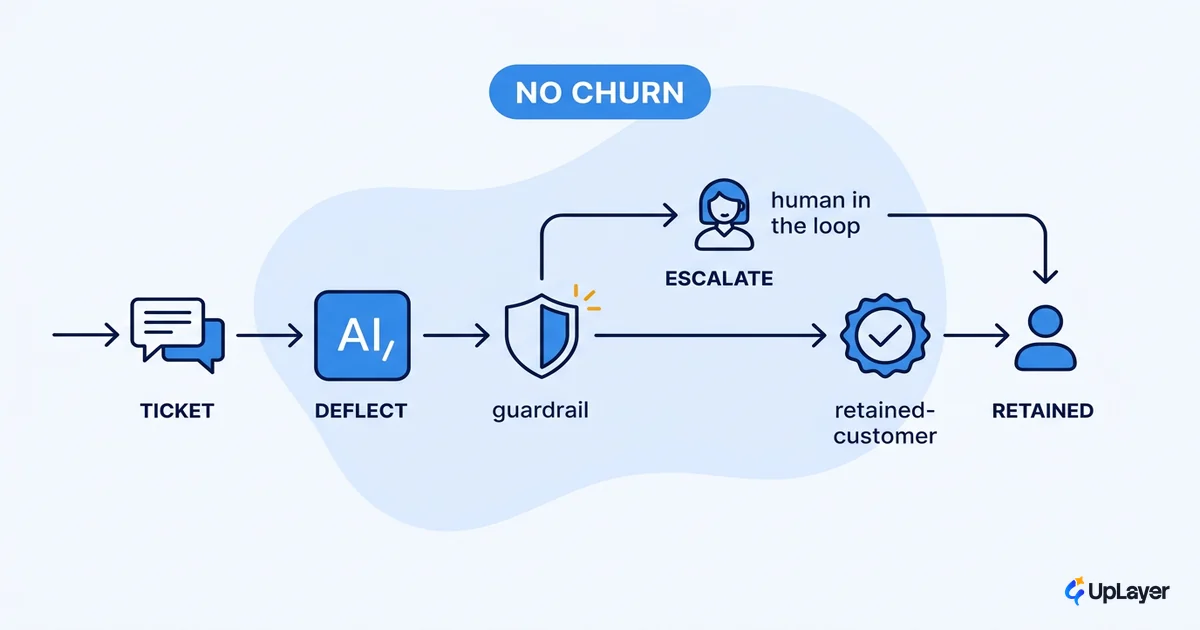
You have felt the failure mode from the other side. The bot greets you, asks the wrong question, loops on the answer it already gave, and offers no way out while you, a paying customer, are quietly deciding whether to renew. That is the real risk of AI customer support automation, and it is the one most guides skip. The goal is not to deflect the most tickets. The goal is to clear the queue without spending the trust your support team exists to protect.
Done well, automation absorbs the repetitive volume and frees humans for the conversations that keep accounts. Done badly, it puts a brittle layer between your customer and a resolution at the exact moment they are most likely to leave. The difference is not the model. It is whether you designed the handoff and the guardrails before you shipped the bot. If you want the broader frame for sizing any of this, start with the ROI of AI workflow automation and come back.
Most support automation optimizes the wrong number
The deflection rate is the metric every vendor leads with, and it is the wrong one to optimize alone. Deflection counts tickets the bot closed. It does not count the accounts those closures cost you. A ticket that gets "resolved" by a customer giving up is a deflection on the dashboard and a churn risk in the data warehouse.
The market has the volume and not the return. By Gartner's projection, chatbots will become the primary customer service channel for roughly a quarter of organizations by 2027, and more than half of service teams already run some form of conversational AI. Yet the same research notes that leaders struggle to identify actionable metrics, which limits the ROI they actually see. Adoption is easy. Return is not.
So tie support automation to a number you already track and already trust: retention, first-contact resolution, CSAT, or net revenue retention on the accounts that touch support. If a deflected ticket category correlates with a dip in any of those, that category was automated too far. This is the same discipline that governs every AI feature decision. One feature, one metric, measured against a baseline.
How do you automate customer support with AI without losing customers
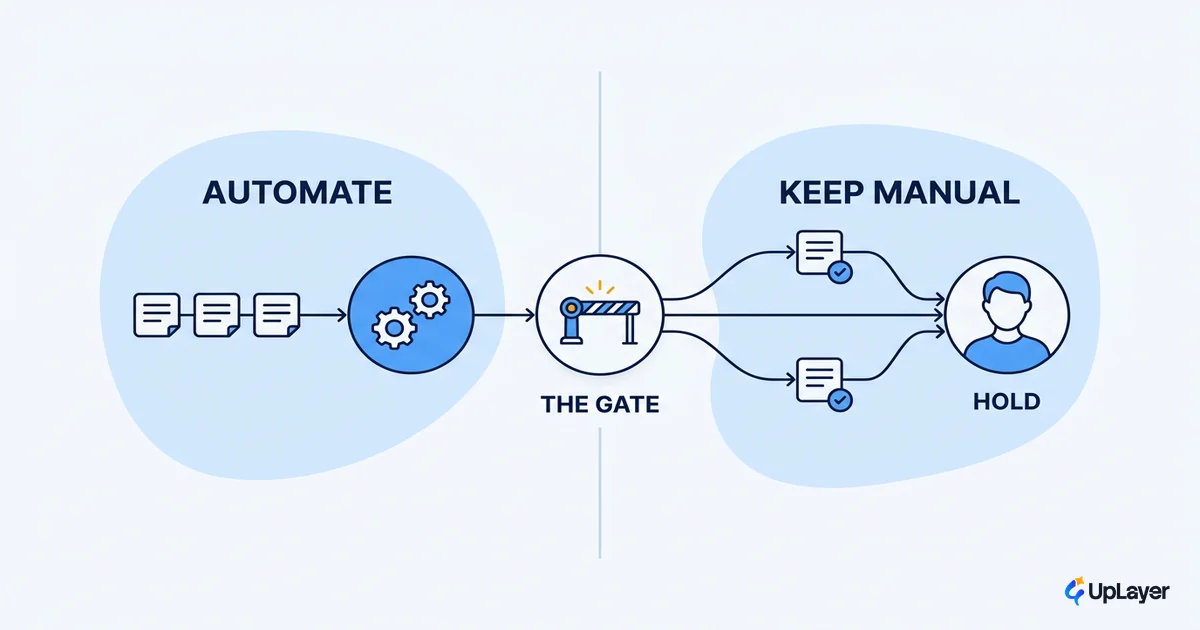
The answer is to treat AI as a supportive layer over your existing support workflow, never as the thing that owns the customer relationship. Supportive ai drafts replies, retrieves the right doc, summarizes a long thread, tags and routes incoming work, and suggests a next step. It does not send the irreversible message or make the call that loses an account. The deterministic support process keeps running underneath, and the model assists it.
That framing tells you what to automate and what to leave alone. The split is rarely about how hard the question is. It is about the cost of being wrong.
| Ticket type | Automate fully | Assist the agent | Never automate |
|---|---|---|---|
| Password reset, "how do I" | Yes | n/a | n/a |
| Billing question, plan change | Draft and confirm | Yes | n/a |
| Bug report, outage | Triage and route | Yes | n/a |
| Cancellation, downgrade intent | No | Yes (context only) | Final reply |
| Angry account, legal, churn risk | No | Surface context | Yes <- human owns it |
Notice the pattern. The further right a ticket sits, the higher the stakes and the more a wrong answer costs in retention, so the more a human owns the reply. The work of building this well is mostly the work of deciding what not to automate, which is the part the deflection-rate pitch never covers.
Design the escalation path before the bot
The escalation path is the product. The bot is a feature on top of it. If you build the bot first and bolt on a handoff later, you get the looping dead end everyone hates. If you design the handoff first, the bot becomes a fast lane that knows its own limits.
Nielsen Norman Group's usability research is blunt about this: users reacted favorably when a bot owned its failure, with owning the failure and offering an escape hatch such as a live agent rated far better than a confidently wrong answer. The same research found people were pleased when a business was transparent about using a bot, because they could calibrate their expectations. Honesty about limits is a feature, not a weakness.
A good escalation policy is explicit, not a vague fallback. Write it down before you write the prompt.
## escalation-policy.yaml (human-in-the-loop, written before the bot)
route_to_human_when:
  confidence_below: 0.7        # model's own answer confidence
  ticket_tag_in: [billing_dispute, cancellation, outage, legal]
  sentiment: negative          # frustration or churn-intent detected
  user_requests_human: true    # always honored, no loops
  bot_repeated_answer: true    # same response twice means stop

on_handoff:
  carry_context: full_transcript   # human starts informed, not cold
  set_expectation: "Connecting you to a teammate now."
  preserve_place_in_queue: true
Three rules make or break it. A request for a human is always honored, immediately. A repeated answer is treated as a failure and triggers handoff. And the human inherits the full transcript, so the customer never repeats themselves. That last one is where most retention leaks: forcing a frustrated person to start over is exactly the high-effort experience that pushes them out the door.
Reliability guardrails that protect retention
Guardrails are what let you automate the safe middle without fabricating your way into a refund or a public complaint. The reliability guardrails that matter most are narrow and boring on purpose.
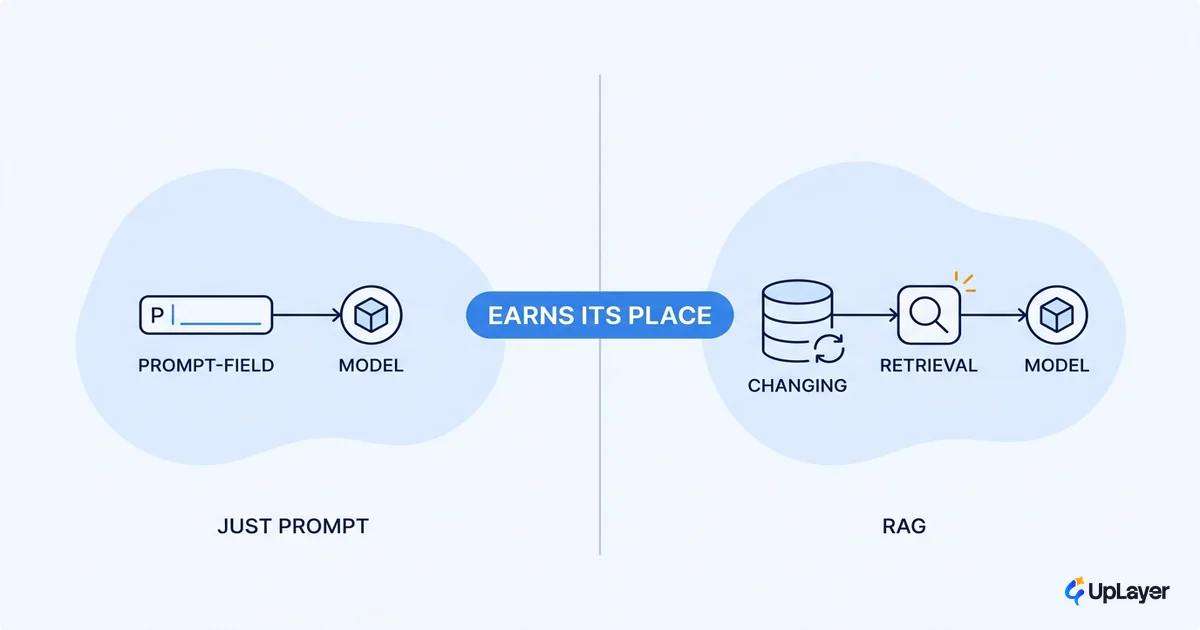
- Ground every answer in your own content. The model retrieves from your docs and help center, then answers from what it found, with no answer when it finds nothing relevant.
- Gate on confidence. Below the threshold, the bot does not guess. It hands off.
- Forbid invented specifics. No made-up prices, dates, policies, or account details. Those are the answers that cost money.
- Keep an audit trail. Every automated reply is logged and reviewable, so you can find and fix the category that is quietly hurting a metric.
The retention case for restraint is older than the technology. Harvard Business Review, reporting CEB's study of more than 100,000 customers, found service interactions are four times likelier to lead to customer disloyalty than to loyalty, and that the strongest loyalty lever is making the interaction effortless. Automation that adds steps, loops, or wrong answers is not neutral. It is actively working against the metric you care about.
CEB data from more than 100,000 customers shows service interactions are four times likelier to drive disloyalty than loyalty. The job of automation is to reduce effort, not relocate it.
Does AI support automation hurt retention
It hurts retention only when you over-automate the high-stakes, high-emotion tickets. Automating a password reset reduces effort and helps retention. Automating a cancellation conversation, or letting a bot stonewall an angry enterprise account, relocates effort onto the customer at the worst possible moment and pushes them toward the exit.
The good news is that this is measurable, which means it is fixable. Segment your support data by whether a ticket was bot-handled or human-handled, then watch the downstream retention and CSAT of each cohort. If a bot-handled category trails its human-handled equivalent, you found an over-automation line and you move it back. Trust is the thing you are protecting, and trust is also what drives adoption of every other AI feature you ship, so the discipline pays off twice.
WARNING
The fastest way to lose an account is a bot that loops on a cancellation or an outage with no way to reach a person. Never automate the final reply on a high-stakes ticket. Route it, with full context, to a human.
AI customer support automation as an AI workflow automation build
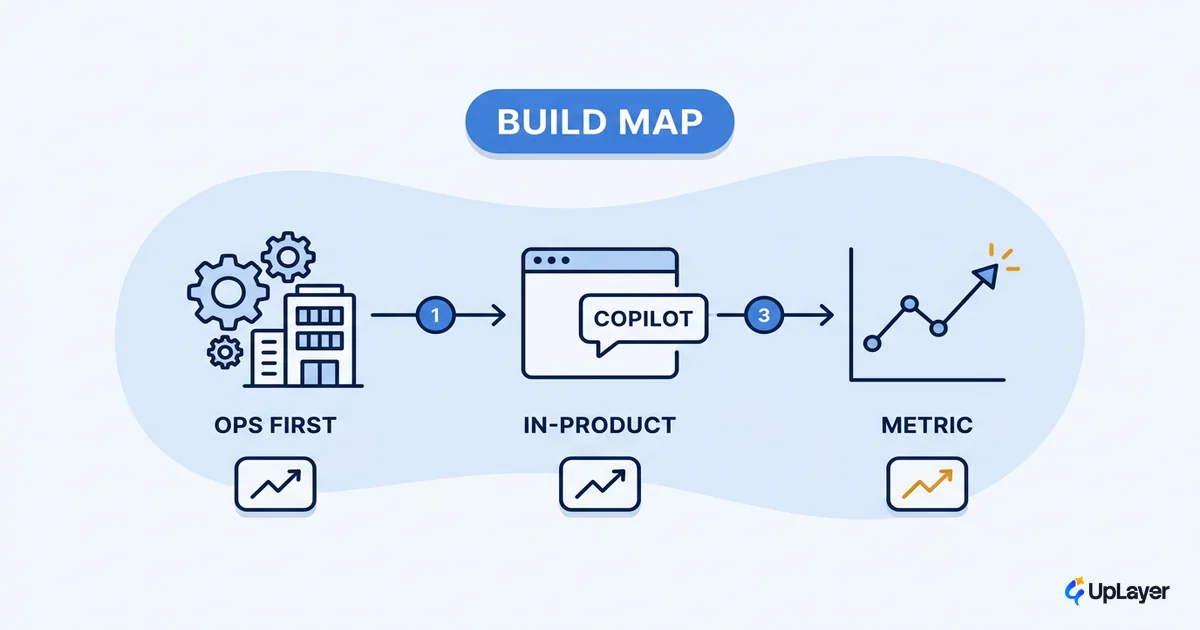
In practice, AI customer support automation is one application of a larger ai workflow automation pattern: a supportive model layer that reads from your systems, assists the work, and hands off cleanly, while the deterministic core keeps running. You would ship AI as a supportive layer, not a core-engine bet, wire the escalation policy and guardrails first, then turn on automation one ticket category at a time and watch the metric move.
Framed as a Concept Demo, the projected shape is simple. Automate the high-volume, low-stakes third of the queue, assist agents on the middle third, and keep humans firmly on the top third. The designed-to-move outcome is lower handle time and steady retention, because nothing the customer cares about got handed to a system that cannot own it.
That is the whole discipline of AI customer support automation in one line: automate the queue, protect the relationship, and let the escalation path, not the deflection rate, be the number you defend. Build the handoff first and the rest of the system has room to be wrong safely. Ship the bot first and every wrong answer is a renewal you did not have to lose.
TIP
Want a projected number before you build, scored against a metric you already track? How the AX Audit works.