AI SaaS ideas that start from a metric, not a demo
Most AI SaaS ideas are demos in disguise. Here is a method for generating AI SaaS ideas from a metric you already track, then killing the ones that flop.
 Sohanur RahmanAI for SaaS & Features7 min read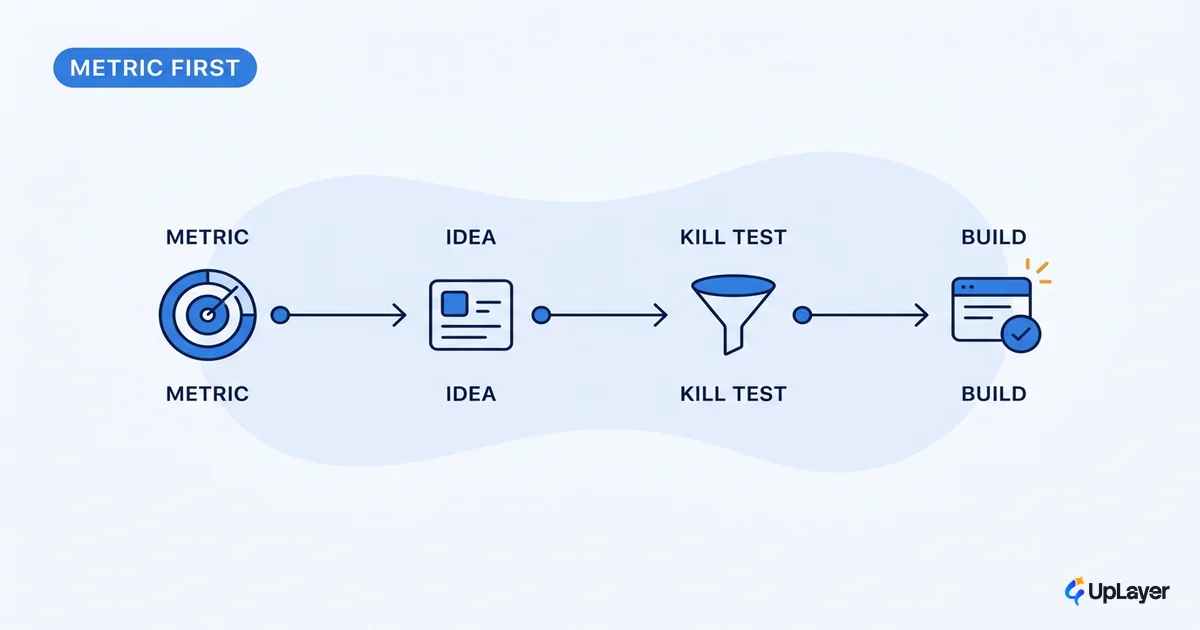
Most AI SaaS ideas you find online are demos in disguise. The lists rank ideas by how big the market sounds or how clever the feature looks, never by whether the thing moves a number you actually track. That is the exact failure mode that kills products after launch. If you run a B2B SaaS past product-market-fit, you do not need another list of features to clone. You need a way to generate AI SaaS ideas that earn their place in a product you already have.
We build the opposite of a list. A good idea starts from a number you want to move, then works backward to the smallest feature that moves it. Everything else is theater. This piece gives you the method, the tests an idea has to pass, and the criteria for killing the ones that will flop before you write a spec. It pairs with our map of the AI features worth adding to a SaaS, which ranks the patterns; here we focus on where the idea comes from in the first place.
Where do good AI SaaS ideas come from?
Good AI SaaS ideas come from a metric you already track, not a model you want to try. That is the whole reframe. The model is a tool that sometimes wins the bid; the metric is the brief.
Start anywhere else and you build features nobody opens. The proof is older than the AI hype. Across 615 software companies, Pendo found that 80% of product features are rarely or never used, while just 12% of features drive 80% of daily usage. A company with $50M in revenue spends roughly $8.4M building features customers ignore. AI does not fix that math. It makes it more expensive, because now you are paying for inference on a feature nobody asked for.
An average of 12% of features generate 80% of average daily usage volume. Meanwhile, 80% of features are rarely or never used. (Pendo, 2019 Feature Adoption Report)
The metric-back method flips the order. You name a number, you find where it leaks, and you ask whether a supportive AI layer could plug the leak. The idea is whatever survives that question. It is smaller than you expect, and it is specific to your product, which is exactly why no listicle could have handed it to you.
Start from the number, not the model to move a metric
There are four numbers worth starting from in a post-PMF SaaS: retention, activation, conversion, and expansion. Pick the one your board asks about. Then turn it into a question an AI feature has to answer, and only then sketch the feature.
This is how you turn a vague "we should do AI" into an AI opportunity you can defend. The table below shows the move from metric to question to a supportive feature that sits on top of your product rather than inside its core engine.
| Metric to move | The question an AI feature should answer | Supportive-AI feature (a layer, not a rewrite) |
|---|---|---|
| Activation | Why do new users stall before the aha moment? | In-product assistant that drafts the first real output for them |
| Retention | What signals a power user before they churn? | Summaries and nudges surfaced inside the workflow they already use |
| Conversion | Where do trials get stuck and go cold? | Setup copilot that removes the manual config blocking value |
| Expansion | Which accounts are ready for more seats or tiers? | Usage analysis that flags expansion moments for the CS team |
Notice none of these is "add a chatbot." Each starts from a number and ends at the smallest supportive feature that could move it. That constraint is what keeps the idea honest, and it is the same logic behind how you decide which AI features to build at all.
What makes an AI idea worth building?
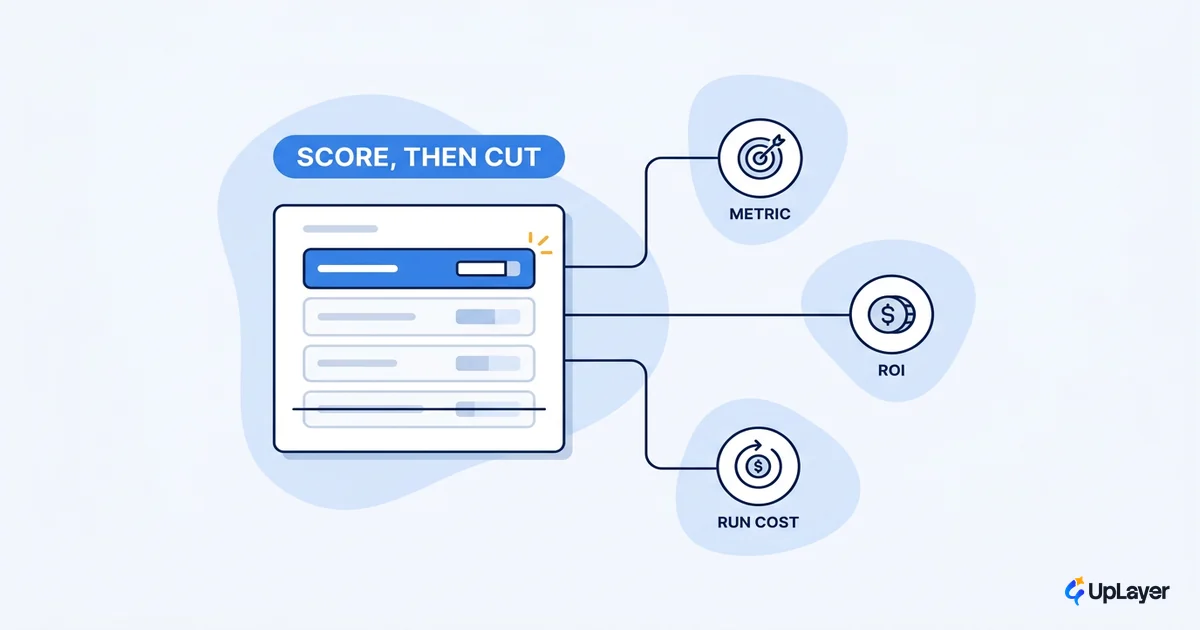
An AI idea is worth building when it passes three tests: it is tied to a tracked metric, it is a supportive layer rather than a core-engine bet, and its projected return beats the build cost. Fail any one and you have a demo, not a feature.
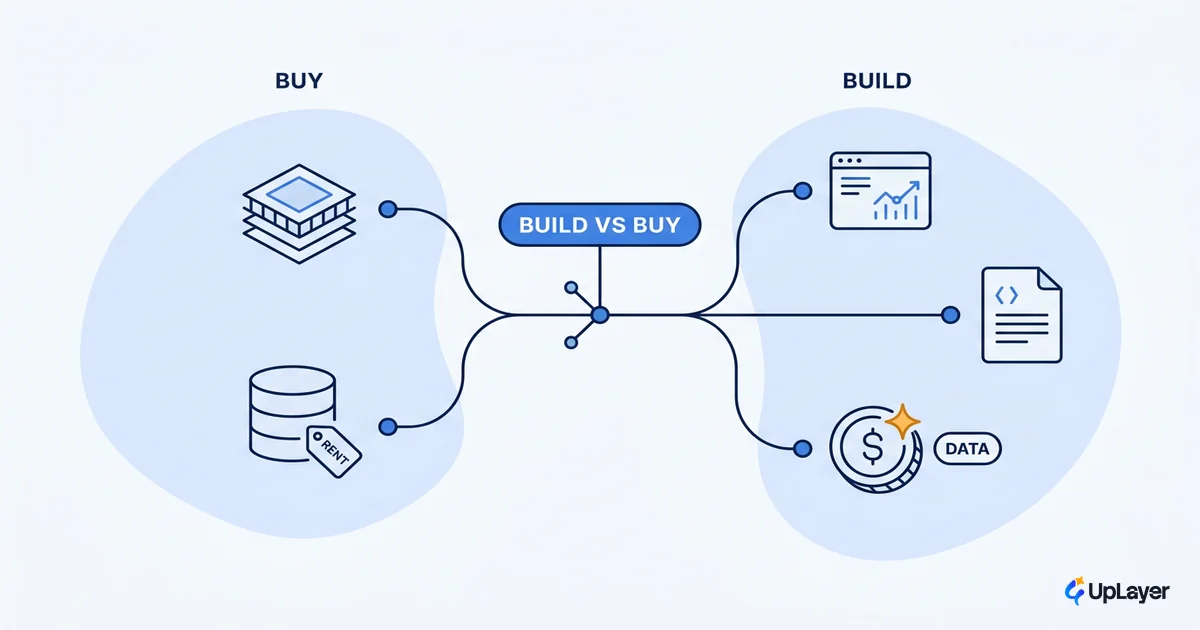
Skipping these tests is the expensive default. Reporting on the MIT NANDA study, Fortune found that 95% of enterprise generative AI pilots stall with no measurable impact on P&L, based on 150 interviews, a survey of 350 employees, and 300 public deployments. The winners were not the ones with the best models. They were the ones who, in the report's words, "pick one pain point, execute well." The same study found that buying or partnering on AI tools succeeds about 67% of the time while internal builds succeed only one-third as often, a useful caution before you decide to build everything in-house.
The 95% failure rate for enterprise AI solutions represents the clearest manifestation of the GenAI Divide. (MIT NANDA, The GenAI Divide: State of AI in Business 2025)
Run every candidate through a simple worth-building score before it reaches your roadmap. The point is not precision; it is killing weak ideas cheaply.
WorthBuilding = (MetricLift x DollarValuePerUnit x Confidence) / BuildCost

MetricLift          projected change in the tracked metric (e.g. +3 pts activation)
DollarValuePerUnit  what one unit of that metric is worth to you
Confidence          0.0 to 1.0, honestly estimated, assumptions written down
BuildCost           design + build + the ongoing inference and maintenance bill

Rule of thumb: if the projected value is not at least 3x BuildCost, it does not ship.
The 3x line is not arbitrary. It is the bar our own AX Audit holds itself to under the 3X Guarantee: find AI worth 3x the fee, or the audit is free. Hold your own ideas to the same standard and most of them will not survive, which is the point.
How do you validate an AI feature idea before you build it?
You validate an AI feature idea the cheap way: project the number, build a concept demo of the single best idea, then ship the smallest slice and watch the metric. You do not validate by shipping the whole feature and hoping. Validation is a loop you run before the spec, not a launch you pray over after.
Start from the user's job, not the technology. The most reliable filter for the best AI features for SaaS is the one Clayton Christensen named decades ago: focus on the job your user is hiring the product to do and the outcome they measure success by. If your AI feature does not make that job faster, safer, or possible for the first time, it does not matter how good the model is.
Then prioritize. Once you have a shortlist of ideas that each pass the three tests, prioritize the shortlist by projected ROI and validate only the top one or two. The rest wait. This is where the kill list earns its keep.
WARNING
Kill the idea before you build it if any of these are true: you cannot name the metric it moves, it needs the model to be right 100% of the time to be safe, it duplicates a feature your usage data shows people already ignore, or the projected value is under 3x the build cost. These are not edge cases. They describe most of the AI ideas that reach a roadmap.
Two things make validation safe to run fast. A concept demo lets you show the idea and project the impact without committing engineering time, and reliability guardrails plus a human in the loop keep an early version from embarrassing you in front of paying users. We frame every concept demo metric as projected or designed-to-move, never achieved, because honest numbers are the only ones worth validating against.
A worked example: turning one AI opportunity into one idea
Here is the method on one number, framed as a Concept Demo so the figures are projected, not claimed.
Say churn is the board's question. You find the leak: accounts that never complete setup churn at three times the rate of those that do. The metric is activation, the proxy for that churn. The AI product features you could build are many, but the metric-back method points to one: a setup copilot that drafts the first working configuration from the customer's own data, with a human review step before anything goes live.
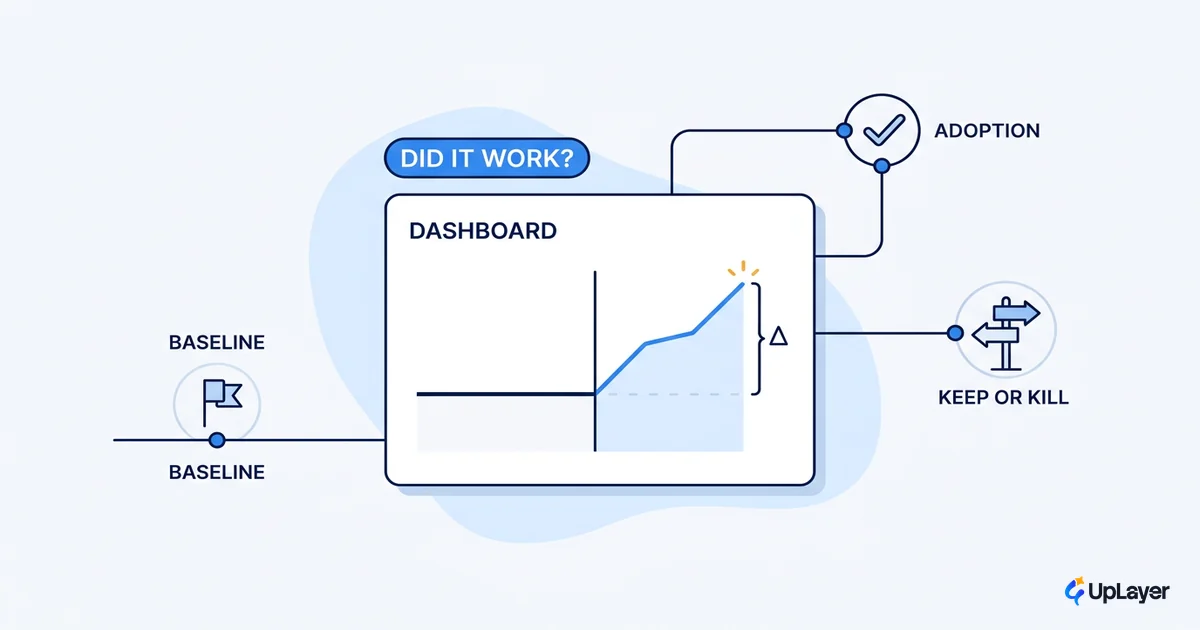
You project the lift, the dollar value of a retained account, and an honest confidence number, then run the worth-building score. If it clears 3x, you build the smallest version, ship it to a cohort, and measure whether the feature actually moved the number. One metric, one idea, one shippable slice. That is the entire loop, and it is the opposite of picking the feature that demos best. Under the Ship-It Guarantee, the final build milestone is not due until that slice is live and working.
The best AI SaaS ideas list is one item long: the supportive feature that moves your number this quarter. Generate ideas from the metric, score them honestly, kill the ones that cannot show a projected lift, and build the one that survives. Do that and your next AI feature ships into the 5% that move a metric, not the 95% that move nothing.
TIP
Want to know which idea actually clears the 3x bar in your product? How the AX Audit works.