The best AI features for SaaS, judged by a metric
The best AI features for SaaS are the ones that move a metric you already track. A ranking method by activation, retention, conversion, and expansion.
 Shahriar P. ShuvoAI for SaaS & Features7 min read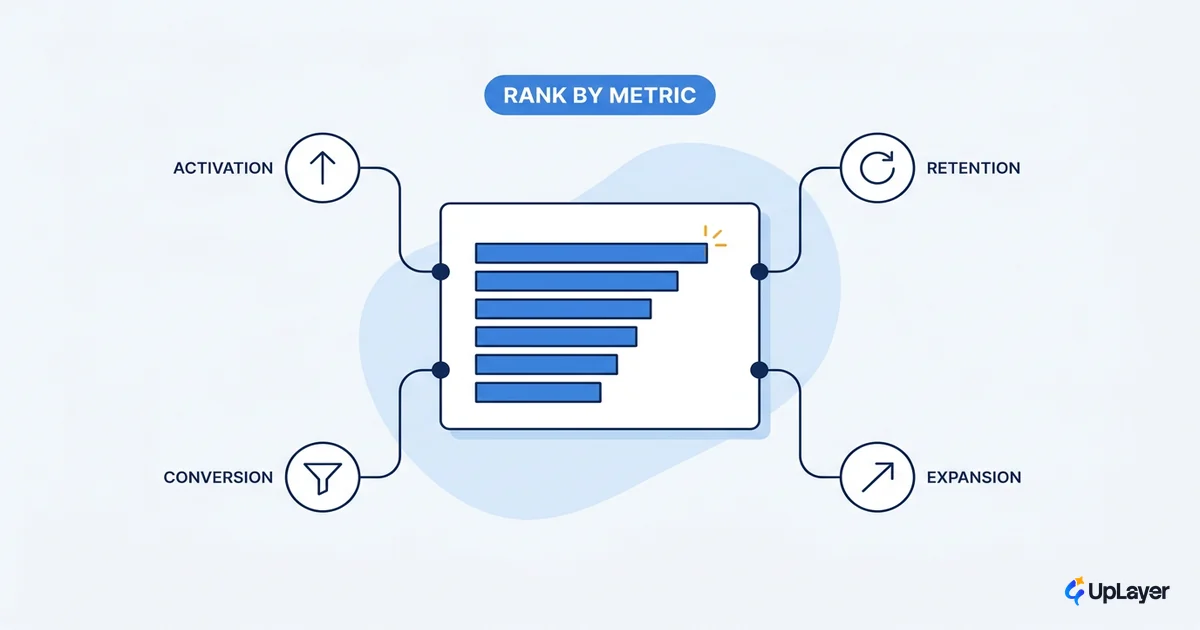
There is no universal answer to "what are the best AI features for SaaS." There is only the feature that moves a metric you already track. Most roundups hand you a menu (chatbot, semantic search, smart onboarding, predictive analytics) and present every item as equally worth building. That menu is where teams lose money, because it skips the only question that matters: which one pays off in your product.
So this is not a listicle. It's a ranking method. The best AI features for SaaS are the ones with the highest projected lift on activation, retention, conversion, or expansion, divided by what they cost to build reliably. Pick the feature by the number, not by the demo.
If you want the full menu with the flops marked, our cornerstone on AI features for SaaS worth adding covers the catalog. This piece is about ranking it.
There is no universal best feature, only the one that moves your metric
The best AI feature is the one with the highest projected movement on a metric your team already reports. That is the entire test. Everything else is taste.
Start with the four numbers a post-product-market-fit SaaS already tracks: activation, retention, conversion, and expansion. An AI feature earns its place only when you can name which of those it should move and by roughly how much. If you can't name the metric before you build, you are buying a demo.
The reason to be this strict is that most shipped software goes unused. Pendo found that 80% of shipped features are rarely or never used, and that just 12% of features drive 80% of daily usage. AI features inherit that base rate, and then add model cost and trust risk on top. A feature that doesn't move a number is worse than nothing, because it still costs you to run and to maintain.
Pendo, 2019 Feature Adoption Report: "an average of 12% of features generate 80% of average daily usage volume. Meanwhile, 80% of features are rarely or never used."
This is why "move a metric" is the filter we apply to every AI opportunity before design starts.
How do you rank AI features by impact?
Rank by projected value per unit of build cost, with your confidence baked in. A feature that might move retention a lot but rests on a guess should lose to a smaller, surer win.
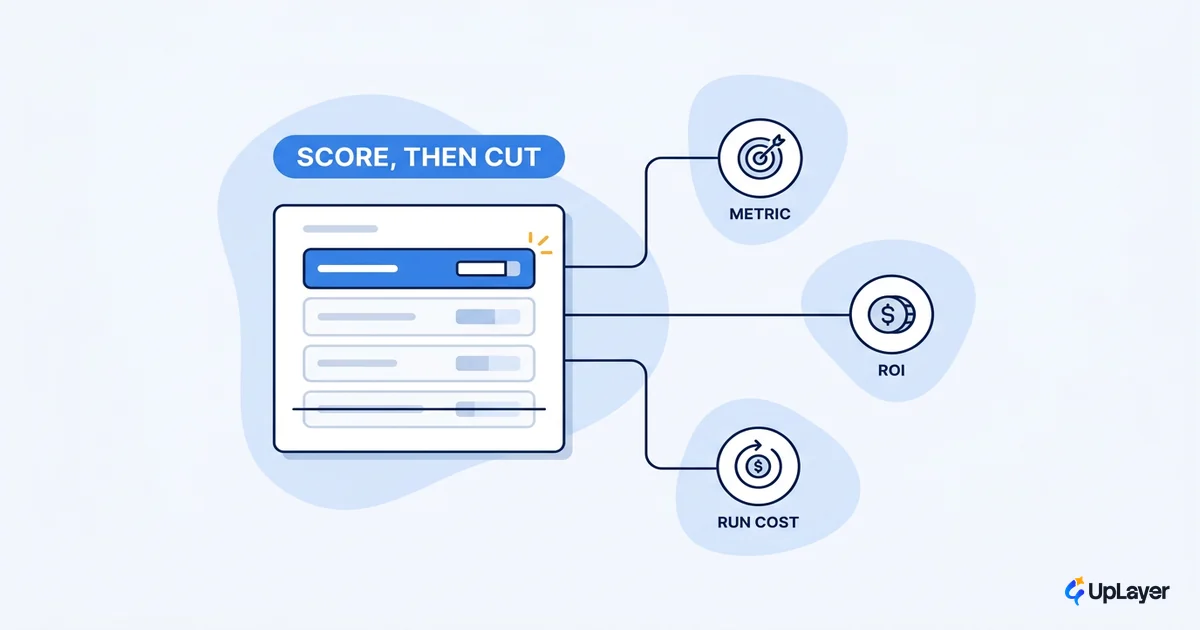
Here is the scoring model we use. It's deliberately simple, because a score you can argue about beats a roadmap nobody can question.
Feature score = (projected lift × reach × confidence) ÷ build cost

projected lift  = expected change in the target metric (e.g. +4 pts activation)
reach           = share of users who hit the feature in a normal week (0 to 1)
confidence      = how sure you are the lift is real (0 to 1), set honestly
build cost      = engineering + design + ongoing model/run cost, normalized
Score every candidate, then sort. The point is not false precision. The point is forcing the assumptions into the open so the cheap, high-confidence, high-reach feature wins over the flashy one. Scoring first is also how you avoid the value gap: BCG found that only 26% of companies move past proofs of concept to real value with AI. The other 74% mostly skipped this step.
For a deeper version of this scoring with worked examples, see prioritize AI features by projected ROI.
The table below maps common AI product features to the metric each one plausibly moves. Use it as a starting grid, not a verdict, and weight it by what you sell: the same feature pays off differently across AI features in SaaS mapped by product category, so a CRM and an analytics tool should not read this grid the same way.
| AI feature | Metric it moves | Why it can move it | Confidence to start |
|---|---|---|---|
| In-product assistant / smart onboarding | Activation | Gets users to first value faster | High |
| Churn-risk triage + save flow | Retention | Flags at-risk accounts before they go quiet | Medium |
| Semantic search and answers | Activation + retention | Cuts time-to-answer inside the product | High |
| Usage-based upsell prompts | Expansion | Surfaces the next plan at the moment of need | Medium |
| Trial-to-paid copilot | Conversion | Removes setup friction during the trial | Medium |
| Generic bolted-on chatbot | None named | No metric is waiting on it | Low (skip) |
The best AI features for SaaS, ranked by the number they move
The best AI features for SaaS cluster around activation, because activation is close to revenue and usually already instrumented. If you have to pick a metric to attack first, attack the one with the shortest path to a dashboard you already read.
Ranked by where they tend to pay off:
- Smart onboarding and in-product assistants move activation. They get a new user to the "aha" action faster, and activation lift compounds into retention.
- Semantic search and in-product answers move activation and retention. Users who find answers without leaving stay longer.
- Churn-risk triage with save flows moves retention. The AI does the watching; a human runs the save.
- Usage-based upsell prompts move expansion by surfacing the right plan at the moment of need.
- Trial-to-paid copilots move conversion by removing the setup friction that kills trials.
TIP
Start where the metric is already instrumented. If activation isn't measured yet, an AI onboarding feature has nothing to prove against. Instrument the number first, then build the feature that moves it.
Which AI feature is worth building first?
Build first where the metric sits closest to revenue and is already measured, and where a small reliable feature beats a flashy one. First does not mean biggest. First means surest.
Most AI work dies before it earns anything. Gartner projects that at least 30% of generative AI projects get abandoned after the proof of concept, often because the business value was never clear. A "build-first" pick avoids that fate by being narrow and measurable.
Build-first checklist (all three must be true):
1. The target metric is already instrumented and you read it weekly.
2. A modest, reliable version of the feature would move that metric.
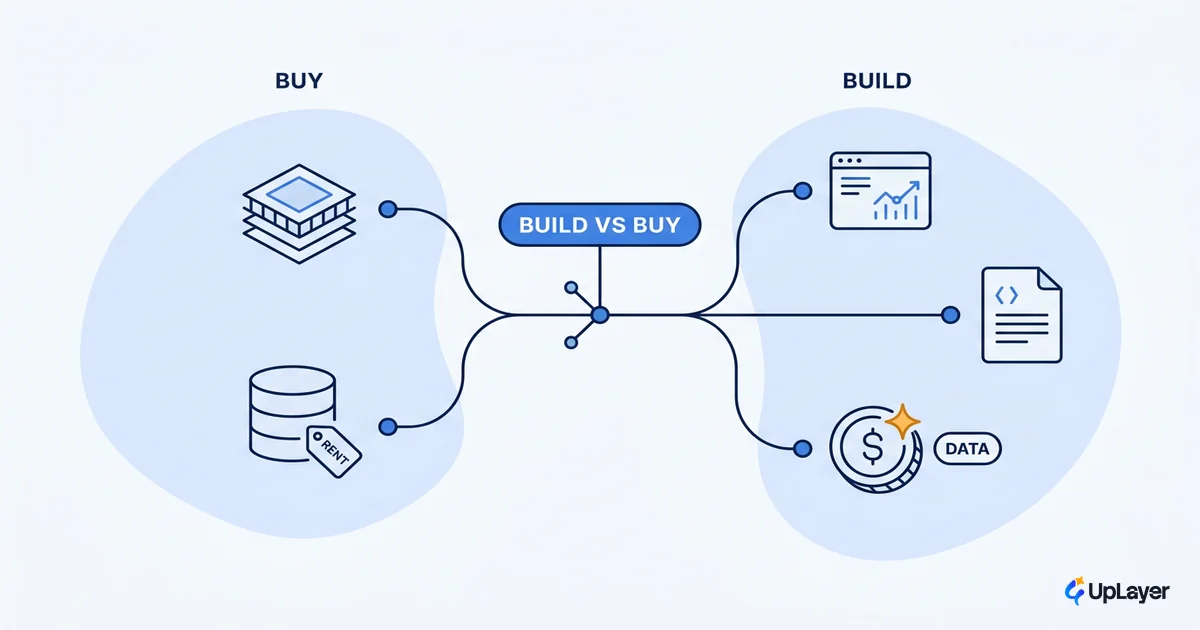
3. You can ship it as a layer on top, without rewriting the core product.
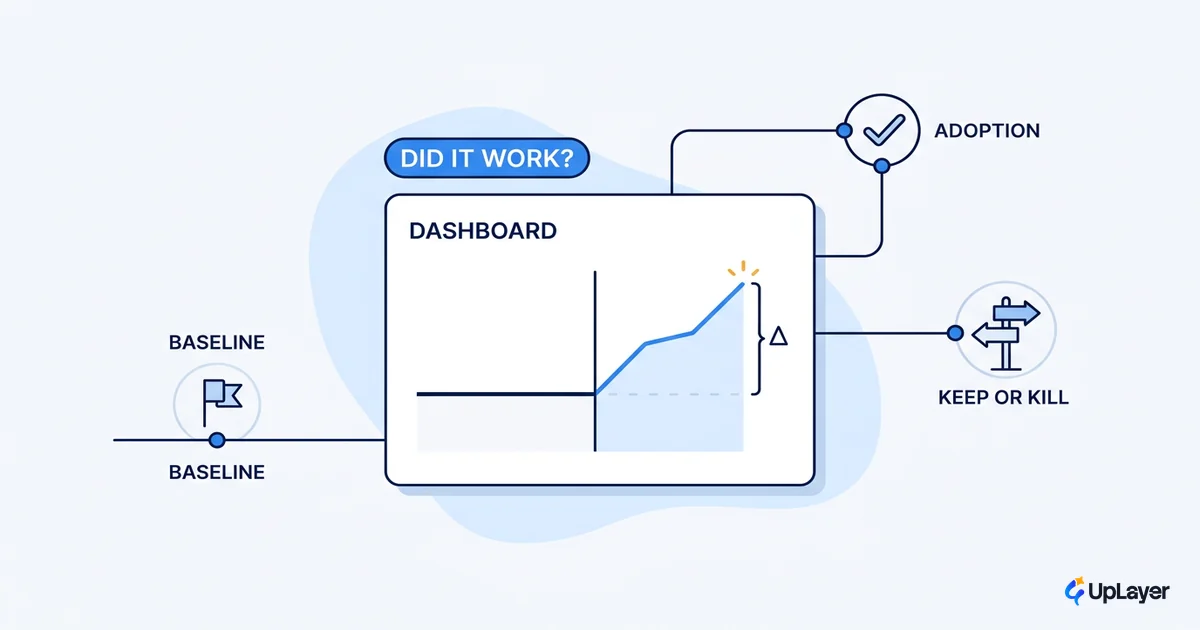
When all three hold, you have your first AI feature. When they don't, keep scoring. And plan the measurement before launch, not after, so you can measure if an AI feature actually worked instead of arguing about vibes.
The AI features to skip (what not to build)
The fastest way to improve your AI roadmap is to cut the features that no metric is waiting on. Saying no here is not caution. It's how the budget reaches the feature that pays.
The usual demo-bait to skip:
- A generic chatbot bolted onto the corner of the app, attached to no metric.
- "AI everywhere" sprinkles (a summarize button on every screen) that add surface area and run cost without a target number.
- A feature chosen because a competitor shipped it, not because your data points at it.
WARNING
If you can't name the metric an AI feature should move before you build it, that's the signal to kill it. A feature that demos well and moves nothing still costs you to run, and it spends the trust you'll need for the feature that matters.
For the full kill list and how to run that call, see which AI features to kill before you ship them.
What are the best AI features for a SaaS?
The best AI features for a SaaS are the ones with the highest projected lift on a metric you already track, divided by what they cost to build and run reliably. In practice that usually means smart onboarding or in-product assistants for activation, semantic search for activation and retention, churn-risk triage for retention, and usage-based prompts for expansion. There is no single answer that holds across products. The right shortlist is the one your own numbers point at, ranked by the scoring model above, with the demo-bait cut.
The takeaway is small and stubborn: pick by the metric, build the reliable version, prove the lift, then earn the next one. That is how the best AI features for SaaS get chosen, and it is the opposite of working down a menu. Rank your candidates by projected impact, ship the surest one as a layer on top, and let the number decide what comes after.
TIP
Want this ranking run on your actual product and metrics? How the AX Audit works.