AI agent vs copilot: the product team's call
AI agent vs copilot is a risk decision, not a tech tier. Score the work by reversibility and the cost of being wrong, then ship the least autonomy that works.
 Shahriar P. ShuvoAI Copilots & Assistants8 min read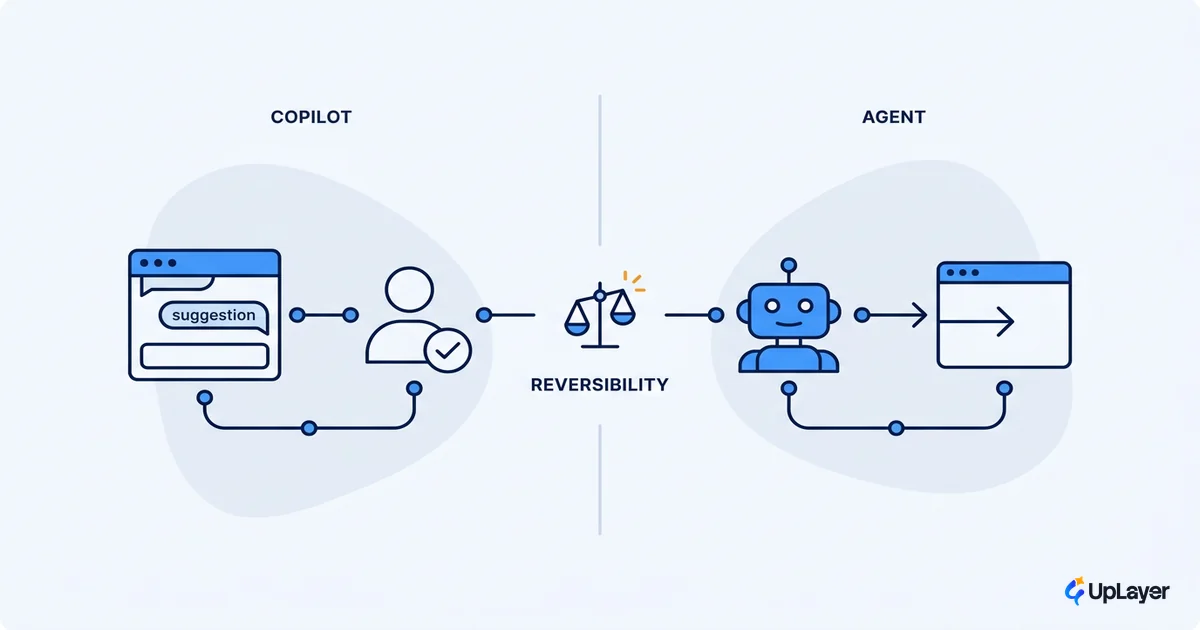
The question of AI agent vs copilot is usually framed as a technology choice, as if one were the newer and better version of the other. It is actually a risk choice. A copilot suggests and the human commits. An agent decides and acts on its own. So the real question your product team is answering is not "which is more advanced," it is "how much of our users' liability are we willing to move onto the software, and what happens when it gets one wrong."
That framing matters because the failure data is blunt. Gartner predicts over 40% of agentic AI projects will be canceled by the end of 2027, driven by escalating costs, unclear business value, and inadequate risk controls. The teams supplying that number are the ones that picked autonomy because it sounded advanced, not because the work earned it. The same discipline we bring to designing AI assistants that earn trust applies here: pick the least autonomy that does the job.
This piece gives you the decision framework instead of the debate. Score the work by how reversible the action is and how much it costs to be wrong, then pick the autonomy level the task actually earns. Once you score the work, the choice stops being about hype.
AI agent vs copilot: the one difference that matters
The difference between an AI agent and a copilot is who commits the action. A copilot is request and response: the human asks, the system drafts or suggests, and the human commits. An agent runs a control loop: it receives a goal, plans steps, executes actions, checks the result, and iterates with little human involvement per step. Anthropic draws the same line at the architecture level, distinguishing predefined workflows from agents that "dynamically direct their own processes and tool usage", keeping control of how they reach the goal. Everything else, including how capable the underlying model is, follows from that one line.
That control loop is the entire source of both the upside and the risk. A copilot keeps a human in the loop on every commit, so its worst case is a bad suggestion the user ignores. An agent moves the human onto the loop or out of it, so its worst case is a chain of committed actions nobody reviewed until afterward. The model can be identical. The exposure is not.
| Dimension | Copilot | Agent |
|---|---|---|
| Interaction | Request and response | Goal, plan, execute, iterate |
| Human posture | In the loop, reviews every commit | On the loop, or out of the loop |
| Best worst-case | A bad suggestion the user ignores | A chain of unreviewed actions |
| Suits | Interactive, high-stakes, judgment work | Repetitive, low-stakes, high-volume work |
| Earns its place when | Output needs human judgment | The action is cheap to undo and easy to verify |
Both patterns are growing, into different jobs. The market is not picking a winner. It is sorting work by how much autonomy each task can safely carry.
Score the work, not the technology
The copilot vs agent decision is made by the work, not by which architecture sounds more impressive. Two properties of the task decide it: reversibility and the cost of being wrong. Map your workflows on those two axes and the answer falls out without a vote.
Reversibility is whether a wrong action can be cleanly undone. Re-categorizing a deal is reversible. Sending a customer a refund is not. Cost of being wrong is what one bad action does to the user, the customer, or the business. A wrong draft costs a few seconds. A wrong outbound email to a key account costs a relationship. Put the two axes together and the autonomy gradient stops being a matter of taste.
| Reversibility | Cost of being wrong | Recommended autonomy |
|---|---|---|
| High | Low | Agent, audited after the fact |
| High | High | Copilot, or a supervised agent with a human on the loop |
| Low | Low | Copilot with a confirm step |
| Low | High | Copilot only, human in the loop on every commit |
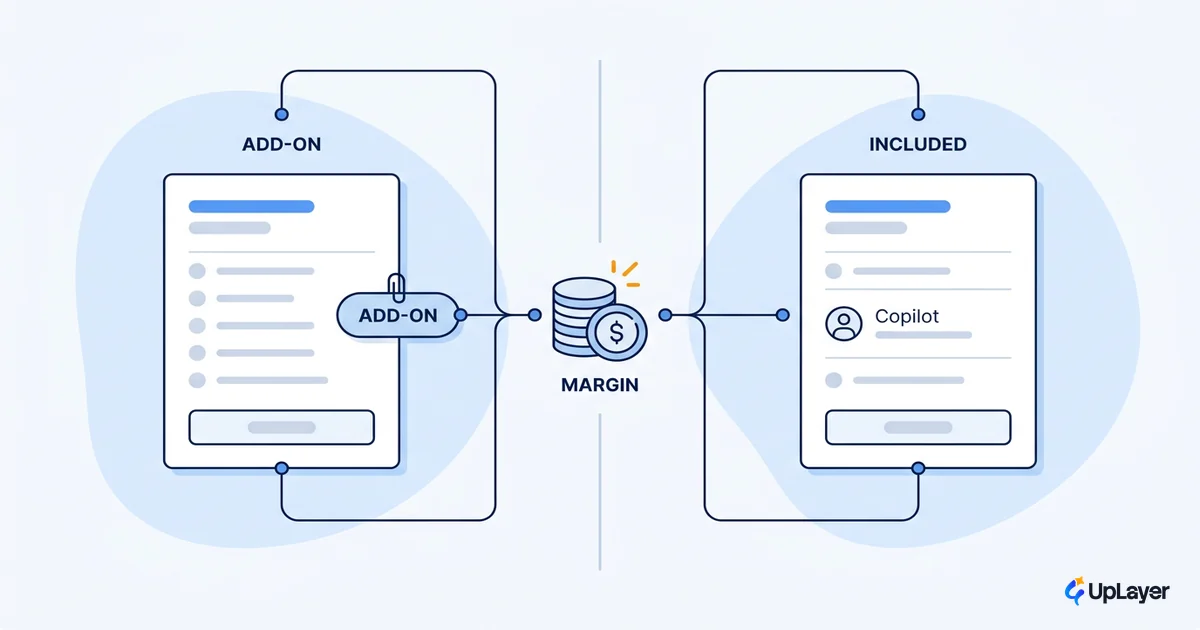
Most of the work inside a B2B SaaS product lives in the bottom rows, which is why the copilot is the safe default and the agent is the thing you graduate specific tasks into. We work the same logic from the product side in which one your SaaS actually needs and walk through the cases for staying with the copilot in when a product copilot beats an agent.
Is an AI agent worth the added risk?
An AI agent is worth the added risk only when three things hold at once: the task is reversible, the cost of a single wrong action is low, and the volume is high enough that human review would be the real bottleneck. That combination is genuine, but narrower than the marketing for agentic AI SaaS suggests. When it holds, an agent removes a real constraint. When any one of the three is missing, the agent is a liability you pay for in incidents.
The governance gap is the tell. Gartner attributes much of the agentic failure rate to inadequate risk controls, and warns that the market is full of "agent washing," the rebranding of assistants, RPA, and chatbots as agents without the substance behind them. The pattern underneath the failures is consistent: teams confuse an agent's ability to act with the scope of access it was granted, and an agent that can act on a wide blast radius without graduated controls is the one that gets decommissioned after the first production incident.
WARNING
Autonomy without a bounded blast radius is the failure mode, not the model. An agent that can touch anything, with no kill switch and no audit log, is the project that ships, breaks something expensive, and gets pulled.
So "is an AI agent worth the added risk" is the wrong first question. The right first question is how small the blast radius can be while the task still gets done. Encode that as a rule before you build:
def autonomy_for(task):
    if not task.reversible and task.cost_of_wrong == "high":
        return "copilot"                      # human commits every action
    if task.reversible and task.cost_of_wrong == "low" and task.volume == "high":
        return "agent"                        # bounded scope + audit log
    return "copilot_with_confirm"             # suggest, then one-click commit

# Default to the least autonomy that clears the task.
# Widen only after reliability holds in production.
How much control do you give an AI agent
You give an AI agent the least control that still gets the task done, then widen it only as reliability earns the next step. The reliable way to ship is to start as a copilot and graduate, not to build the agent first. Keeping a human-in-the-loop early is not a permanent tax. It is how the feature learns its own failure modes before it is trusted to commit.
The sequence is concrete:
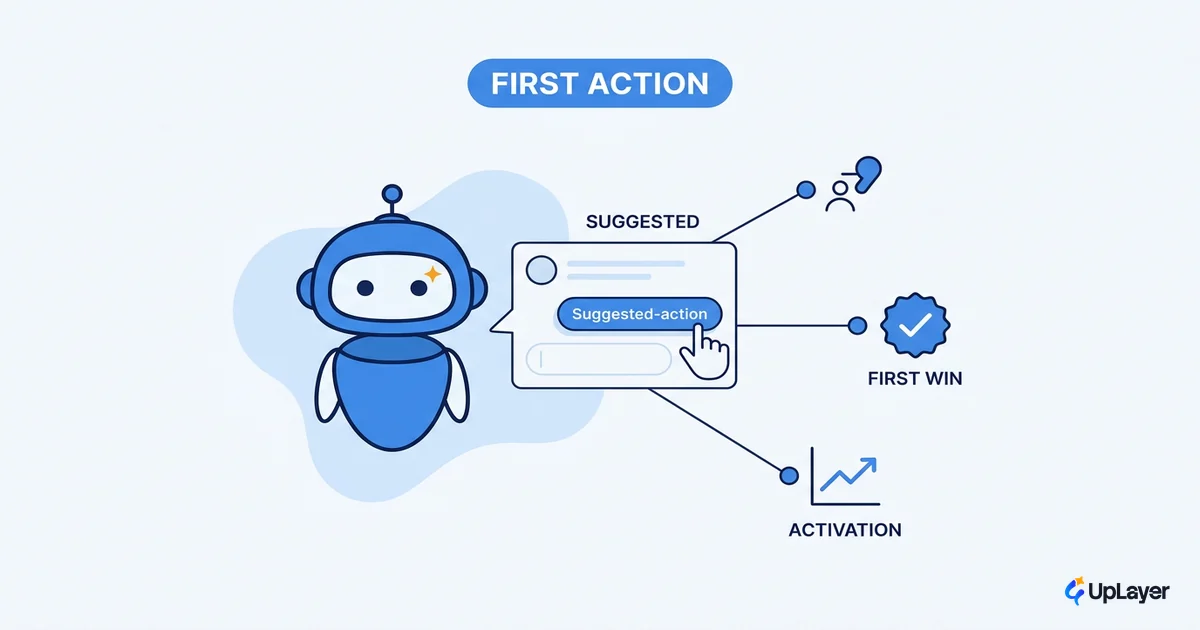
- Ship the feature as a copilot that suggests, where the human commits.
- Watch where users accept the suggestion unchanged and where they correct it.
- Automate the commit only for the suggestion types with a high accept-without-edit rate that also sit in the high-reversibility, low-cost quadrant.
- Expand one task type at a time, with a kill switch and an audit log on every step.
Real agent platforms are built for exactly this graduated control. Microsoft's Copilot Studio, for example, runs generative orchestration where the agent "selects one or more tools, topics, other agents" to plan a response, and exposes an activity map so you can review what it did after the fact. That review trail is the mechanism that lets you widen autonomy with evidence instead of optimism. The guardrails that keep an autonomous step in bounds are what make the graduation safe rather than a gamble.
What work suits an agent over a copilot
Agents suit repetitive, well-bounded, high-volume work where each action is cheap to verify and cheap to undo. Copilots suit interactive, judgment-heavy, high-stakes work where a human should own the commit. A useful pattern once you are past the pilot is to run both: the copilot handles the human-facing, interactive layer while a constrained AI agent SaaS process runs defined background jobs. The split is not agent versus copilot as a company-wide religion. It is the right autonomy for each task.
Adoption is no longer the question. The Stanford AI Index reports that 78% of organizations reported using AI in 2024, up from 55% the year before. Almost everyone has shipped something. The teams that pull ahead are the ones choosing autonomy levels deliberately instead of reaching for the most autonomous option available.
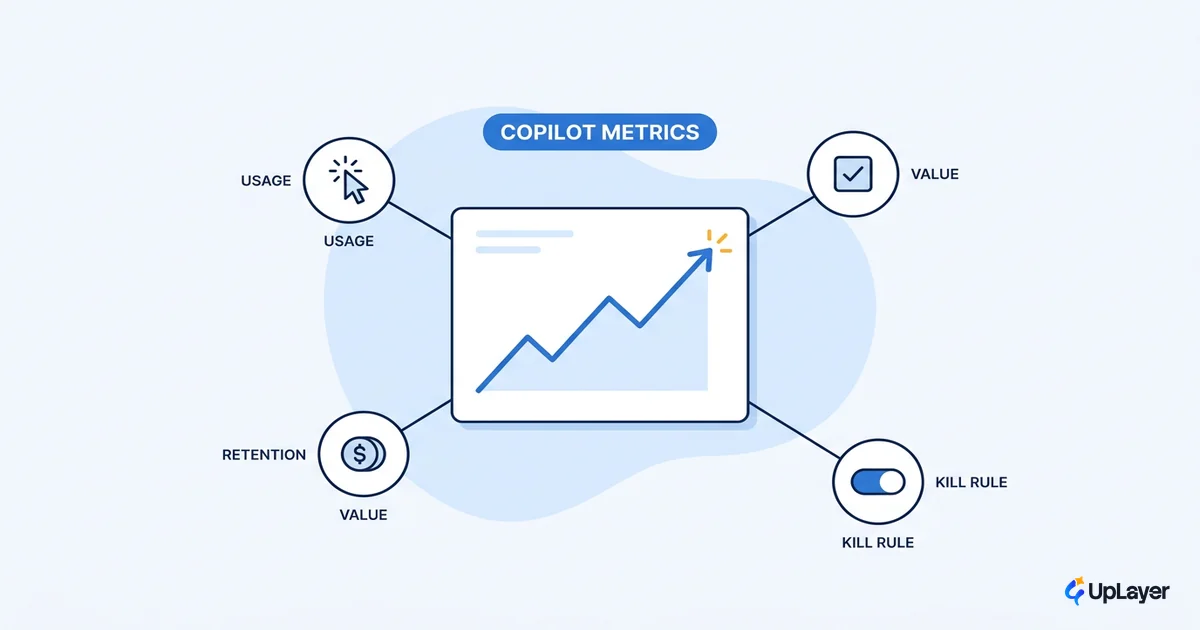
Wherever you land, one test overrides the rest: the feature has to move a metric you already track, not just demo well. An agent that automates a workflow nobody measured is a science project with a budget. We tie the autonomy choice back to return in building AI copilots that move a metric, not a demo, because the autonomy level only matters if the feature pays for itself.
The next decade of product work is mostly this judgment, repeated feature by feature: how much should the software be allowed to do on its own. Treat AI agent vs copilot as a risk and reversibility call rather than a status symbol, ship the least autonomy the task earns, and you keep the upside without joining the 40% that get canceled.
TIP
Weighing an agent against a copilot for a specific feature? The answer is in your numbers, not the trend line. How the AX Audit works. and we will score your candidate AI features by projected ROI and risk, then tell you where a copilot beats an agent and which ones to skip.