How to build an AI agent, the decision before the code
How to build an AI agent for a SaaS starts with a product decision, not a framework: what it owns, whether an agent fits, and what metric proves it.
 Sohanur RahmanAI Copilots & Assistants7 min read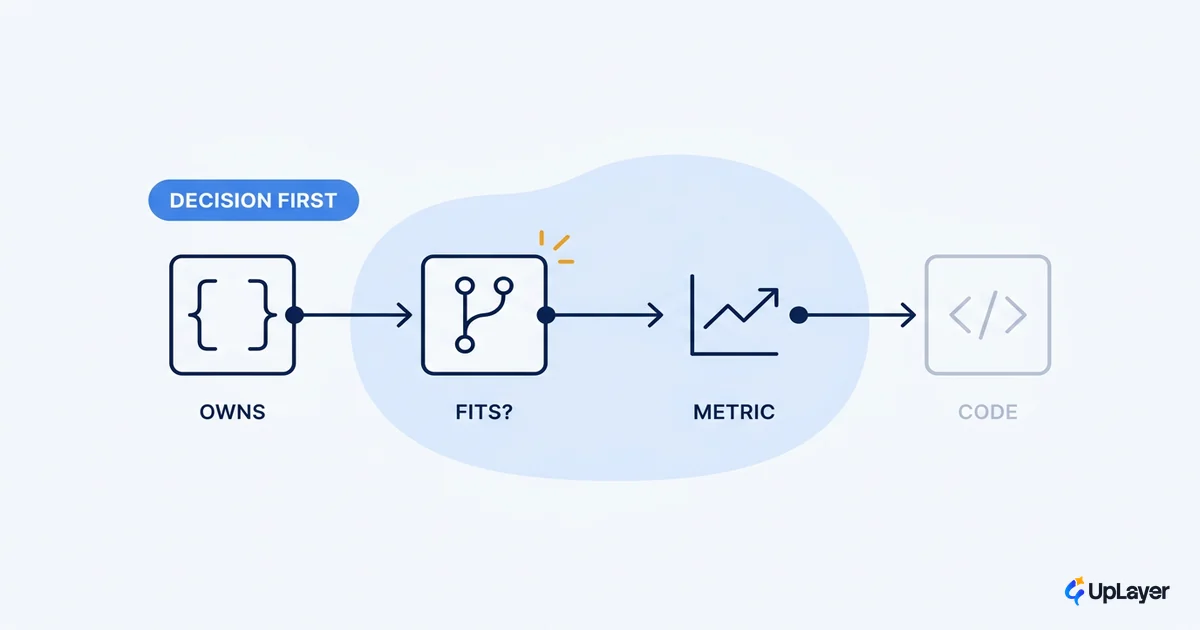
Search "how to build an AI agent" and you get a stack of framework tutorials: the tool-calling loop, memory, orchestration, multi-agent graphs. That is useful if you already know an agent is the right thing to build. For a founder or Head of Product at a B2B SaaS, it usually is not. The expensive question comes before any of that code, and the tutorials skip it: should this be an agent at all, what should it own, and what number tells you it worked.
This piece takes the supportive-AI view. An agent is a layer on top of the product you already have, not a second product that runs itself. The hard part of how to build an AI agent is not wiring the model to tools. It is deciding the job, the shape, the metric, and the blast radius before you start. Get that order right and the build gets straightforward. Get it wrong and you ship something the board liked in a demo and your users quietly never touch. The deeper version of how these features should feel to a user lives in our guide to designing AI assistants for B2B SaaS that earn trust.
We will cover whether to build one at all, the four decisions that come before code, how to scope it down to one job, how to build it so it ships and stays in bounds, and how to prove it moved a metric you already track.
Should you build an AI agent at all?
Often the answer is no, and saying so is the senior call, not a failure of nerve. The people who build these systems for a living say the same thing. Anthropic's engineering team, after working with dozens of teams, recommends finding the simplest solution possible, and only increasing complexity when needed, and adds plainly that this "might mean not building agentic systems at all." Autonomy is a design choice you make when the work demands it, not a maturity level you graduate to.
Adoption is no longer the thing that sets you apart. According to Stanford HAI's 2025 AI Index, 78% of organizations reported using AI in 2024, up from 55% the year before. When almost everyone has shipped something, the question stops being whether you have an agent and becomes whether yours does a job worth doing.
So before you open a framework, run one filter. An agent earns its place only when the work is genuinely multi-step, the steps vary enough that a fixed workflow cannot cover them, and the value of letting the model decide outweighs the cost of it deciding wrong. If a human needs to approve the action, or the task is the same every time, you do not want an agent. You want a copilot or a plain workflow, and both ship faster with less risk.
NOTE
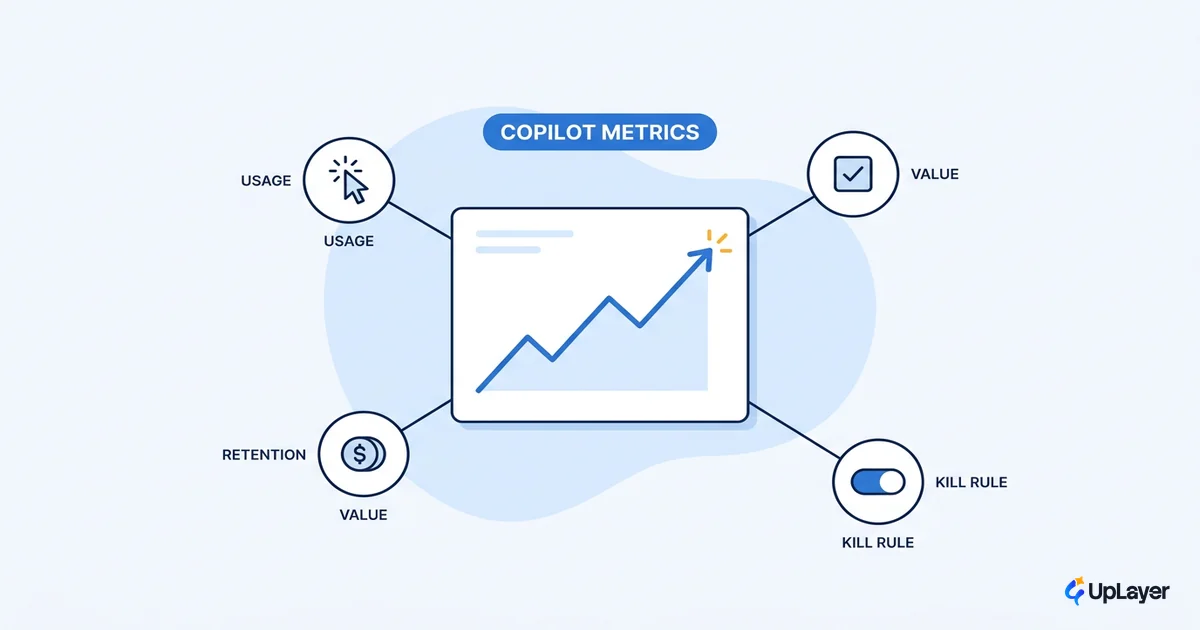
Name the metric the agent should move before you name the feature. If you cannot name the metric, you are scoping a demo, not an agent.
What to decide before building an AI agent
The four decisions that come before code are the job, the shape, the metric, and the blast radius. Most teams skip straight to the shape, pick "agent" because it sounds further along, then hunt for a job to give it. The honest path runs the other way: start from a job your users already do, then pick the smallest shape that does it.
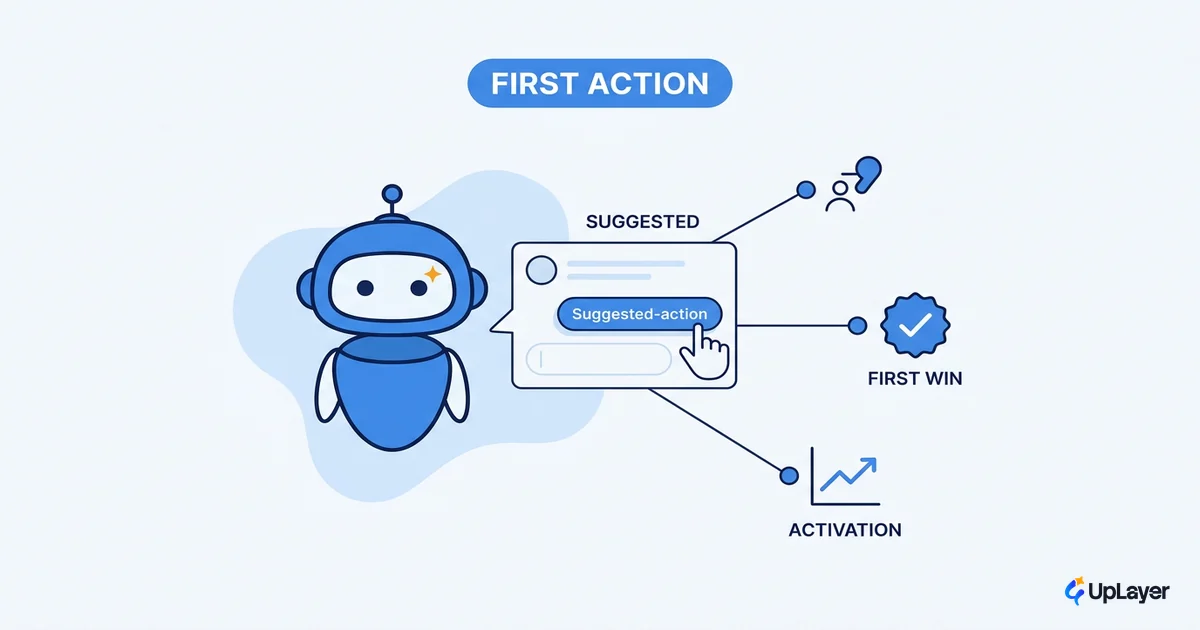
The shape decision is the one with the most leverage. A copilot suggests and a human approves. An agent decides and acts on its own. That single line, who approves the action, changes the scope, the cost, and the failure mode of everything downstream. We work through that fork in detail in our guide on whether your SaaS needs a copilot or an agent; for the decision in front of you, this table is the short version.
| Decision | The question to answer | What gets it wrong |
|---|---|---|
| The job | What task do users already repeat that a small amount of help removes friction from? | Inventing a job because the board asked about AI |
| The shape | Who approves the action, the user or the AI? | Picking "agent" for the autonomy, not the task |
| The metric | Which number you already track should move, and by how much? | "Engagement" with no baseline and no target |
| The blast radius | If it acts wrong, what breaks, and how fast can you undo it? | Letting it touch billing, data, or customers unsupervised |
Work top to bottom. If you cannot answer the job, stop. If the shape is a copilot, you are not building an agent at all, and that is a good outcome. The metric and the blast radius then tell you how much guardrail the thing needs before it goes near a user.
How do you scope an AI agent for a product?
You scope an AI agent for a product by shrinking it to the smallest version that does one job, then drawing a hard line around the actions it is allowed to take. Scope is the difference between an agent that ships and one that stalls. In BCG's survey of 1,000 executives across 59 countries, only 26% of companies move beyond a proof of concept to real value. The ones that stall almost always tried to do too much at once.
Write the scope down before you build. A short spec keeps the agent honest and gives you something to test against.
# agent-scope.yaml (the smallest agent that does one job)
job: "Draft a renewal-risk summary for a CSM before a QBR"
shape: copilot          # human approves before anything is sent or saved
metric: "QBR prep time"  # a number we already track
target: "cut median prep time 30%, no drop in CSAT"
actions_allowed:
  - read: [account_usage, support_tickets, past_QBR_notes]
  - draft: renewal_risk_summary   # output to a review pane, never auto-send
actions_forbidden:
  - write: [crm_fields, emails_to_customer, billing]
human_in_the_loop: true            # CSM edits and approves every draft
fallback: "If confidence is low, say so and show the source records"
Notice what scoping does. It turns a vague "build an agent for customer success" into one testable feature with a metric and a wall around it. The forbidden actions are not a limitation. They are how an AI agent for SaaS supports the team rather than replacing its judgment. The narrower the action surface, the faster it ships and the less there is to go wrong.
How to build an AI agent that ships and stays in bounds
Once the scope is fixed, how to build an AI agent becomes a build-order problem, and guardrails come first, not last. The framework you reach for is a downstream choice, and treating choosing an AI agent framework as a product call rather than a tooling preference keeps the scope in charge of the build. The teams that bolt on safety after the demo are the ones that pull the feature later. Gartner predicts that over 40% of agentic AI projects will be canceled by the end of 2027, citing escalating costs, unclear business value, and inadequate risk controls. Build for those three failure modes from the start.
A supportive agent gets built in this order:
- Guardrails and the action wall. The forbidden list from your scope spec, enforced in code, not in a prompt. The model cannot take an action it was never given.
- Human-in-the-loop on high-trust steps. Anything that touches money, customer-facing output, or data the user is accountable for gets a review step. Approval is a feature, not friction.
- Grounding and a confidence floor. The agent cites the records it used and says when it is unsure, so the user can check it instead of trusting it blind.
- Evaluation before launch. Run it against real cases and measure where it is wrong. You cannot tune what you do not score.
The interaction-level rules that keep an agent inside that wall are their own subject. Our breakdown of AI agent guardrails that keep it in bounds goes a layer deeper than this checklist.
WARNING
Autonomy is not a goal. Gartner calls the rebranding of assistants, RPA, and chatbots as agents "agent washing." If your feature does not need to decide and act on its own, do not make it. A copilot that ships beats an agent that gets switched off.
How do you prove an agentic AI feature was worth building?
You prove an agentic AI SaaS feature was worth building the same way you prove any feature: tie it to a metric you already track and watch the delta. Pick the number before the build, set a baseline, and after launch compare against a holdout or a clean before-and-after. If the agent cut QBR prep time by a third with no drop in satisfaction, you have a result. If you cannot point to a moved number, you have a demo that survived to production.
This is where most agent projects go quiet. They shipped something the team could show, but nobody can tie it to retention, activation, or expansion. We do the opposite on purpose. Before a build, we project the ROI on a metric the team already tracks and build a Concept Demo, a working prototype framed as "designed to move," never as an achieved result. Our 3X Guarantee says the audit finds AI worth three times the fee or it is free, and our Ship-It Guarantee says the final milestone is not due until the feature is live and working.
The most useful thing you can know about how to build an AI agent is when not to build one, and which of your numbers the one you do build is supposed to move. Decide the job, scope it to one metric, wall off the actions, and prove the delta. Everything the framework tutorials teach comes after that, and it is the easy part.
TIP
Not sure which AI feature, agent or otherwise, is worth building in your product? How the AX Audit works.