AI automation use cases for SaaS teams
A scored shortlist of AI automation use cases for SaaS teams, ranked by effort, risk, and projected ROI, so you build the one use case that actually pays back.
 Anamoul RoufAI Automation7 min read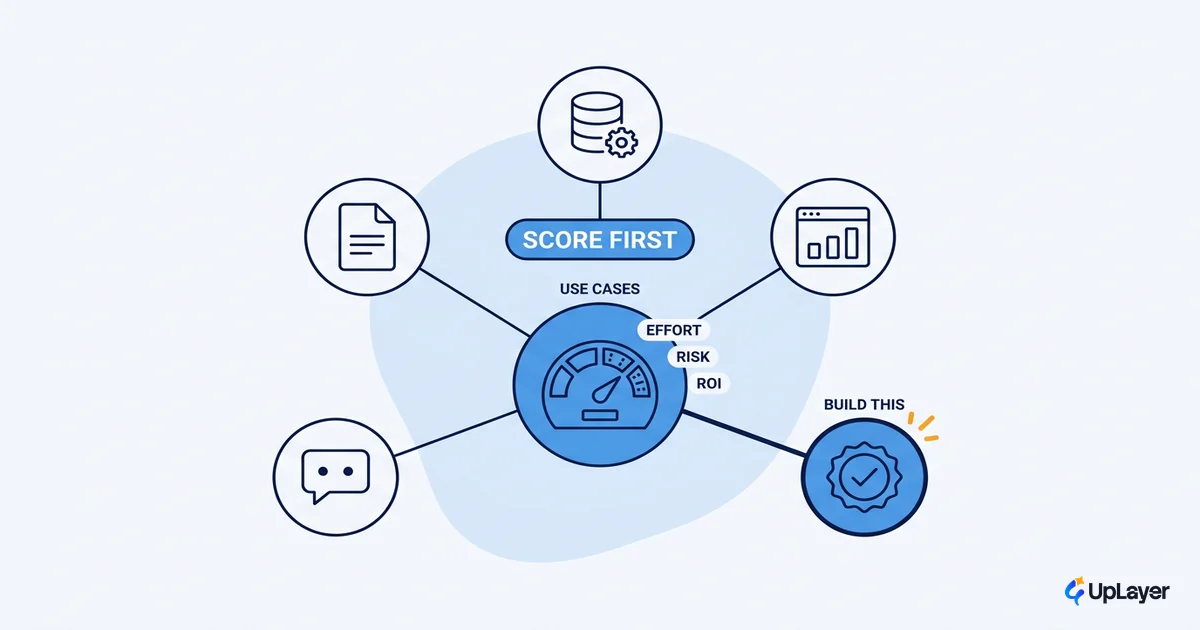
Finding AI automation use cases is the easy part. Any vendor blog will hand you fifty of them in an afternoon. The hard part, the part that decides whether you ship something that pays or something that quietly gets switched off, is picking the one to build first. A longer list does not help you choose. It usually makes the decision worse, because every item on it looks equally plausible until you put a number next to it.
So this is not another roundup. It is a scored shortlist of AI automation use cases for SaaS teams, ranked by the only three things that predict whether a use case earns its place: effort to build, risk if it gets something wrong, and projected ROI against a metric you already track. The whole point is to turn an undifferentiated wish list into a ranked decision. If you want the full method behind that scoring, our cornerstone on AI workflow automation ROI for SaaS teams walks through it; this piece applies it to specific candidates.
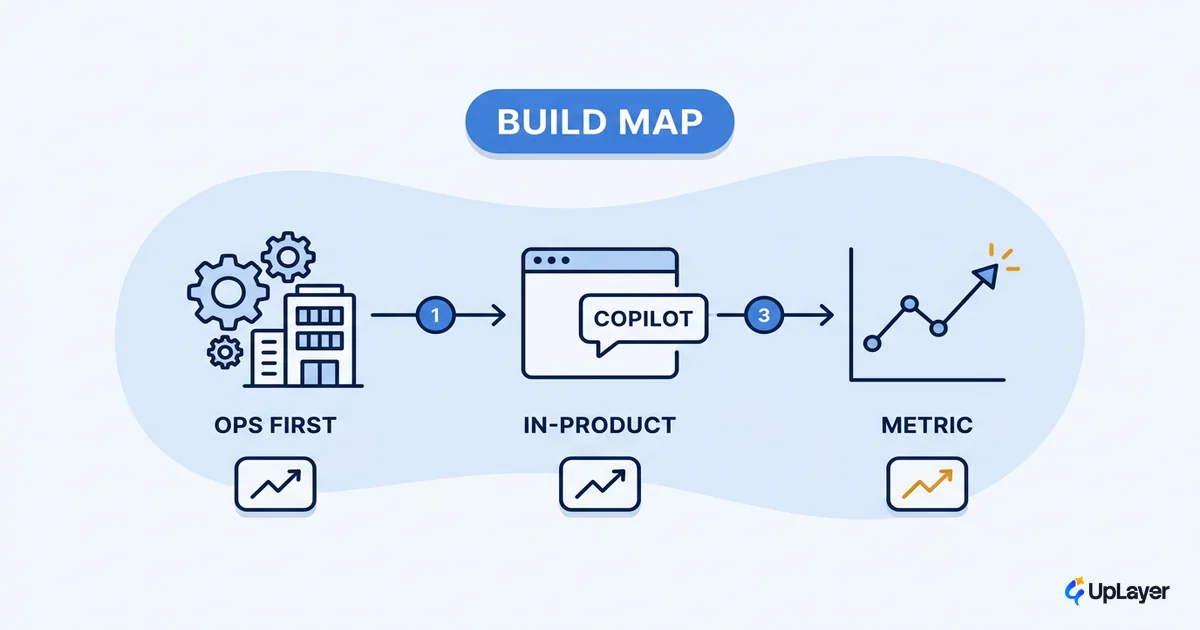
One principle runs underneath every recommendation here. UpLayer builds AI as a supportive layer on top of the product you already shipped, never inside the core engine that the business depends on. That bias shows up in which use cases we rank highly and which we tell you to leave alone.
How do you pick a first automation use case
Score it before you build it. The reason most AI projects never pay back is not that the model was weak. It is that nobody scored the use case against a metric and a cost before committing engineering time to it.
The numbers on this are blunt. Gartner projects that at least 30% of generative AI projects will be abandoned after the proof-of-concept stage by the end of 2025, citing poor data quality, weak risk controls, escalating costs, and unclear business value as the causes.
At least 30% of generative AI projects will be abandoned after proof of concept by the end of 2025. (Gartner, 2024)
Every one of those causes is something you can catch with a scoring pass that takes an hour, long before you write code. The model is simple. For each candidate, rate three dimensions and only build what clears the bar.
SCORE = (Projected ROI on an existing metric)
        ─────────────────────────────────────
        (Build effort  ×  Risk if it's wrong)

Build the use case only if:
  1. It moves a metric you ALREADY track (not a new vanity one)
  2. A wrong answer is recoverable, not catastrophic
  3. Projected payback clears the build cost within 2 quarters

If you can't name the metric, you can't score it.
Don't build it yet.
The rule that does the most work is the first one. If a use case does not move a metric you already report on, you have no baseline to measure the delta against, and "projected ROI" becomes a story instead of a number.
What are the best AI automation use cases
The best AI automation use cases for a SaaS team sit in the same place: high-volume, judgment-light work that wraps around the product rather than replacing it. Below is the shortlist, scored. Treat the projected ROI column as a planning estimate you confirm against your own baseline, not a promise.
| Use case | Effort | Risk | Projected ROI | Metric it moves |
|---|---|---|---|---|
| Support deflection (assist, then auto-answer) | Low | Low | High | First-response time, ticket volume |
| In-app onboarding and contextual guidance | Medium | Low | High | Activation rate, time-to-value |
| Internal ticket and lead triage / routing | Low | Low | Medium | Handle time, SLA breaches |
| Document automation (extract, summarize, draft) | Medium | Medium | High | Hours per document, error rate |
| Churn-signal alerts for CS teams | Medium | Low | Medium | Net revenue retention |
| Sales and CS research prep (account briefs) | Low | Low | Medium | Reps' prep hours, meetings per week |
| Code or query generation inside the product | High | High | Variable | (score per feature; see caution below) |
Support deflection is the most common first move for a reason: the work is repetitive, the baseline is already measured, and a wrong answer hands off to a human instead of breaking anything. The same logic makes AI customer support automation safe to start with when it stays an assist layer. Document-heavy workflows score well too, which is why AI document automation tends to pay back fast when the documents are structured. For worked versions of these, our AI workflow automation examples that ship value post shows what each looks like in production.
NOTE
"Projected ROI" here means a modeled estimate with assumptions shown, not a measured result from a named client. We never publish invented metrics. The number you act on should be your own baseline times your own volume.
Which use cases fit a SaaS team and which are a trap
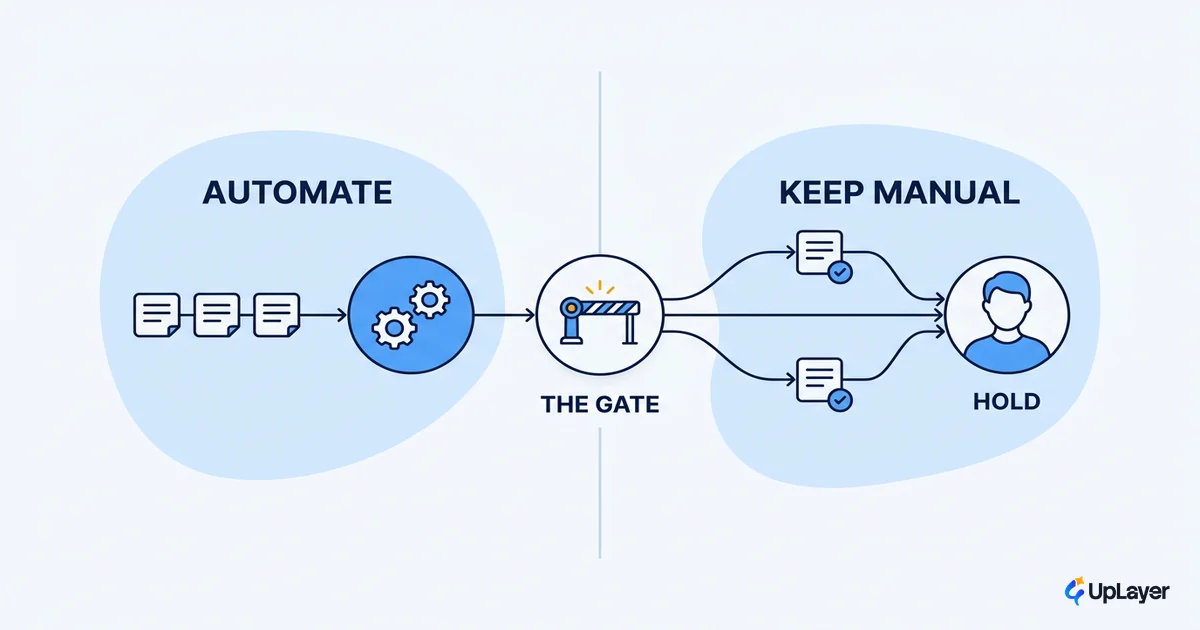
The use cases that fit a SaaS team are the ones that automate the workflow above the engine. The trap is automating the engine itself.
Here is the line. Supportive AI sits on top of the product: it drafts, summarizes, routes, suggests, and surfaces, and a human or a deterministic system still owns the final action. Core-engine AI replaces the logic the business is built on, so when the model has a bad day, the product does too. A churn-alert that flags an at-risk account is supportive. An AI that silently changes a customer's billing tier is core-engine, and it is the kind of thing that should make you stop. When in doubt, the safer instinct is captured well in our piece on when not to automate with AI.
WARNING
Do not automate the core engine your revenue depends on. Automate the workflow around it. A model swap should never be able to take the product down.
The scaling data backs the cautious posture. BCG's survey of 1,000 executives found that only about a quarter of companies move past pilots to real value, meaning roughly 74% stall before the automation pays for itself. The ones that stall almost always over-scoped: they tried to automate something high-risk and judgment-heavy on the first attempt. Picking a supportive, low-risk use case first is not timidity. It is how you get a measurable win on the board before you spend the harder budget.
What AI automation ROI really depends on
AI automation ROI depends far more on your data and your adoption than on which model you pick. A use case scored as "high ROI" still returns nothing if the feature is grounded in stale data or if nobody uses it.
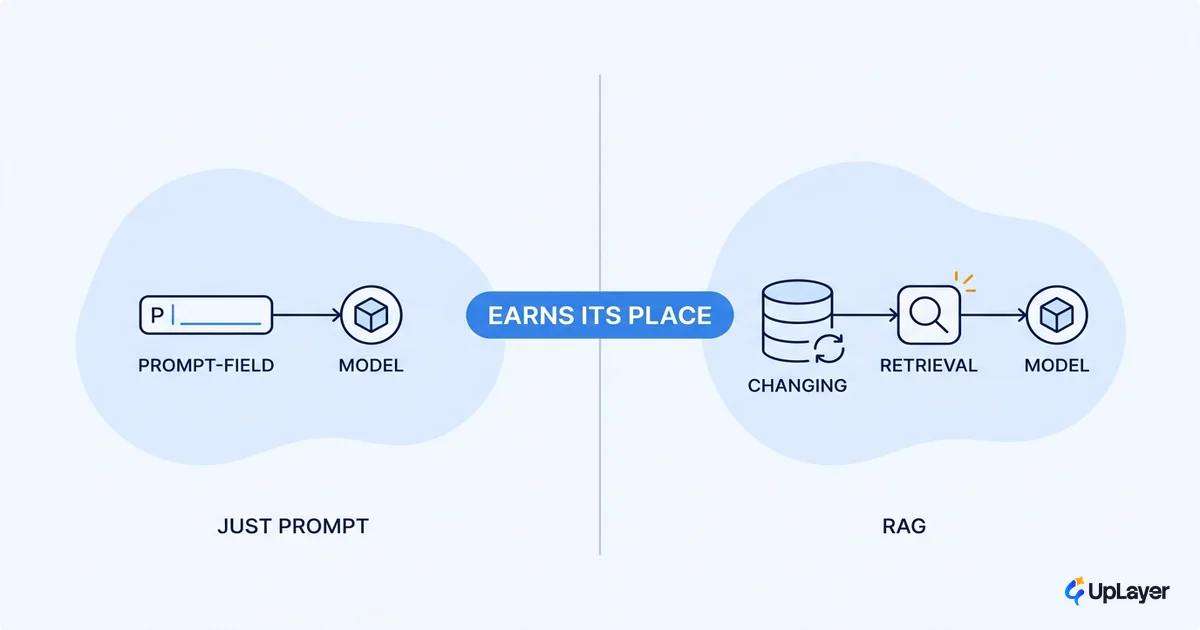
Grounding is the technical half of this. For any use case that answers questions or drafts content from your own records, the dependable pattern is retrieval-augmented generation, which pulls the relevant records from your source of truth and hands them to the model as context for that one answer. If you are weighing whether that pattern fits your data at all, our deeper look at where RAG actually earns its place for a business draws the line between use cases that need retrieval and ones that do not. AWS frames the benefit plainly: retrieval gives the model current, authoritative data and lets the output cite its sources, which is what makes a grounded answer checkable instead of trusted blind. Harvard Business Review makes the same point at the strategy level: useful business output comes from a model grounded in your own data, not from the base model's general knowledge.
Adoption is the human half, and it is where design earns its keep. A support assistant that agents bypass moves no metric, no matter how accurate it is. This is why AI workflow automation for SaaS lives or dies on whether the feature fits into the work people already do, rather than asking them to change their habits to suit the model. When the scored use case clears the bar but the team lacks the bandwidth to build it well, knowing when an AI workflow automation agency is the right call keeps a strong use case from stalling for the wrong reason.
IMPORTANT
Score before you build, ground before you ship, and measure against the baseline you already had. A use case that skips any of those three is a project waiting to be abandoned.
That is the whole discipline in one line. The teams that win with AI automation use cases are not the ones with the longest list of ideas. They are the ones that scored a short list honestly, picked one supportive use case that moves a metric they already track, and shipped it grounded in their own data. Start there, prove the delta, then earn the right to the harder ones.
TIP
Want the highest-ROI AI automation use case for your specific product, scored and proven on a metric you already track? How the AX Audit works.