AI product design that moves a metric
AI product design is a metric problem first and a craft problem second. Here is the order to work in so the feature gets used and moves a number.
 Shahriar P. ShuvoAI Product & UX Design11 min read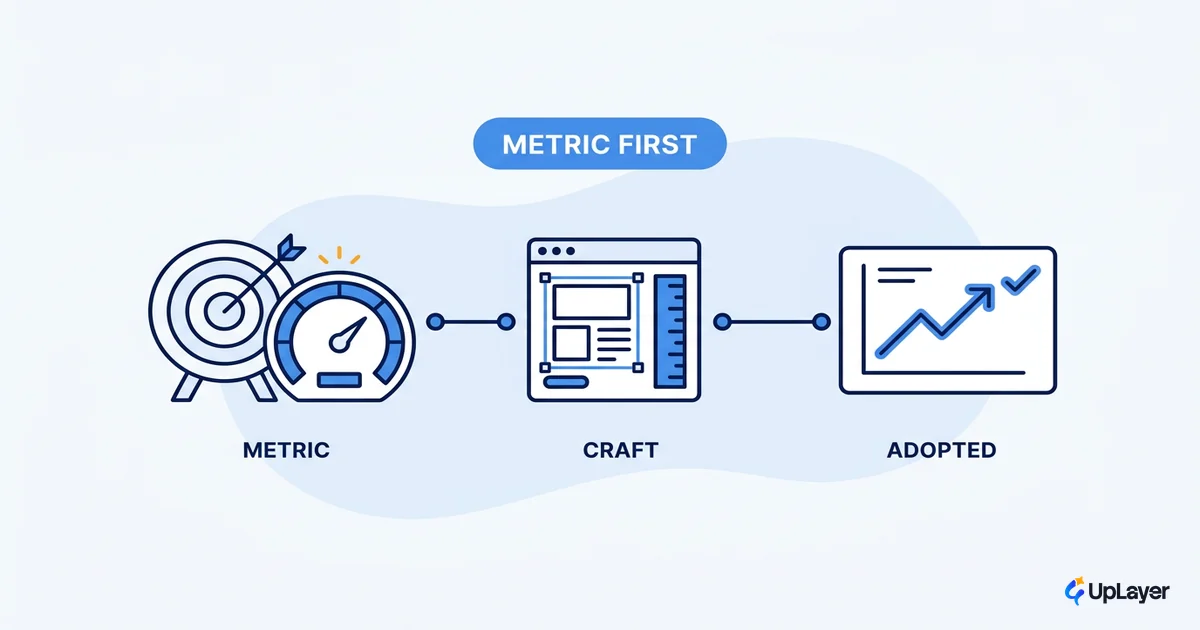
Design is not the first problem in AI product design. The metric is. A beautifully designed AI feature that nobody adopts is a more expensive failure than an ugly one, because the polish hid the strategic mistake underneath it.
We see the same pattern across post-product-market-fit SaaS teams. The board asks for AI. A feature gets picked because it demos well. The design team does careful, real work. The thing ships. And the number it was supposed to move, churn or activation or expansion, does not move. The craft was fine. The order was wrong.
This is a guide to the order. Treat the work as a metric decision first and a craft decision second, and most of the failure pattern disappears. We will define the discipline, show why so much of it moves nothing, and lay out the sequence to work in.
What is AI product design (and what it is not)
AI product design is the practice of designing the experience of an AI feature so that a real user adopts it and a metric you already track moves. It is not prompt engineering, and it is not "make the product feel smart." It is the experience layer that decides whether the model under it ever gets used.
There are two things people call AI product design, and conflating them causes most of the confusion. One is designing with AI tools: using generative tooling to produce mockups, copy, or prototypes faster. The other is designing AI products: shaping how a user discovers, trusts, and acts on an AI feature inside your product. This guide is about the second. The tools change every quarter. The job of designing AI products that earn their place does not.
When we talk about designing ai products at UpLayer, we mean a supportive layer on top of the product you already built. Copilots, assistants, search, summarization, triage. AI that sits above the core engine and helps the user, not a model you bet the company on. The design question is always the same: does this layer move a number the buyer reports, and will anyone actually use it?
That framing matters because it sets the bar. A feature is not "done" when it looks good in Figma. It is done when a user reaches for it without being told to, and the metric behind it bends.
Why most AI product design moves nothing
The failure mode is predictable. The feature is chosen by hype, designed with care, and adopted by almost no one. The craft was never the problem. The sequence was.
The numbers back this up. Gartner predicts that 30% of generative AI projects get abandoned after proof of concept, citing poor data quality, weak risk controls, escalating costs, and unclear business value. The common thread in that list is not bad design. It is the absence of a defined outcome before the build started.
"After last year's hype, executives are impatient to see returns on GenAI investments, yet organizations are struggling to prove and realize value." (Gartner, July 2024)
When you design an AI feature before you have named the metric it serves, you are designing in the dark. You can make it elegant. You cannot make it matter. This is exactly why most AI features ship and move nothing: the team optimized the surface and skipped the decision.
The reframe is simple to state and hard to hold to. The discipline is a metric problem first and a craft problem second. The craft is real and it decides whether the feature gets used. But it comes second, because craft applied to the wrong feature is just an expensive way to lose. Pick the feature against a number you already report. Then design it well enough that people adopt it.
The order it should follow: metric first, craft second
There is an order, and it is load-bearing. Work it in sequence and the odds change. Skip a step and you are back in the 30%.
| Step | Question it answers | What you produce |
|---|---|---|
| 1. Metric | Which number do we already track and need to move? | A single target metric (activation, retention, conversion, expansion) |
| 2. Opportunity | Which AI feature could plausibly move it, and by how much? | A ranked shortlist with a projected delta and the assumptions shown |
| 3. Craft | How do we design it so a real user adopts it? | The experience: defaults, trust signals, recovery, human-in-the-loop |
| 4. Measure | Did it move the number against a baseline? | A before/after on one metric, plus a kill rule |
Most teams start at step 3. They have a feature idea, they brief the designers, and they ship. Steps 1, 2, and 4 are the difference between a feature that earns its place and one that decorates the roadmap. If you want the full method for step 4, we cover how to measure the ROI of an AI feature end to end.
Step 2 deserves a rubric, because "this feels valuable" is not a decision. Score each idea before you design it:
AI feature score (rank ideas before designing)

  metric_fit      = does it move a number we already track?   (0-3)
  projected_delta = size of the move, with assumptions shown   (0-3)
  adoption_odds   = will users reach for it unprompted?        (0-3)
  reliability_cost= effort to make it trustworthy enough       (0-3, lower is better)
  build_cost      = design + build effort                      (0-3, lower is better)

  score = metric_fit + projected_delta + adoption_odds
          - reliability_cost - build_cost

  Rule: design only the top idea. Park or kill the rest.
The output of this step is not a backlog. It is a verdict, including the features you choose not to build. Saying no to a feature that scores low is the most valuable thing the process produces, because it saves the design budget for the one idea that pays off. That is the harder half of deciding which AI features to build, and almost nobody does it on purpose.
Designing the AI experience so it gets used
Now craft earns its place. Once the metric and the opportunity are settled, the design decides whether the feature is adopted or ignored. This is where good ai ux design separates a feature people lean on from one they click once and forget.
AI shifts the interaction model, which changes the design job. Jakob Nielsen calls generative AI a new UI paradigm of intent-based outcome specification: the user states the outcome they want and the system figures out the steps, reversing the usual locus of control. He also notes that current AI tools have "deep-rooted usability problems," which means better usability of the AI layer is a real competitive advantage, not a nicety. The studios that design that layer well will win the adoption their competitors assumed would come for free. Where that layer sits relative to the core product is an architectural call, and designing AI products as a supportive layer keeps the feature replaceable and the product usable when the model is wrong. The patterns we reach for in the AI UX design pillar all serve the same goal: get the user to trust the layer enough to keep using it.
A few patterns drive most of the ai feature adoption you will see:
- Strong defaults. The feature should do something useful before the user configures anything. A blank prompt box is a dead feature.
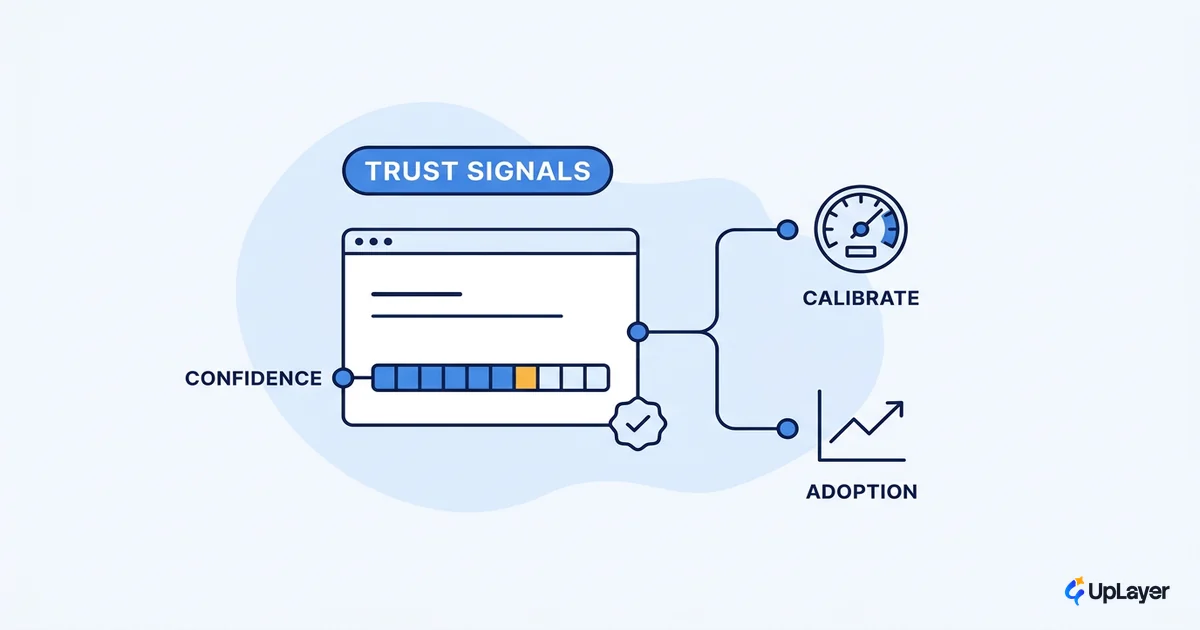
- Confidence signals. Show the user how sure the system is, and make the wrong answer cheap to correct rather than expensive to trust.
- Graceful recovery. When the AI misses, the path back should be obvious. Dead ends kill adoption faster than wrong answers.
- Human-in-the-loop on high-trust actions. Let the user confirm before anything irreversible happens.
WARNING
The most common AI design mistake is building a chatbot nobody opens. Nielsen Norman Group research found that scripted bots break the moment a user steps off the prescribed path, and that for most products, improving the UX of your existing app returns more than a chatbot that will get little use. If the answer to "where does this move a metric" is fuzzy, do not build the bot. Design the in-product assistant that earns its place instead.
Good craft here is not decoration. It is the mechanism that converts a feature with projected value into a feature with real adoption. Without it, the metric you projected in step 2 never arrives.
Generative AI product design without the theater
Generative features raise the trust bar higher than any other kind. Generative ai product design covers drafting, summarizing, suggesting, and rewriting, where the system produces something the user has to judge. The design challenge is not making it produce. It is making the output trustworthy enough to act on.
Three things keep generative features honest:
- Reliability guardrails. Constrain what the model can assert, and ground its output in sources the user can check.
- Human-in-the-loop. Put a review step between the generation and any consequence that is hard to undo.
- Honest framing. Label projected impact as projected, not achieved. Show the assumptions. A number with no source gets cut.
NOTE
A Concept Demo is how we prove this before a single line ships to production. We build a working prototype of the highest-scoring feature and frame its impact as designed to move or projected, never claimed. It shows the thinking, the guardrails, and the experience without inventing a result we have not earned.
The theater version of generative AI is the feature that demos beautifully and quietly hallucinates in production. The disciplined version constrains itself, shows its work, and stays inside the metric it was built to move. The difference is design intent, not model choice.
How do you measure AI product design success
You measure it the way you measure anything you can defend: against a baseline, on one number, with a rule for when to stop. Success in AI product design is not "users said it felt smart." It is a delta on a metric you reported before the feature existed.
The loop is short. Capture the baseline before launch. Pick one primary metric and resist the urge to track ten. Ship to a slice of users. Read the delta, not the vanity engagement. And write the kill rule in advance, so an underperforming feature gets retired instead of defended.
This is also the honest answer to whether the design worked. If activation, retention, conversion, or expansion bends in the direction you projected, the design earned its place. If it does not, the feature gets cut, the budget moves to the next idea, and nobody pretends otherwise. That discipline, more than any tool or pattern, is what separates the work that pays off from the version that ships and moves nothing.
The teams that win the next two years will be the ones that treat ai product design as a metric decision first and a craft decision second, in that order, every time. Pick the number, project the move, design it so it gets used, then measure the delta against the baseline. The craft still matters enormously. It just comes second, where it belongs.
TIP
Want to know which AI feature would actually move a metric you already track, before you design a thing? How the AX Audit works.