AI feature adoption and why most move nothing
AI feature adoption is the real gap: working AI features ship, get clicked, and still move no metric. Why it happens and the signals that quietly fix it.
 Anamoul RoufAI for SaaS & Features7 min read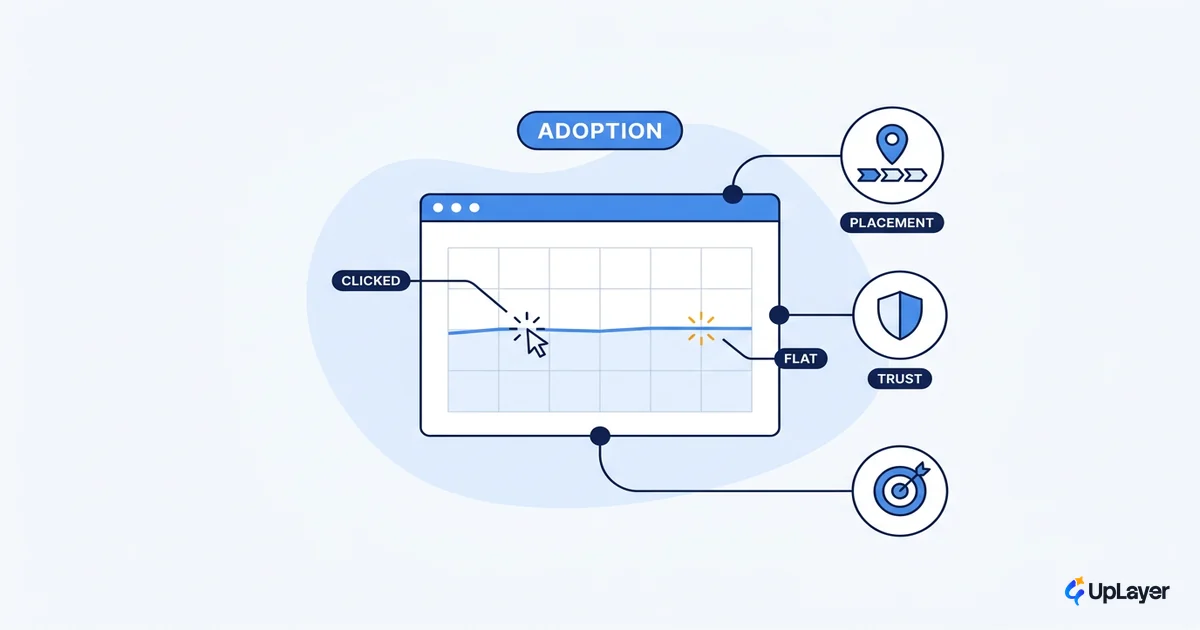
The feature shipped on time. The demo landed, leadership clapped, and the release note went out. Then the dashboard stayed flat. Nobody churned because of it, nobody activated faster, nobody upgraded. It just sat there, getting a few clicks a week, moving no number anyone cares about.
That is the real story of AI feature adoption in most products. The model works. The output is fine. And the metric you build the business on does not budge. The problem is almost never the model. It is that the feature was never placed where the work happens, never earned trust on first contact, and was never tied to a number you already track. This piece covers why working AI features move nothing, and the placement and trust signals that change that. If you are still deciding what to ship, start one level up with the AI features worth adding before you optimize for adoption.
The adoption gap: shipped, used, and still moving nothing
Adoption is a proxy for a metric you already track, not the prize itself. A feature can be discovered, clicked, and even mildly liked while activation, retention, and expansion all hold flat. Counting usage feels like progress because the chart goes up, but usage that does not connect to a business number is just motion.
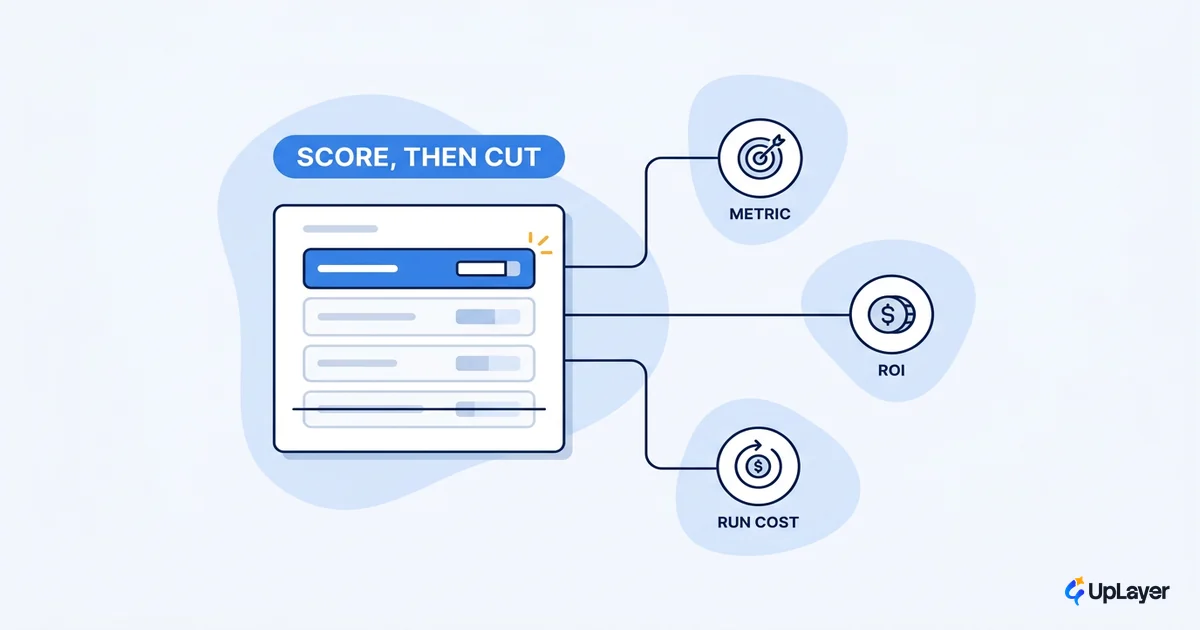
The pattern is industry wide, not a quirk of your product. In its 2024 survey of 1,000 executives, BCG found that 74% of companies have yet to show tangible value from their use of AI, and just 4% generate significant value across functions. Most saas ai features land in that 74%: built, shipped, technically working, and economically invisible. The fix starts by deciding, before launch, which number the feature exists to move. That is the same discipline behind tying one AI feature to one metric you already track.
| Adoption signal you can see | The number it should move | What a flat signal usually means |
|---|---|---|
| Feature opened / clicks per week | Activation rate | Discoverable but not yet trusted or in the workflow |
| Repeat use within a session | Retention / stickiness | Used once out of curiosity, not adopted as a habit |
| Use by paying segments | Expansion / upgrade rate | Liked, but not tied to the job people pay more for |
| High usage, flat revenue | None | The feature moves a vanity metric, not money |
If your only proof is "people are using it," you have measured the proxy and skipped the point. Adoption has to ladder up to a number, or it is not adoption that matters.
Why is AI feature adoption so low?
Low adoption is rarely a model problem. It is a placement, trust, and metric problem wearing a model costume. The feature is hard to find, slow to trust, or disconnected from the work the user came to do, so it gets ignored the way most software gets ignored.
That base rate is brutal and predates AI. Pendo's analysis of anonymized usage across its customer base found a stark split:
An average of 12% of features generate 80% of average daily usage volume. Meanwhile, 80% of features are rarely or never used.
AI features inherit that distribution unless you design against it. Shipping one more thing into a product where four out of five features go unused is not a strategy, it is a coin flip. And the build-then-abandon pattern is even sharper for AI: Gartner predicts at least 30% of generative AI projects will be abandoned after proof of concept by the end of 2025, citing escalating costs and unclear business value. A feature that nobody adopts and that proves no value is the most common way an AI initiative quietly dies.
What makes users ignore a new AI feature?
Users ignore a new AI feature when it fails on first contact: they cannot find it, cannot tell what it will do, or do not trust the answer it gives. Trust in AI is fragile and front-loaded. One confident, wrong output early, and the user files the feature under "not for me" and never comes back.
Discoverability and usability are the quiet killers. Nielsen Norman Group argues that today's generative AI interfaces carry deep-rooted usability problems, and that better AI usability is a real competitive advantage rather than a nice-to-have. When the interaction is awkward, the feature does not get a fair trial. Most ai features in saas die in that first session, not in week six.
The recurring ignore-triggers are predictable:
- It is hidden. The feature lives in a tab or panel the user never opens during real work.
- It is unclear. The user cannot predict what the AI will do, so they do not risk it on a real task.
- It breaks trust early. A wrong or unverifiable answer on first contact ends the relationship.
- It is irrelevant. It solves a job the user does not have, in a moment they are not in.
How do you drive adoption of an AI feature?
You drive adoption by making the feature discoverable in context, trustworthy on first contact, and tied to a metric you watch from day one. The order matters. Trust before reach, reach before scale. A feature that earns trust slowly beats a feature that gets pushed loudly and burns it. It helps to study the SaaS AI features that actually get used daily, because the ones that stick share the same placement and trust traits this sequence is built around.
Here is the working sequence, in order:
ADOPTION = placement x first-contact-trust x metric-fit

1. Pick the metric first
   - Decide: activation, retention, or expansion. One. Instrument it before launch.
2. Place it in the workflow
   - Surface the feature where the job already happens, not in a separate panel.
3. Earn first-contact trust
   - Show confidence, cite checkable sources, make every action reversible.
4. Prompt in context
   - Trigger help on user behavior, not on a timer. Relevance beats reach.
5. Read the curve, not the spike
   - Adoption is the slope over weeks, not the bump on release day.
This is the supportive-AI approach in practice. The feature helps with a job the user already has, and you can prove it moved a number. The same instinct shows up in the in-context UX patterns that make a feature feel native instead of bolted on, and in the broader playbook for how to increase AI adoption once the basics are in place. Drive the metric, not the click. Activation is the early signal that the sequence is working.
Adoption is the metric, not the milestone
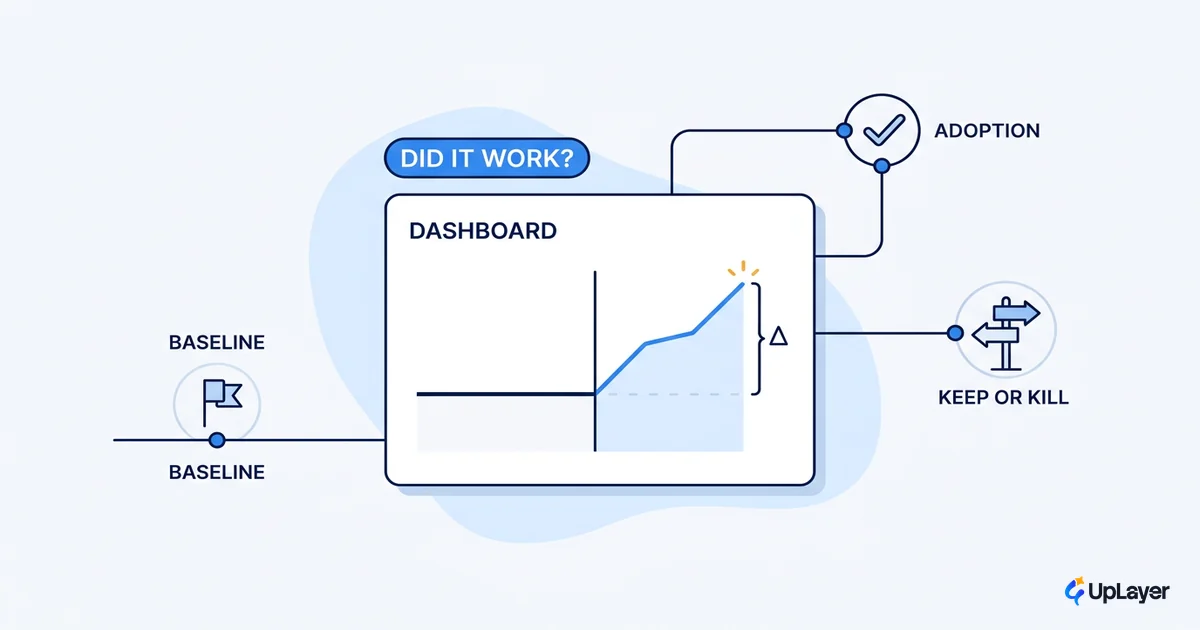
The launch is not the win. The curve is. Treating ship day as the finish line is how teams end up with a wall of features that demo well and move nothing. Read adoption as a leading indicator for the number you chose, and kill the feature honestly if the number stays flat after a fair trial.
WARNING
Most AI features ship and move nothing. Define the metric before the model, and treat adoption as a proxy for that metric, never as the goal itself.
This is the difference between supportive AI and AI theater. Supportive AI helps with a job the user already has and earns its place against a number. Theater demos well, ships, and quietly costs you. Any projected metric movement here should be framed as projected and proven in a Concept Demo, never claimed before the curve confirms it.
Strong ai feature adoption is the readout, not the trophy. When the placement is right, the first contact builds trust, and the feature is wired to a metric you already track, adoption and the number move together. When they do not move together, you learned something cheap: that feature was theater, and the next one gets the metric defined first.
TIP
Want to know which of your AI features will actually move a number before you build them? How the AX Audit works..