Supportive AI vs core-engine AI: which to ship
Supportive AI sits on top of your product as a helper, not the engine you bet the company on. See the difference from core-engine AI and which to ship.
 Shahriar P. ShuvoAI for SaaS & Features7 min read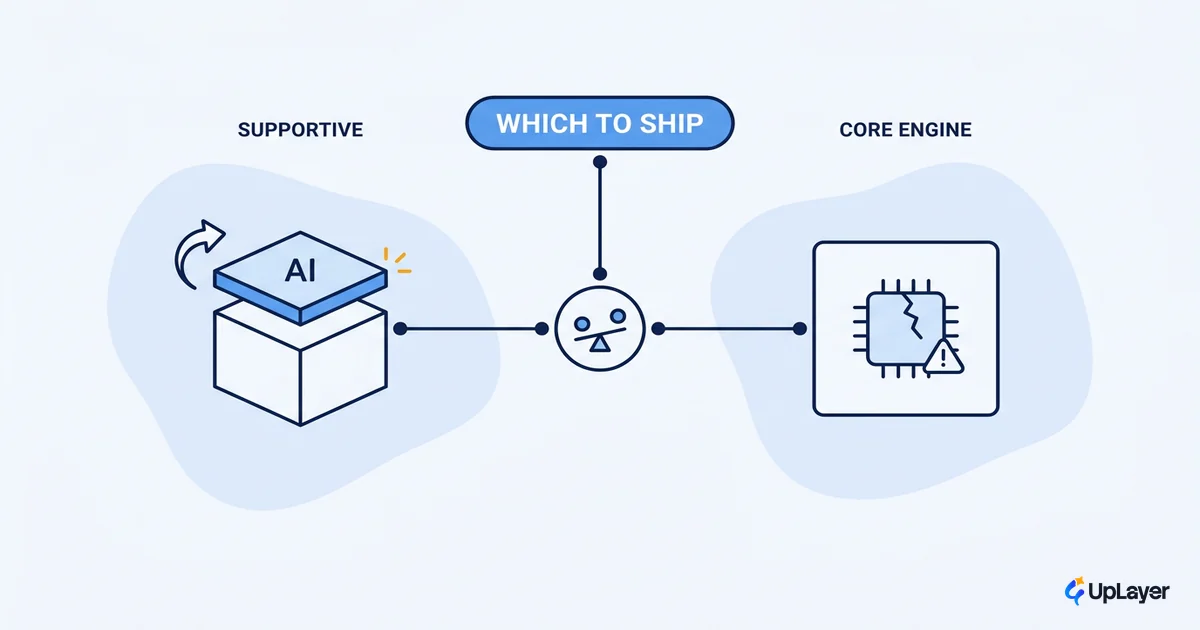
Most teams argue about which model to use before they have answered a more important question: where does the AI actually sit in the product? That one unmade decision is why a model swap, a price hike, or a bad day from a vendor can take a whole product down. Supportive AI is the answer to where it sits. It is intelligence that lives on top of your product as a copilot, assistant, search, or analysis layer, helping the user without becoming the thing the product depends on.
The opposite is core-engine AI, where a model is the product. When the model is the engine, every weakness in it is a weakness in your business. The contrarian-but-true version: the safest, highest-return AI is the kind you could remove tomorrow without breaking anything.
This piece draws the line cleanly, shows why most in-product AI moves no metric, and gives you a decision rule for which one to ship. If you want the broader playbook, start with how to add AI to your SaaS without betting the company and treat this post as the architectural half of that decision.
What is supportive AI?
Supportive AI is intelligence layered on top of an existing product to assist the user, while the product's core logic keeps working whether the AI is on or off. It shows up as a copilot, an assistant, a smarter search box, a summary panel, or an analysis view. Turn it off and the product still does its job. That reversibility is the whole point.
The category is well defined by the vendors who sell it. Microsoft describes a copilot as an assistant that works alongside the user, offering real-time support and suggestions, as distinct from an autonomous agent that acts on its own. IBM frames a copilot the same way, as a conversational assistant that augments the people using it rather than replacing the system underneath. In both definitions the human and the existing product stay in charge. The AI is the helper, not the foundation.
This is the spine of how we think about it at UpLayer. You add a layer that levels the product up. The engine you already built stays the engine.
Supportive AI vs core engine AI, what's the difference?
The difference is what breaks when the model is wrong. With supportive AI, a bad answer is a bad suggestion the user can ignore. With core-engine AI, a bad answer is a broken product. That single distinction cascades into reversibility, cost of failure, and how you prove return.
| Dimension | Supportive AI (the layer) | Core-engine AI |
|---|---|---|
| Where it sits | On top of the product | Is the product |
| If the model is wrong | A suggestion you can ignore | The core output is broken |
| Reversibility | Remove it, product still works | Cannot remove without rebuilding |
| Vendor / model swap | Swap underneath, users barely notice | Re-architecture and re-validation |
| ROI proof path | Tie one feature to one tracked metric | Bet the roadmap, prove it later |
| Who it serves | The user doing their existing job | A new job the model must do reliably |
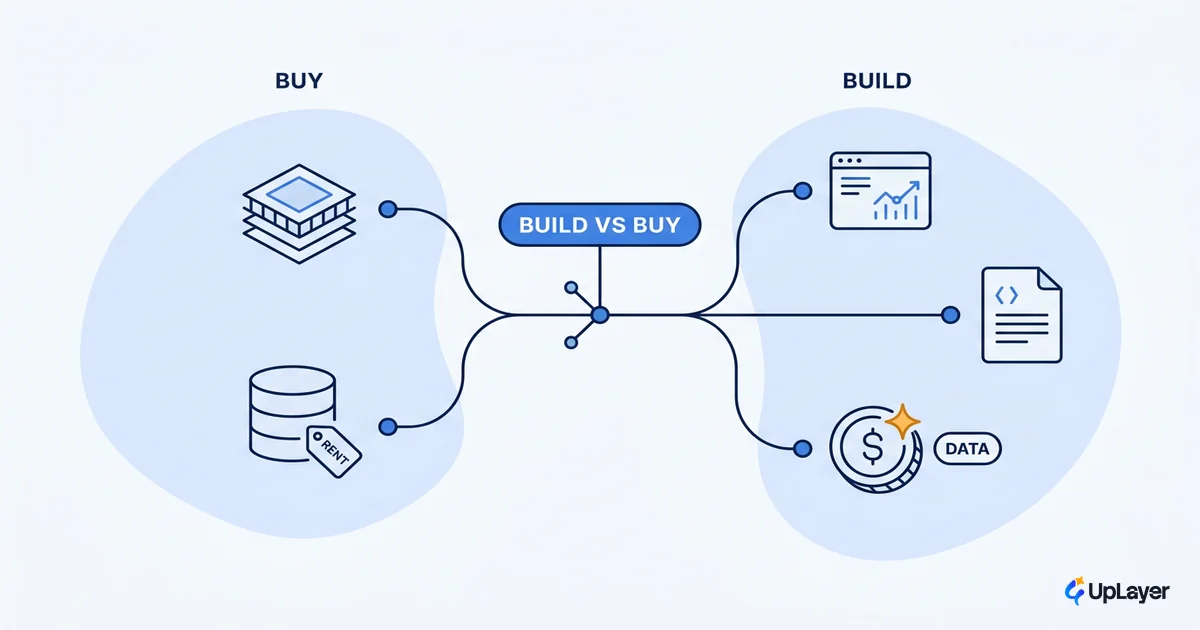
Core-engine AI is not wrong in every case. If the model genuinely is the value, a fraud-scoring engine, a transcription product, a recommendation core, then it belongs in the engine and you accept the higher bar. The mistake is defaulting to core-engine AI for features that would have been safer, cheaper, and faster to prove as a supportive layer.
Why most in-product AI moves no metric
Here is the uncomfortable part. Most AI that gets shipped into products changes nothing measurable, and the failure rate is well documented.
Gartner predicts at least 30% of generative AI projects get abandoned after proof of concept by the end of 2025, citing poor data quality, weak risk controls, rising costs, or unclear business value.
An MIT NANDA study reported by Fortune found that roughly 95% of enterprise generative AI pilots produced no measurable P&L impact, and attributed the gap to integration and an organizational learning gap, not to model quality.
Read those two numbers together and the lesson is not "AI does not work." It is that AI shipped without a job, a metric, and a reversible place to live tends to move nothing. Betting the engine on a model is the fastest way to join the 95%, because when the bet does not pay off you cannot quietly pull the feature. You have to rebuild.
WARNING
The risk is not that the model is bad. It is that you wired a probabilistic helper into the load-bearing path of your product. Define the metric and the off switch before you write the prompt. This is what separates in-product AI that earns its place from theater.
Supportive AI changes the math. Because the layer is reversible, a feature that does not move its metric can be removed without a re-architecture. You lose the build cost, not the product.
Why ship AI above the core engine?
Shipping AI above the core engine is how you de-risk the whole bet. The product keeps a deterministic spine that you control, and the AI rides on top where its failures are recoverable. You get the upside of the feature without handing your reliability to a vendor's release schedule.
Three concrete reasons to keep the AI supportive:
- Model independence. When the AI is a layer, you can swap the model underneath for a cheaper, faster, or more accurate one and users barely notice. When the model is the engine, a swap is a re-architecture.
- Reversible failure. A wrong suggestion is recoverable. A wrong core output is an outage.
- Honest ROI. A layer attaches to one feature and one metric, so you can prove or disprove its value without betting the roadmap.
The decision itself is small enough to write down. Run every AI idea through one test before you choose where it lives.
LAYER-OR-ENGINE TEST

1. If this AI is wrong, what breaks?
     a suggestion the user can ignore  -> SUPPORTIVE (ship the layer)
     the product's core output         -> CORE-ENGINE (raise the bar)

2. Can I remove this feature in a day without a rebuild?
     yes -> SUPPORTIVE
     no  -> CORE-ENGINE

3. Is the model itself the product's reason to exist?
     no  -> SUPPORTIVE (default here)
     yes -> CORE-ENGINE (accept the cost, prove reliability first)

Default to SUPPORTIVE. Choose CORE-ENGINE only when all three force it.
Most features that look like they need core-engine AI do not. They need a well-designed supportive layer with guardrails and a clear off switch.
How to decide: integrating AI into SaaS as a layer
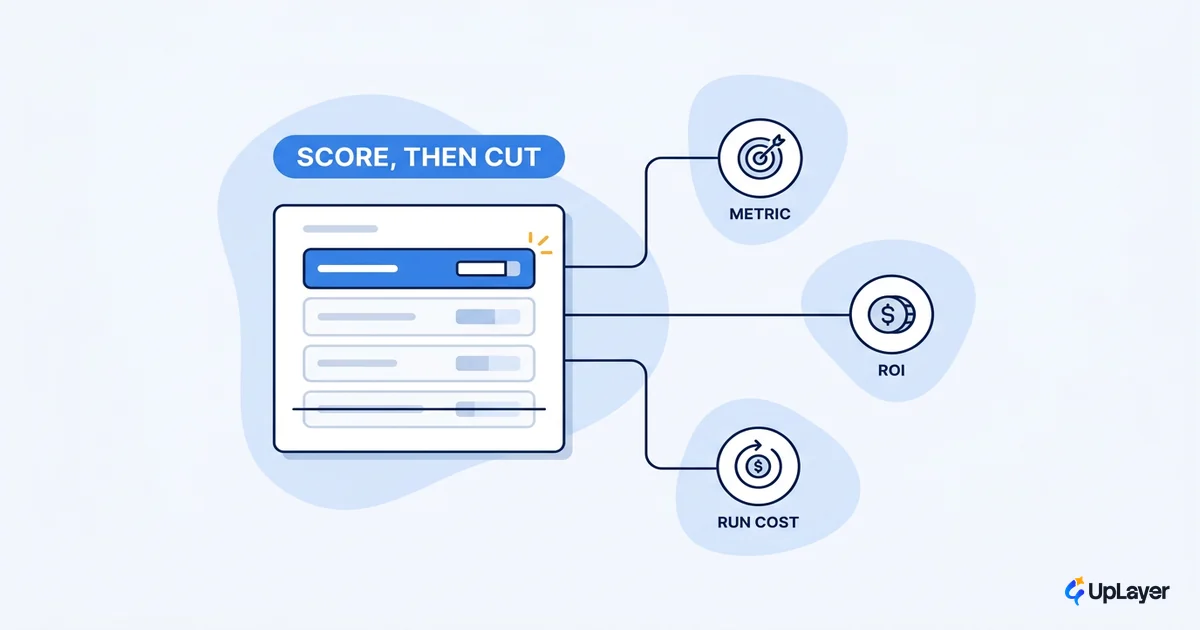
The practical move when integrating AI into SaaS is to pick one job, one metric, and one reversible layer, then prove the delta before you expand. Do not ship a copilot because copilots are popular. Ship one because there is a number you already watch that it should move.
A simple sequence:
- Name the metric first. Activation, retention, conversion, expansion, time-to-value. Pick one you already track and tie it to a metric you already track so the result is a number, not a story.
- Pick the smallest supportive surface. A summary, a suggested action, a search upgrade. Something that helps inside an existing workflow.
- Build the off switch with the feature. If it does not move the metric, you remove it without touching the engine.
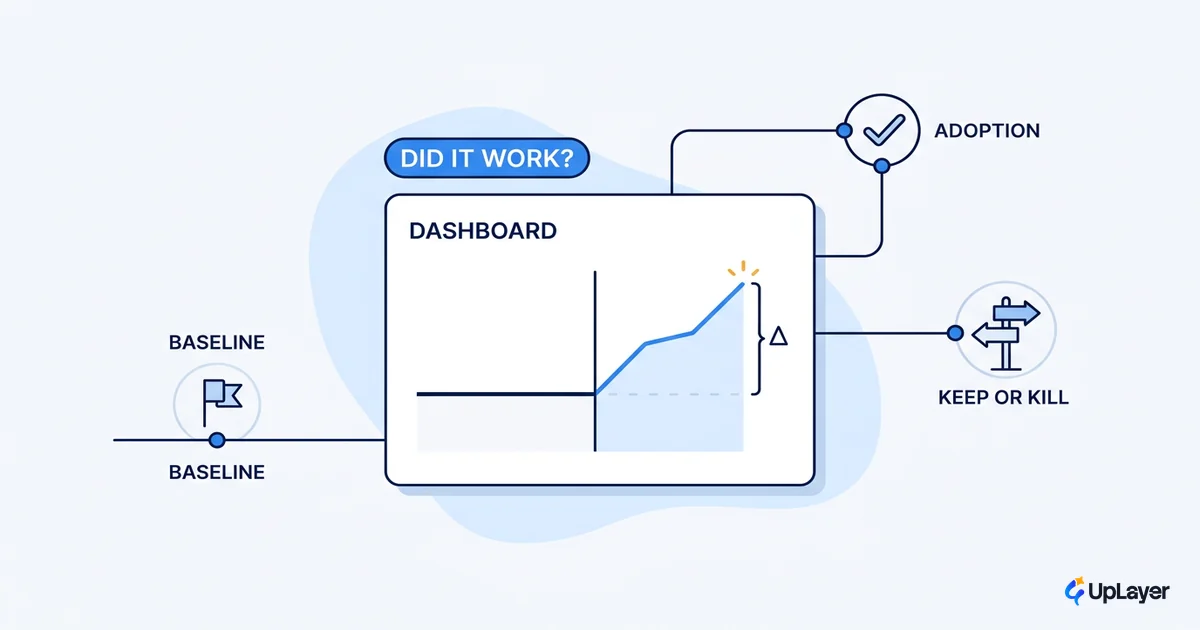
- Measure the delta, then decide. Keep what pays off, kill what does not.
That is most of the integration work of adding a supportive layer: the engineering is real, but the harder discipline is refusing to ship AI that has no metric attached.
NOTE
Concept Demo framing: a support copilot designed to deflect repetitive tickets is projected to move first-response time and deflection rate, both already on the support dashboard. The point is not the projected number. It is that the feature is wired to a metric and can be pulled if the delta does not show up.
The teams that win with AI in 2026 are not the ones with the most ambitious model. They are the ones who treated supportive AI as the default, kept the core engine deterministic, and only reached for core-engine AI when the product genuinely demanded it. Decide where the AI sits before you decide which model runs it, and most of the risk goes away.
TIP
Not sure whether your next feature should be a supportive layer or a core bet? How the AX Audit works.