How to write an AI product strategy
An AI product strategy is a ranked sequence of metric bets, not a vision deck. Here is how to write one for B2B SaaS that actually moves a number.
 Shahriar P. ShuvoAI ROI & Strategy7 min read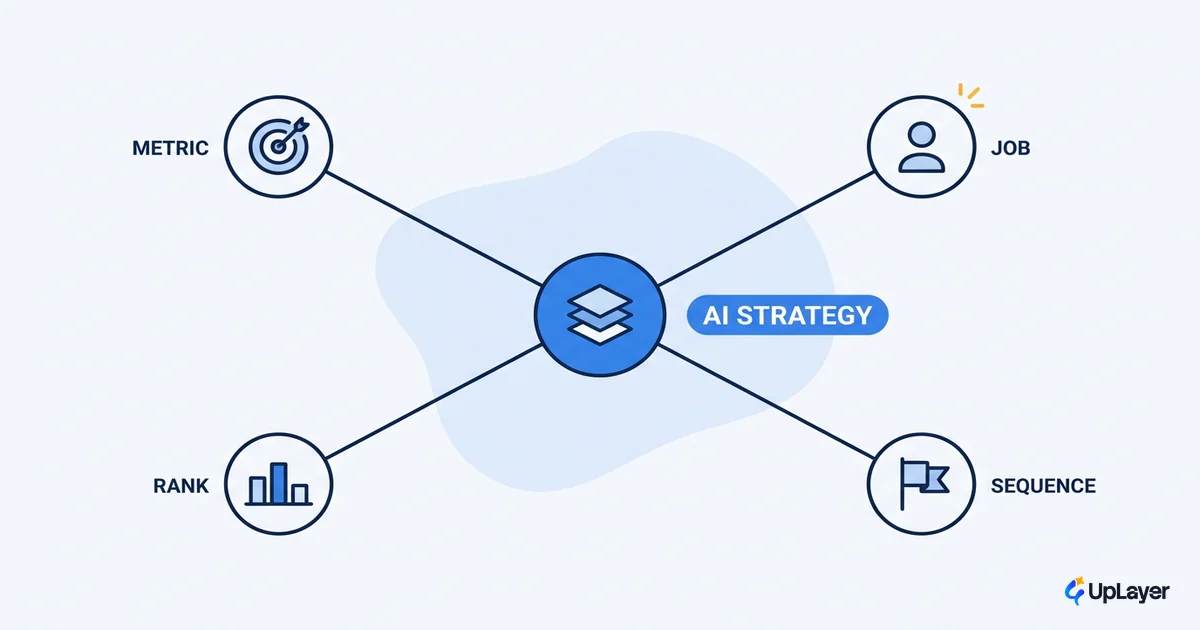
Someone told you to "have an AI strategy," so you opened a slide deck. That is where most of them die. An AI product strategy written as a vision deck is full of ambition and empty of numbers, and it tends to ship features that demo well and move nothing. The fix is not more vision. It is a different shape: a real AI product strategy is a ranked sequence of small metric bets, each one a layer on top of what your product already does well.
This piece gives you that shape. What a strategy actually contains, why most of them stall, a framework you can run this quarter, and the part most teams skip, which is deciding what not to build.
What is an AI product strategy?
An AI product strategy is a prioritized list of feature bets, where each bet names a metric you already track, projects its return before any code is written, and ships as a supportive layer on top of the core product. That is the whole definition. It is closer to a portfolio than a manifesto.
The vision-deck version describes a future. The metric-bet version describes the next three to five things you will build, in order, with a number attached to each and a rule for when to stop. The difference matters because the vision version has no way to be wrong, and anything that cannot be wrong cannot guide a decision. Before you write a single bet, you have to decide which AI features to build in the first place, which is its own discipline.
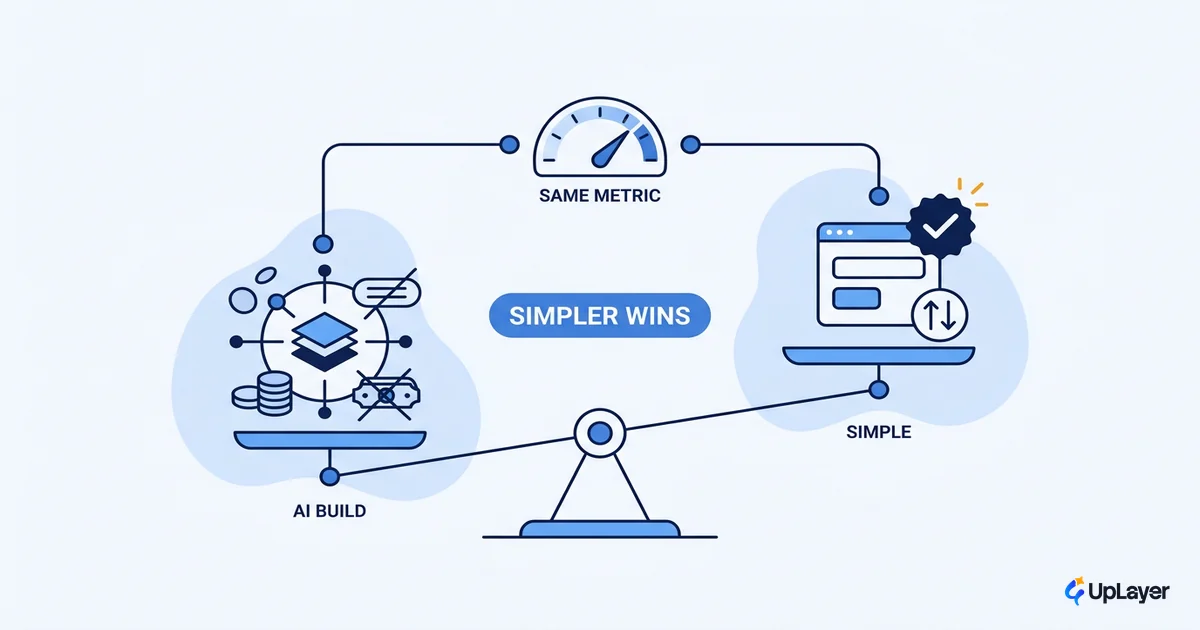
The "layer on top" idea is the load-bearing part. You are not rebuilding the product around a model. You are adding a thin AI layer above an engine that already works, so a model swap or a bad output never takes the core product down with it. The plan is just the order in which you add those layers.
Why most AI product strategies move no metric
Most do not fail because the technology is weak. They fail because the strategy was written as a wish, not as a set of bets tied to a number you can read next month. The base rate here is brutal. A widely cited MIT study found that roughly 95% of enterprise generative-AI pilots end up delivering little to no measurable impact on the bottom line.
Despite the rush to integrate powerful new models, only about 5% of AI pilot programs reach rapid revenue acceleration. The rest stall.
The pattern repeats at the project level. Gartner expects more than 40% of agentic AI projects to be canceled by the end of 2027, driven by escalating costs, unclear business value, and weak risk controls. "Unclear business value" is the tell. These were strategies with no metric attached, so nobody could say whether they worked, and eventually somebody pulled the plug.
WARNING
If a line in your plan does not name a metric you already track, it is not a strategy line. It is a hope. Define the metric before the model, every time.
A strategy that fails to move a metric was usually never built to move one. The cure is structural, and it fits in a framework.
A simple AI product strategy framework
An AI product strategy framework is the repeatable process that turns vague AI ambition into an ordered list of metric bets. If you want the full scorecard version of this, the AI product strategy framework lays out each stage as a runnable template. Run these five steps in sequence.
- Pick the metric first. Choose one number your team already tracks and already cares about: activation rate, churn, time-to-value, support deflection, conversion. AI that is not pointed at one of these is decoration.
- List candidate bets. Write down every AI feature idea as a one-line bet: which metric it targets and the mechanism by which it moves that metric.
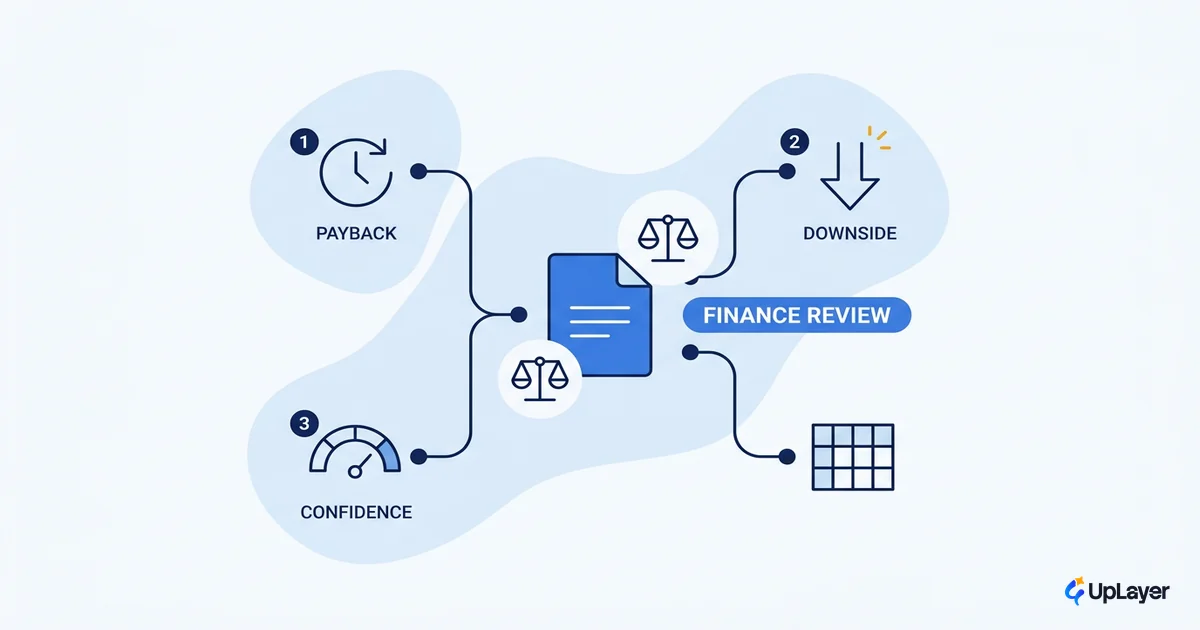
- Project the return. For each bet, estimate the projected delta on the metric and the projected cost to build and run it. You can measure the ROI of each AI feature before you commit a sprint to it.
- Rank and cut. Sort by projected ROI. Draw a line. Everything below the line is documented and not built.
- Set a kill rule. For each bet you keep, write the condition under which you stop: if the metric has not moved by X after Y, the feature is retired.
Here is the schema each bet should follow before it earns a place in the plan.
# One metric bet in the ranked plan
bet:
  feature: "Inline draft-reply suggestions in the inbox"
  target_metric: "median time-to-first-response"   # already tracked
  current_baseline: "4h 12m"
  projected_delta: "-35%"                            # projected, not achieved
  build_cost: "2 eng-weeks + model inference budget"
  ships_as: "supportive layer over existing inbox"   # core works without it
  kill_rule: "retire if delta < -10% after 30 days live"
Notice what the schema forces. No bet without a metric. No metric without a baseline. No build without a kill rule. The framework makes it hard to write a wish.
Which AI features belong in the strategy, and which to cut
The most valuable output of the whole exercise is the list of features you decided not to build. That is not a throwaway line. Pendo's analysis of real product usage found that around 80% of features in the average software product are rarely or never used, with a small fraction of features driving most of the engagement. AI features are not exempt from that math. If anything, the hype makes the bloat worse.
So a strategy needs an explicit build-or-cut test. The table below is the one we apply.
| Signal | Build the AI feature | Cut it from the strategy |
|---|---|---|
| Metric | Targets a number you already track | "Improves the experience" with no metric |
| Baseline | You can state today's value | No baseline, so no way to prove a delta |
| Mechanism | Clear path from feature to metric | "AI will make it smarter" hand-wave |
| Failure mode | Degrades gracefully as a layer | Core breaks if the model is wrong |
| Projected ROI | Positive after build and run cost | Negative or unknowable |
If a candidate lands in the right-hand column on any row, it goes on the list of AI features you should not build and out of the roadmap. Saying no on purpose is the part that keeps your strategy honest.
How an AI product strategy becomes an AI product roadmap
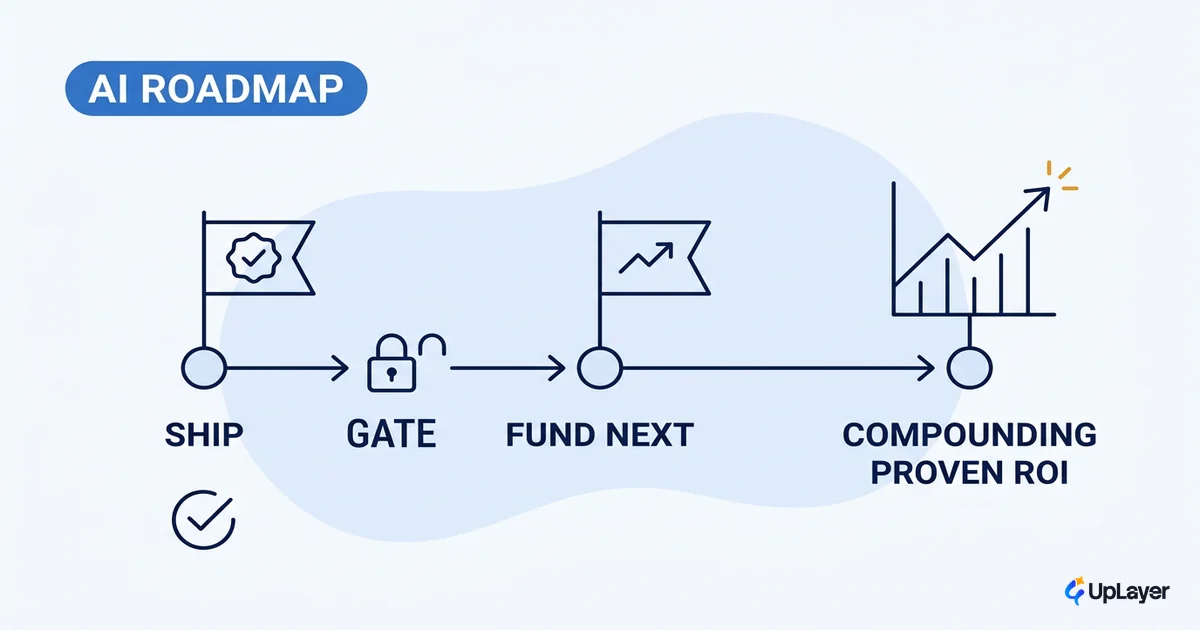
Once the bets are ranked, the strategy becomes a schedule. The roadmap is just the ranked list placed on a timeline, sequenced by projected ROI and by dependency, with each item carrying its metric and its kill rule forward. You can turn the ranking into an AI product roadmap without losing the discipline, as long as every roadmap item keeps its number attached.
This is where an AI driven product strategy differs from a normal feature roadmap. A normal roadmap tracks what you will ship. An AI-driven one also tracks the metric each item is supposed to move and the condition under which you remove it. The kill column is the difference. It is what keeps the roadmap from becoming a graveyard of features that shipped and stalled.
How do I build an AI product strategy for B2B SaaS?
Start with one metric and one bet, not a deck. For an established B2B SaaS team, the lowest-risk first move is to take a metric leadership already reports on, find the single AI feature with the best projected ROI against it, and build only that one as a layer on top. Prove the number before you widen the plan. An ai product strategy for b2b saas earns trust one moved metric at a time, not one launch event. Sequencing that work so it actually ships is the job of an AI adoption strategy, which starts from the same metric and buyer's job rather than from a model.
That is also how we work. We start from the customer's numbers, rank AI opportunities by projected ROI, and hand over a verdict that includes the features to skip. We guarantee the projected ROI of the recommended feature, or the audit is free. No invented results live in that verdict; anything we show is a Concept Demo or a projected figure, never an "achieved" claim we have not earned.
IMPORTANT
A strategy like this is not a one-time document. It is a loop: pick a metric, place a bet, ship the layer, read the number, kill or keep. Run the loop and the plan stays alive.
The teams that get real return from AI are not the ones with the boldest decks. They are the ones who treat the AI product strategy as a sequence of metric bets, ship the smallest layer that can move a number, and have the discipline to retire what does not pay. Write yours as bets, and the next quarter writes itself.
TIP
Want to know which single AI feature has the highest projected ROI in your product before you build anything? How the AX Audit works.