What an AI SaaS really is, past the label
An AI SaaS is defined by whether the AI moves a metric your users already care about, not by the model in your stack. Here is the real test to apply.
 Shahriar P. ShuvoAI for SaaS & Features7 min read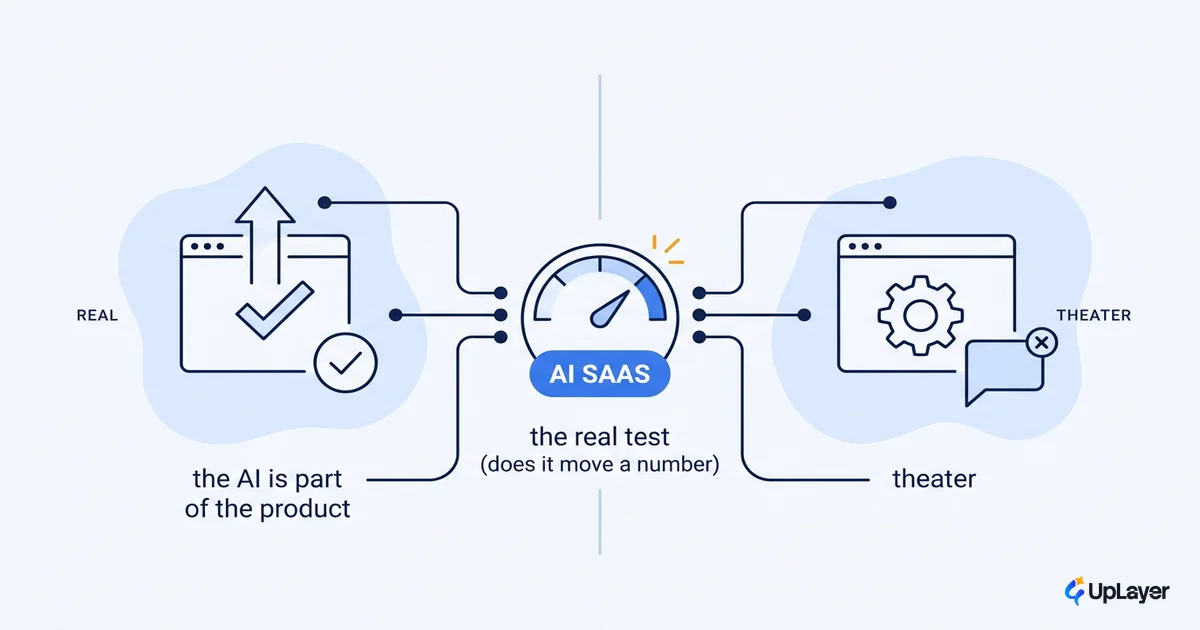
The term "AI SaaS" now describes almost nothing, because it describes almost everything. Every login screen, pricing page, and changelog has the badge. When a label is universal, it stops sorting good products from theater, and that is exactly where most buyers are stuck.
So here is the more useful test. The category is not defined by the model in your stack or the sparkle icon in your nav. It is defined by whether the AI moves a number the user already cares about, which is the only honest way to read the label. If it does, the AI is part of the product. If it does not, it is a settings page with a chatbot. The label is the wrong unit of measurement, and the rest of this piece is about the right one.
We build for that test every day, which is why we keep coming back to the same short list of AI features for SaaS that actually earn their place. The label question and the value question turn out to be the same question.
What counts as an AI SaaS, past the label
A product earns the term when AI is load-bearing in the core job the user hires it to do, not when AI sits in a side panel they can ignore. That is the whole distinction. Everything else is packaging.
The label stopped discriminating for a simple reason: adoption went mainstream. Stanford's AI Index found that 78% of organizations reported using AI in 2024, up from 55% the year before. When more than three quarters of companies "use AI," saying your SaaS "has AI" tells a buyer nothing. The signal moved from whether there is AI to what the AI changes.
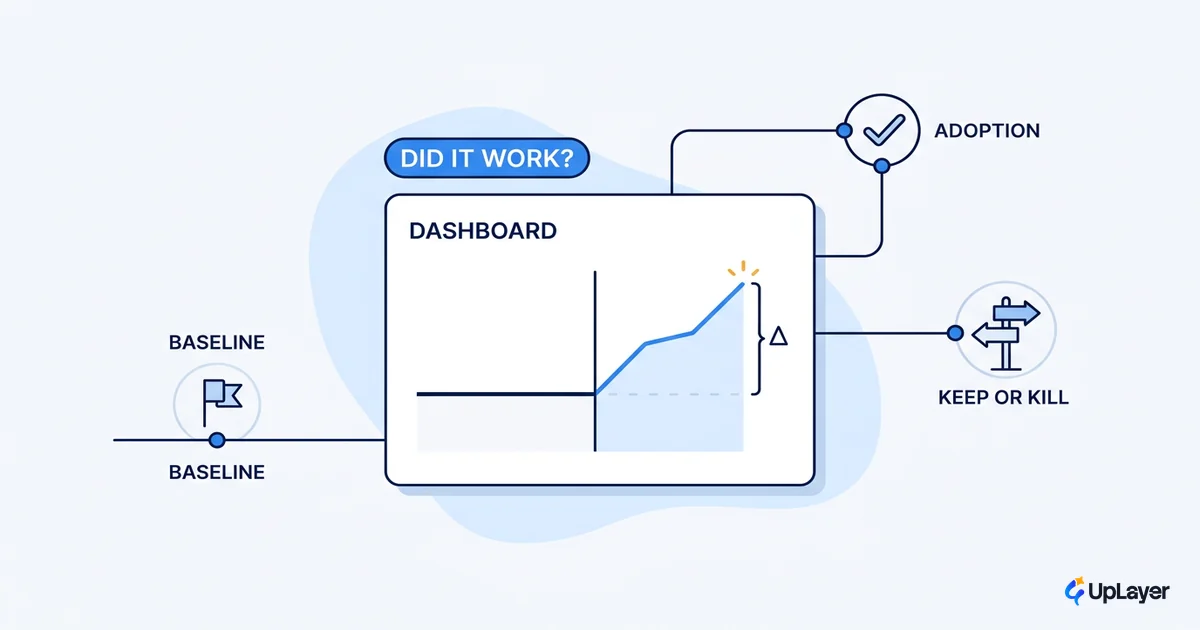
The practical version of the test is boring and effective: name the metric the feature is supposed to move before you build it. Activation, retention, time-to-value, support deflection, conversion. If you cannot name it, the feature is decoration. This is the same discipline behind how you tie it to a metric you already track when you measure the return on any AI feature. The genuine article can point at the number for every AI surface it ships.
The question is never "does it use a model." It is "does a user do something they could not do before, and does that show up in a metric you already report on."
Is every SaaS an AI SaaS now?
No. Nearly every SaaS uses AI, and almost none of that earns the label in any meaningful sense. Usage is not a category. Outcomes are.
The gap between "we added AI" and "the AI works" is wide and well documented. Gartner predicts that at least 30% of generative AI projects will be abandoned after proof of concept by the end of 2025, citing poor data quality, escalating costs, and unclear business value. A feature that demos in the all-hands and gets quietly removed two quarters later never made the product anything but a press release.
This is why "is every SaaS an ai saas now?" is the wrong frame. The interesting line is not adoption, it is durability. An AI powered SaaS that keeps its AI features in the product, because those features keep moving a number, is the real thing. One that ships a demo and rolls it back is a SaaS that ran an experiment.
WARNING
Most AI features ship and move nothing. "We have AI" is not a strategy and not a category. Define the metric before the model, or you are building theater on a deadline.
What makes a SaaS genuinely AI
A SaaS is genuinely AI when the AI is felt in the workflow, not announced in the marketing. The user does not need to know a model is involved. They need to notice that the job got faster, safer, or possible at all. That is what makes a saas genuinely ai: a felt change in the core loop.
Value tends to show up where the work happens, which is the application layer, not the model layer. Menlo Ventures' enterprise survey notes that the application layer is now growing faster than foundation-model spend, as companies create value by using AI to optimize real workflows. The model is a commodity input. The product is what you wrap around it. Here is the difference users actually feel:
| User-facing surface | Theater AI | Supportive AI that earns the label |
|---|---|---|
| Where it lives | Separate "AI" tab or floating widget | Inside the existing workflow, at the decision point |
| What it changes | Adds a thing to click | Removes a step, a wait, or a manual judgment |
| The metric | None named | One metric you already track (activation, retention, deflection) |
| When the model is bad | Breaks the feature | Falls back to the old path; nothing critical depends on it |
| If you removed it tomorrow | Nobody notices | A core number drops |
The right-hand column is supportive AI: a layer that makes the existing product better at its existing job. The left-hand column is the badge. Both can call the same API. Only one changes what the user can do.
AI native vs an AI layer on what you already built
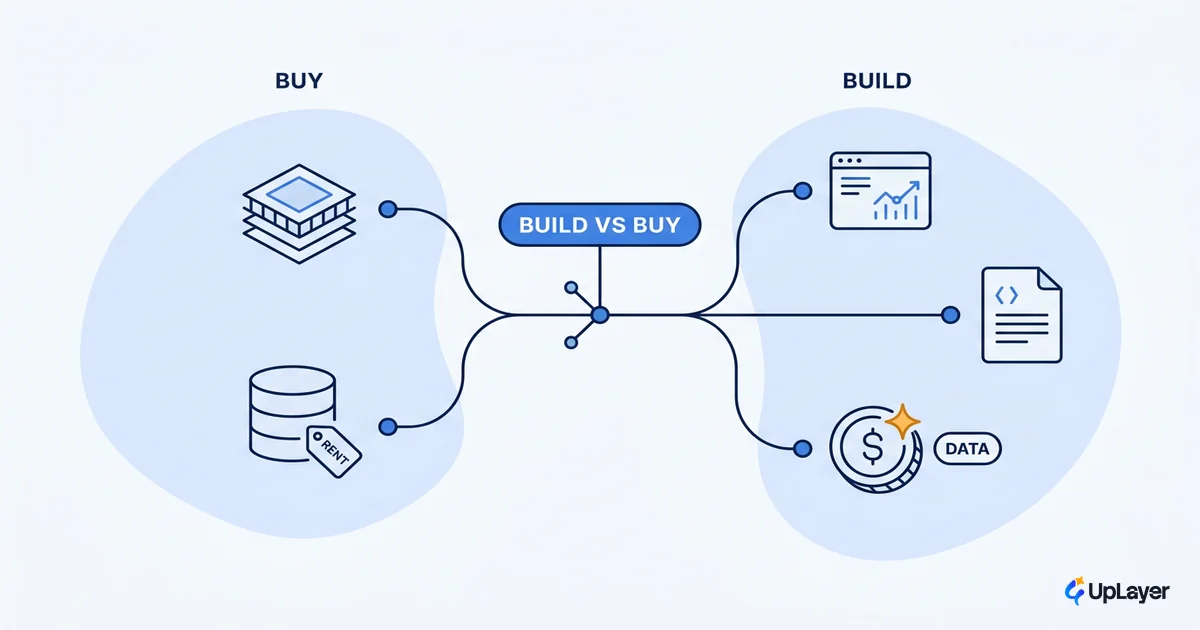
For most established SaaS, the choice is not whether to go AI native or add a layer. It is how to add a supportive layer to the engine you already have without betting the product on a model. AI native is a greenfield posture. A working B2B SaaS with paying customers usually has more to lose from a rewrite than to gain from one.
The economics back the layer. BCG found that leaders are generating 62% of the value of AI in core business processes, not in net-new AI products bolted onto the side. The value is in the work you already do. So the highest-return move is rarely "rebuild as an AI native saas." It is "find the one core process where AI moves a number, and ship that as a layer."
Here is the test we apply before any feature gets to call itself AI:
earns_the_label = (
  moves_a_named_metric        # activation, retention, conversion, deflection
  AND lives_in_the_core_loop  # not a side panel
  AND degrades_safely         # model fails -> old path still works
)

# If any clause is false, it is a feature with a model attached,
# not a reason to wear the AI badge.
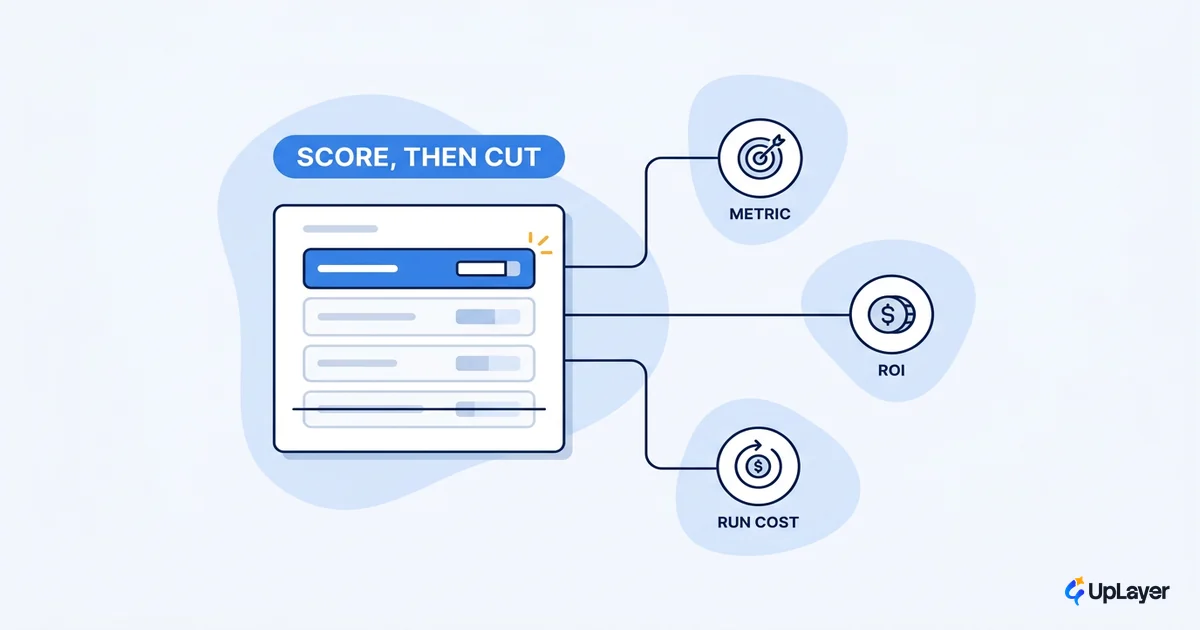
Run that on each AI surface. The features that pass are the ones worth the badge. The features that fail are the ones to cut before launch, which keeps your roadmap honest and your story true.
What an AI SaaS platform owes every feature
An AI saas platform is not a model wrapper. It is the set of guarantees every AI feature inherits: a named metric, reliability guardrails, a human-in-the-loop path where the cost of a wrong answer is high, and a safe fallback when the model is unavailable or wrong. If a platform cannot give those to every feature, it is shipping risk and calling it AI.
The simplest way to keep the standard is to make it structural. The choice between supportive AI versus core-engine AI is really a choice about how much of the product depends on the model behaving. Supportive AI keeps that dependency low on purpose, so a bad day for the model is not a bad day for the product.
IMPORTANT
A platform standard worth keeping: every AI feature ships with one metric, one fallback, and one owner. No metric, no ship. No fallback, no ship.
That is the whole posture. Not "do AI." Build the one layer that moves a number, prove it, and guard it.
The label "AI SaaS" will keep getting cheaper as more products claim it, which makes the real test more valuable, not less. The products that win the next few years will not be the ones that say "ai saas" the loudest. They will be the ones where you can point at the AI, point at the metric it moved, and watch the two stay connected after launch. That is what an AI SaaS actually is.
TIP
Want to know which single AI feature would move a metric you already track, with the ROI projected before you build? How the AX Audit works.