AI native SaaS vs adding a layer to what you built
AI native SaaS is something your users feel, not something your architecture is. Here is how to decide between a costly rebuild and a supportive AI layer.
 Sohanur RahmanAI for SaaS & Features7 min read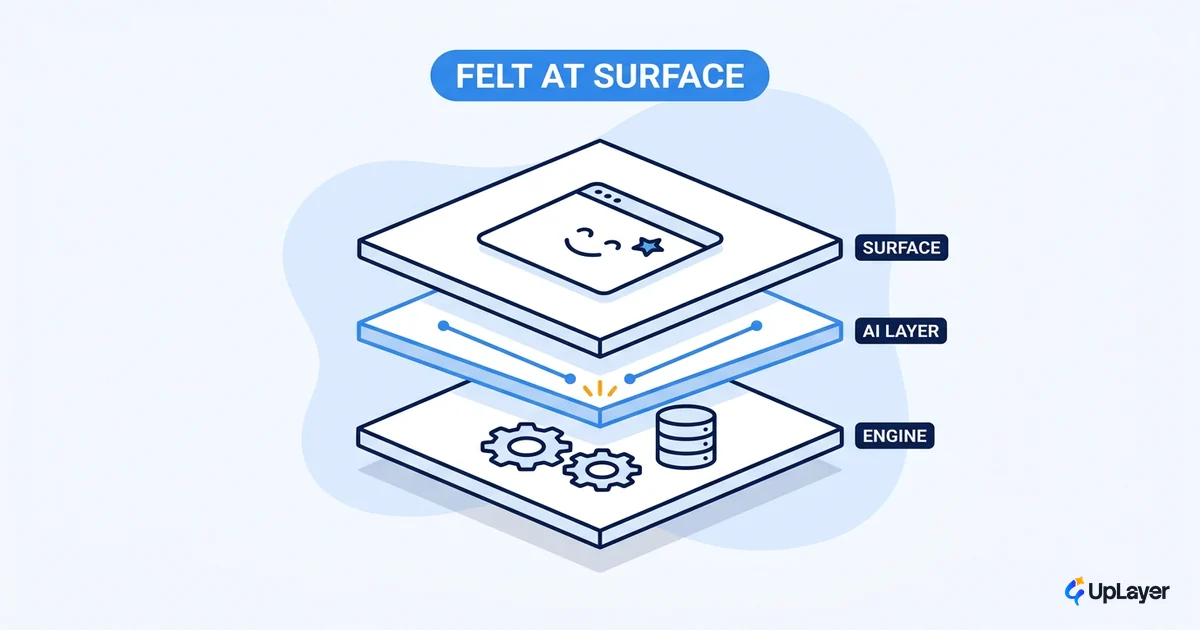
The board read an essay about AI-native startups eating incumbents, and now the quiet question on your desk is whether the four years of product you have already shipped are an asset or a liability. The pressure to become an AI native SaaS usually arrives as rebuild anxiety: a sense that the only honest answer to falling behind is to start over with AI in the foundation.
It is the wrong instinct, and it is expensive. Native is something your users feel at the surface, not something your architecture is underneath. A product can shape its core workflow with AI and still be a rewrite that never ships. A product can keep its existing engine and add a thin, reliable layer that makes the experience feel native to the people who pay for it. This piece is about deciding which path actually moves a metric you already track, and it starts from the same place our advice on how to add AI to your SaaS without betting the company does: with the number, not the roadmap.
What is an AI native SaaS, really?
An AI native SaaS is a product where AI shapes the primary job the user came to do, rather than sitting in a side panel as an optional extra. That is the honest definition. The dishonest version, the one most ranking articles sell, treats native as an identity you are either born with or locked out of forever.
Two things break that framing. First, adoption is no longer a frontier. 78% of organizations reported using AI in 2024 according to Stanford's AI Index, up from 55% a year earlier, so "we use AI" is now a baseline, not a differentiator. Second, and more important, your users cannot see your architecture. They judge nativeness at the interface: does the product anticipate the next step, reduce the work, and stay trustworthy under uncertainty? This is the same test that decides what an AI SaaS really is, past the label: whether the AI moves a number users already care about. A plain ai saas that ships a chatbot in the corner is not native. An ai powered saas whose AI reshapes the actual workflow is, regardless of what runs beneath it.
That gap between architecture and perception is the whole opportunity. It means an established product can earn the native feeling without earning the native rebuild.
AI native vs AI layered: which actually wins?
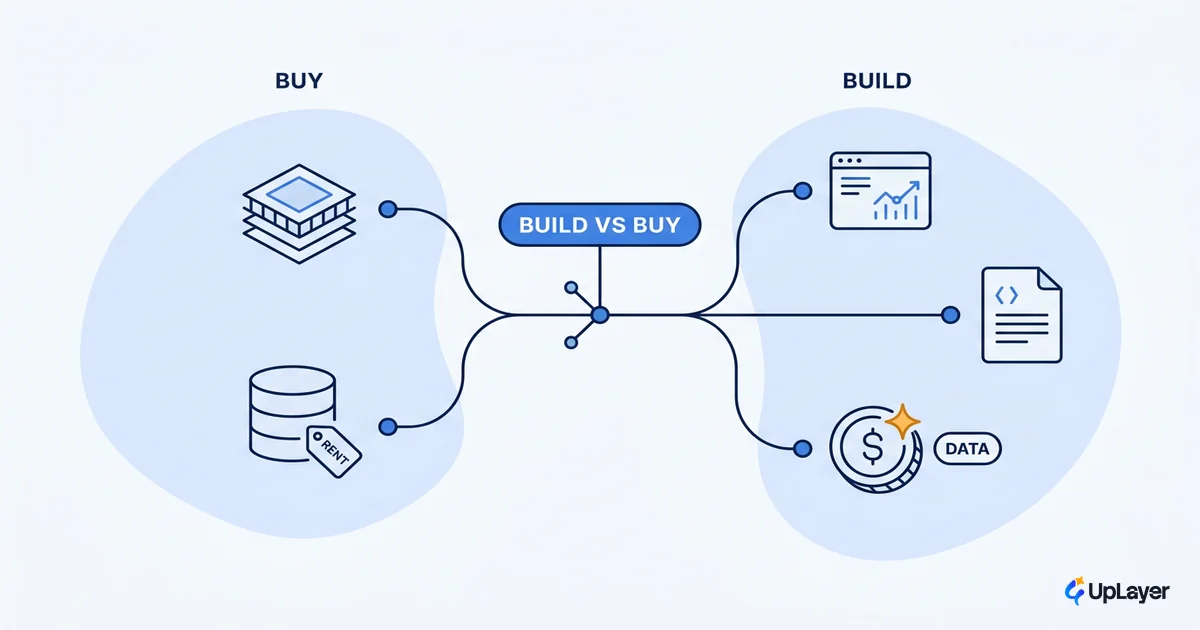
Here is the comparison the rebuild essays skip. Both paths can produce a product users call AI-native. They differ sharply on cost, risk, and how fast you reach a metric.
| Dimension | Rebuild as AI-native | Supportive AI layer |
|---|---|---|
| Time to first metric move | Quarters to a year | Weeks |
| Upfront cost | High; new core, new data plumbing | Bounded; reuses the existing engine |
| Blast radius of a model swap | Large; AI is load-bearing | Small; the layer is replaceable |
| User-perceived nativeness | High, if it ships | High, when the layer reshapes the core job |
| Failure mode | Greenfield project that stalls | A feature that gets killed cheaply |
| Reversibility | Low | High |
The right-hand column is not a compromise. It is risk management with the same upside. The cost of getting the left-hand column wrong is well documented: Gartner predicts that at least 30% of generative AI projects will be abandoned after proof of concept by the end of 2025, citing poor data quality, weak risk controls, escalating costs, and unclear business value. A rebuild concentrates every one of those risks into a single bet. The layer spreads them out and lets you stop early.
The category is full of products that demo well, ship, and move nothing. The native label is not the goal. The metric is.
Do you need to rebuild to be AI native?
Rarely. For most post product-market-fit SaaS, the supportive layer is the correct first move, and a rebuild is the thing you earn into later, after the layer has proven the metric is real. The pattern is to keep your core engine intact and place AI above it, where it can read context, propose actions, and hand control back to the user.
# The layer, not the rewrite

user_intent
   -> supportive AI layer   (interpret, draft, suggest, summarize)
        - reliability guardrails (validation, confidence, fallback)
        - human-in-the-loop confirm
   -> existing core engine   (unchanged source of truth)
        - your data, your business logic, your billing
   -> result the user already trusted, now faster

# Swap the model? Only the layer changes. The engine never moves.
This is what it means to integrate AI as a layer, not a rewrite: the engine that already earns your revenue stays the source of truth, and AI becomes an interpreter on top of it. Seen this way, SaaS vs AI is the wrong question: AI is an input to your software, not a rival to it, and the layer model is how the two actually fit. When a better model ships, or the current one regresses, you replace one component instead of operating on the heart of the product. That is also how you build a strategy that survives a model swap rather than one chained to a single vendor's roadmap.
WARNING
Do not start a rebuild before you have named the metric it is supposed to move. "Become AI-native" is a category, not a target. Churn, activation, and conversion are targets. Pick one, project the lift, and only then decide whether a layer can reach it or a rebuild is genuinely required.
What makes a layer feel native to users
A layer feels native when it changes how the user expresses what they want and stays fast and trustworthy while doing it. Nielsen Norman Group frames this as a shift to intent-based outcome specification: the user states an outcome and the system works toward it, instead of clicking through every command. That is the felt difference between a bolted-on supportive ai helper and a product that genuinely anticipates the job.
The same source is blunt about the risk: current AI is prone to including erroneous information in its results, and when users cannot see how something was done, errors are harder to catch. So the feel of native is not just intelligence. It is intelligence plus restraint. Confidence signals, easy correction, human-in-the-loop confirmation, and a clear path back to the trusted core engine are what keep the experience feeling reliable rather than uncanny. This is the difference between supportive AI versus core-engine AI: the supportive layer assists and defers, it does not silently take the wheel.
Speed is part of the feel too, and it has a number. Google's web.dev guidance puts good interaction responsiveness at or below 200 milliseconds for Interaction to Next Paint. A layer that stalls for three seconds before every response does not feel native, it feels in the way. Stream partial results, show progress, and keep the interface responsive while the model works.
How to decide: rebuild, layer, or wait
Run every AI-native ambition through the same gate before you scope anything.
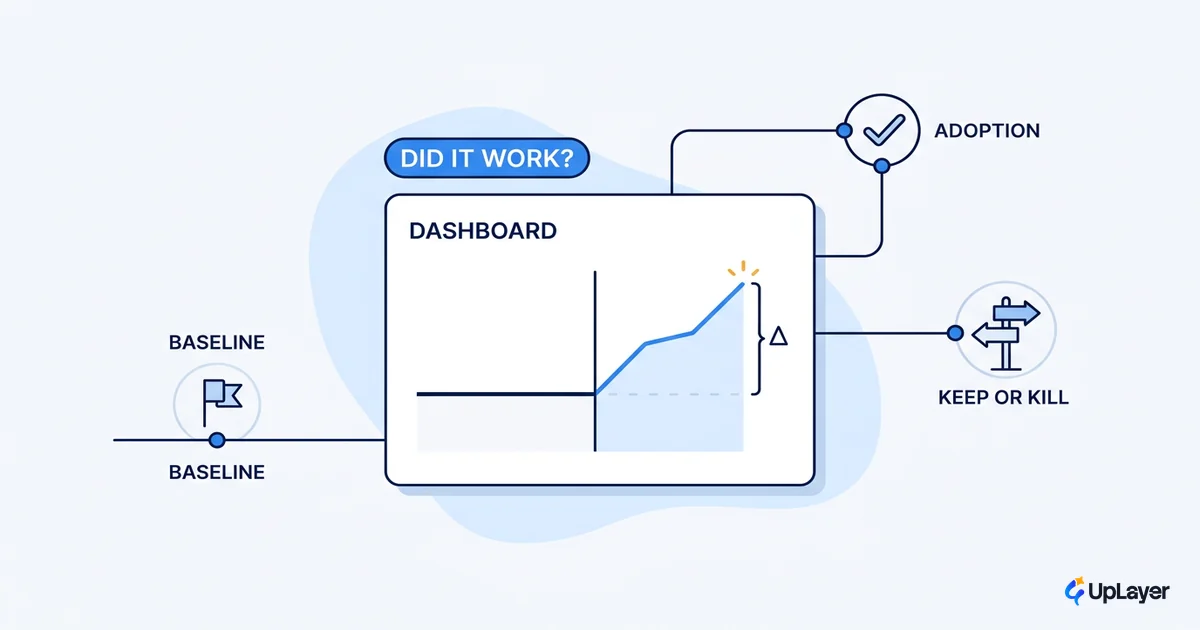
- Name the metric. One number you already track and report: churn, activation, conversion, expansion. If you cannot name it, you are not ready to build.
- Project the lift. Estimate, conservatively, how much a supportive layer could move that number. This is projected ROI, not a guarantee.
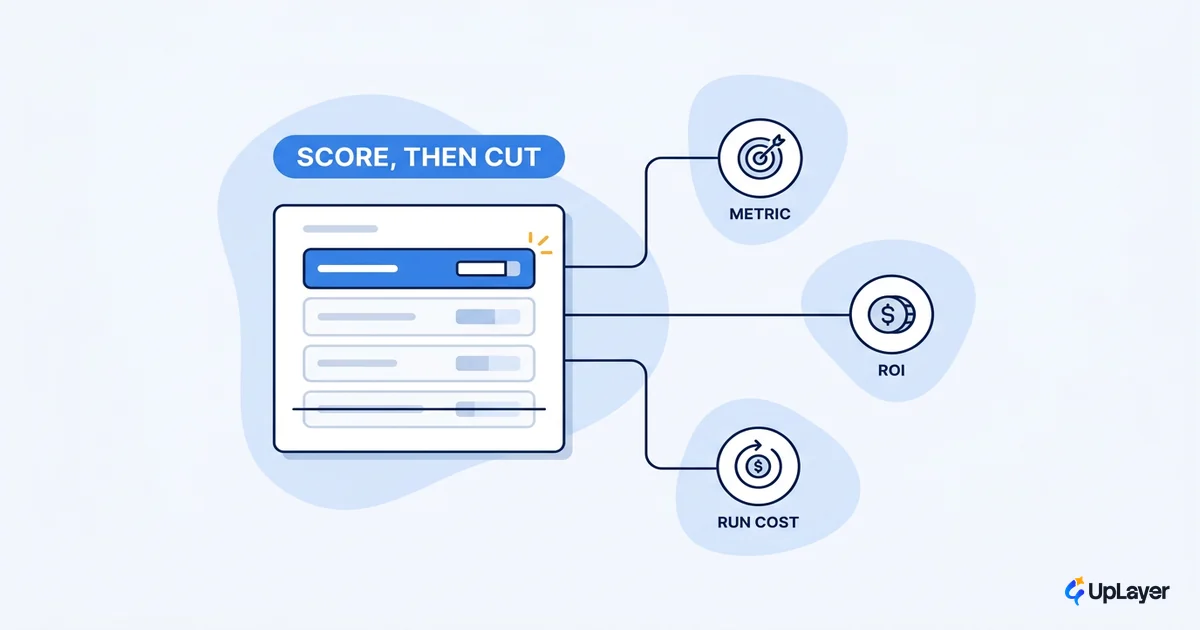
- Price the layer. What does the smallest version cost to ship and run?
- Price the rebuild. Be honest about the quarters and the risk from the table above.
- Choose the cheapest path that can plausibly move the metric. Almost always, that is the layer first.
NOTE
In an AX Audit we run exactly this gate and ship a working concept demo of the top opportunity, framed as projected ROI on a metric you choose. It is backed by the 3X Guarantee: the audit finds AI worth three times the fee, or it is free. No invented results, no theater.
Most teams do not need to rebuild to win. They need a supportive layer that earns the native feeling at the surface, proves a number, and leaves the option of going deeper open rather than spent. An AI native SaaS is not a category you join by tearing down what works. It is a quality your users feel, earned one metric at a time, on top of the product you already shipped.
TIP
Find out where AI actually pays off in your product before you write a line of code. How the AX Audit works..