What is AI reliability and how to measure it
AI reliability is the ROI lever teams skip. Here's what it means, how it differs from accuracy, and how to measure and track it on a real feature.
 Shahriar P. ShuvoAI Adoption & Trust7 min read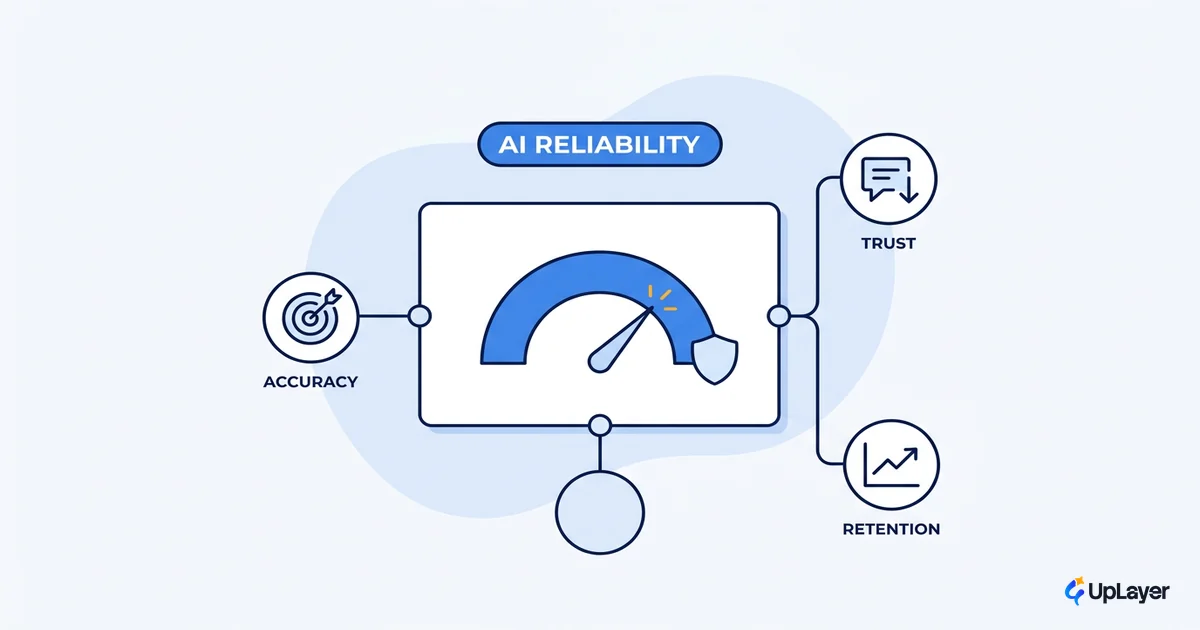
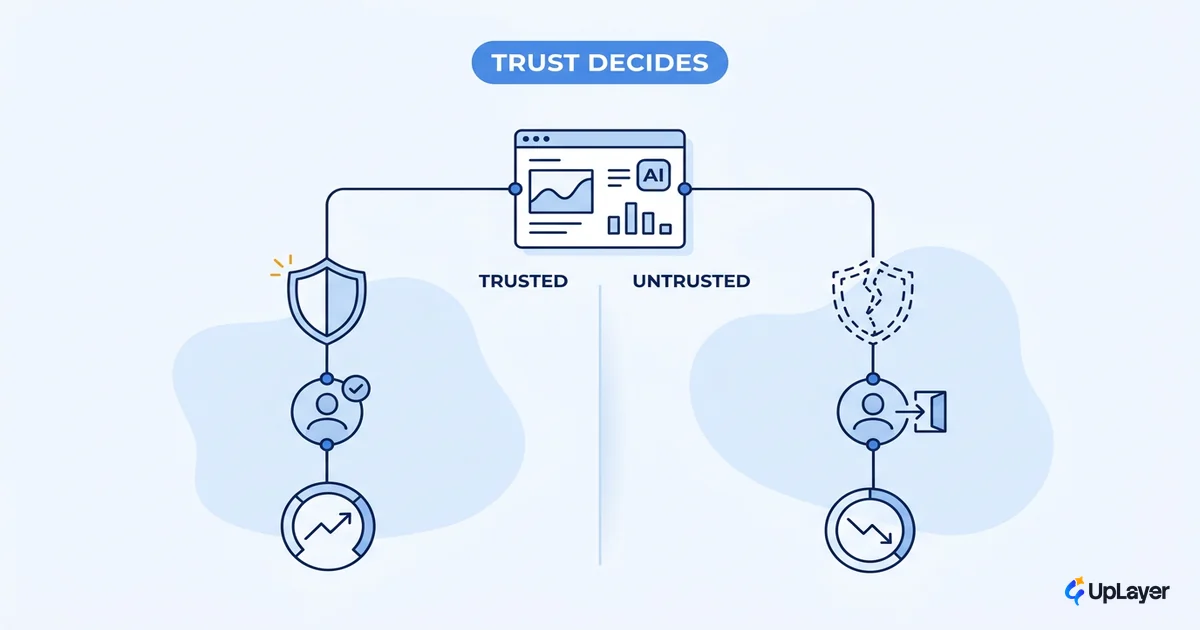
Most AI features don't die from bad accuracy. They die from bad AI reliability. A model that's right nine times and weird the tenth teaches the user one lesson: stop trusting it. Once that lesson lands, the feature is dead regardless of what its benchmark score says, and a dead feature returns nothing on the money you spent building it.
That's the part teams skip. They ship the accuracy number, then watch adoption flatten and can't explain why. The answer is usually that the feature behaves unpredictably at the edges, and unpredictable is the opposite of reliable. Reliability is the line item that decides whether the accuracy you paid for ever shows up in a metric, and whether users adopt it at all.
This is a definition and a measurement method, not a glossary entry. We'll separate reliability from accuracy, give you a way to score it on a feature you already have, and tell you how reliable it actually needs to be.
What does AI reliability mean (and what it isn't)
Reliability is the consistency of useful behavior across real-world inputs, over time. A reliable feature does the right thing on inputs it has never seen, behaves the same way next week as it did today, and when it can't answer well, it fails in a way the user can read and recover from.
Notice what's missing from that definition: a benchmark. Reliability is not "scores high on a test set." It's "a user can depend on it." Those come apart fast in production. A summarizer that nails clean documents and silently invents details on messy ones is accurate on average and unreliable in practice, because the user can't tell which mode they're in.
The thing to internalize is that reliability is a property of the whole experience, not the model. It includes the prompt, the retrieval, the fallback, the way confidence is shown, and what happens on a miss. You can raise reliability without touching the model at all.
AI accuracy vs reliability: the gap that kills adoption
Here's the disambiguation, because conflating these two is the most expensive mistake in the category. Accuracy is how often the output is correct. Reliability is whether a user can trust the output enough to act on it without checking. They're related, but they are not the same number, and the gap between them is where adoption goes to die.
The official frameworks make the distinction for you. The NIST AI Risk Management Framework lists the characteristics of trustworthy AI, and the very first one is valid and reliable, called out as the foundation the others rest on. Reliability is named as its own property, not folded into correctness. It is one pillar of designing a trustworthy AI feature, which pairs it with transparency, recoverability, and a human in the loop.
Why the gap matters in a product, concretely:
| Scenario | Accuracy | Reliability | What the user learns |
|---|---|---|---|
| Right 92% of the time, but wrong answers look identical to right ones | High | Low | "I have to verify everything, so it saves me nothing." |
| Right 85% of the time, but flags low confidence and abstains on the rest | Lower | High | "When it speaks, I can trust it." |
| Right 95% on clean inputs, fails silently on messy ones | High on average | Low at the edges | "It breaks exactly when I need it most." |
The second row is the one that retains. A feature that's a little less accurate but knows when it doesn't know beats a more accurate feature that fails confidently. The buyer lesson: when you compare two AI options, the accuracy delta is the wrong thing to optimize first. The reliability delta is what moves retention.
How do you measure the reliability of an AI feature
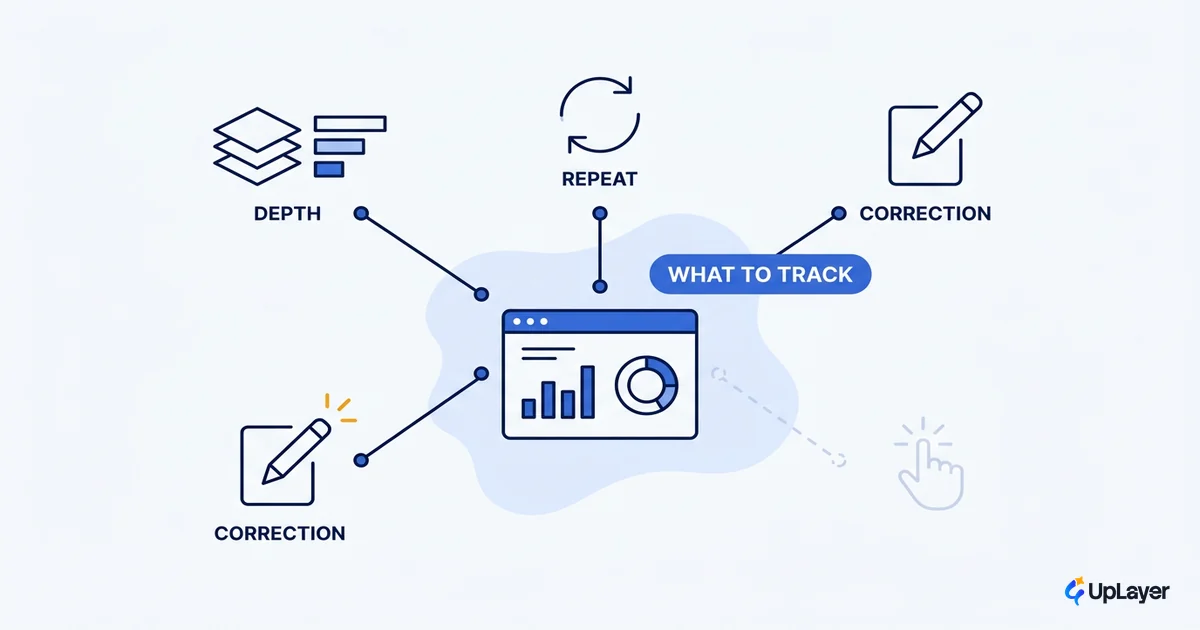
You measure reliability the same way you measure anything you intend to improve: pick dimensions, instrument them, and watch them over time against a metric you already track. Here's a working frame for measuring AI reliability across four dimensions.
reliability_score =
  w1 * consistency      // same input class → same quality of output, run to run
+ w2 * graceful_failure // share of misses that fail safe (flag/abstain) vs fail silent
+ w3 * calibration      // does stated confidence match actual correctness?
+ w4 * recovery         // can the user fix or override a bad answer in one step?

// weights sum to 1; weight by cost-of-error in THIS workflow.
// log every output with: input class, correct?, confidence, failure mode, user action.
None of this is exotic. Factual consistency, the hardest dimension, is already measured per model on a fixed task by public benchmarks. The Vectara hallucination leaderboard computes a hallucination rate (100 minus the factual-consistency rate) for each model on a summarization task at temperature 0. If a third party can score it repeatably, so can you, on your own data.
Map each dimension to a signal you log and the business metric it protects:
| Reliability dimension | What to log | Metric it protects |
|---|---|---|
| Consistency | Output variance for the same input class | Feature retention |
| Graceful failure | Share of misses that flag vs fail silently | Trust, support tickets |
| Calibration | Stated confidence vs measured correctness | Activation, time-to-value |
| Recovery | Steps to override a wrong answer (target: 1) | Churn on the AI feature |
NOTE
If you can't name which tracked metric a reliability dimension protects, you don't have a reliability problem yet. You have a measurement problem. Instrument the feature before you tune the model.
This is the difference between measuring reliability and guessing at it. The guess says "it feels flaky." The measurement says "calibration is off on input class B, and that class correlates with our highest-value users, so fix that first."
How reliable does an AI feature need to be
More reliability is not always better, and chasing perfect reliability is a quiet way to burn the budget that should have gone to the next feature. Google's site reliability engineering team is blunt about it: 100% is the wrong reliability target, because it's impossible to reach and is typically more reliability than users want or even notice. Each additional "nine" of reliability can cost roughly 100x the previous one.
The product translation is an error budget. Set the target by the cost of a wrong answer in that specific workflow. An AI feature that drafts an internal note can be wrong sometimes, because the human edits it anyway and the cost of a miss is a few seconds. An AI feature that auto-sends a customer email or moves money needs a far tighter budget, because one confident error there is a churn event.
WARNING
Don't overbuild reliability where the cost of error is low. Spending six weeks hardening a draft-suggestion feature to 99.9% when users edit every output is engineering effort that moved no metric. Match the target to the blast radius, not to a vanity number.
So the answer to "how reliable does it need to be" is: reliable enough that the expected cost of its errors is below the value it creates, and not one nine more. That ceiling is the most underused cost control in AI product work. For concrete numbers, AI reliability benchmarks by feature type give you the production ranges teams actually hold for summarizers, classifiers, and action-taking agents.
Reliability guardrails that protect the metric
Once you know the target, reliable AI features are built, not hoped for. The build-side answer is a set of reliability guardrails: confidence thresholds that abstain instead of guessing, retrieval that grounds answers in your own data, fallbacks to a deterministic path, and a clear way to keep a human in the loop on any high-trust action. Guardrails are the mechanism that turns a target into measured behavior.
This isn't optional polish. Gartner projected that at least 30% of generative AI projects would be abandoned after proof of concept by the end of 2025, naming inadequate risk controls among the causes. Inadequate risk controls is a reliability failure with a press-friendly name.
At least 30% of generative AI projects will be abandoned after proof of concept by the end of 2025, due to poor data quality, inadequate risk controls, escalating costs, or unclear business value. (Gartner, 2024)
In our own Concept Demos, the reliability layer is where most of the design work lives, because it's what users actually feel. A copilot that abstains on a low-confidence query, shows its source, and lets you override in one click is projected to retain better than a more capable one that bluffs. We frame those numbers as designed-to-move and projected, never claimed, until the metric dashboard says otherwise.
The pattern holds across features: define the reliability target, build the AI reliability guardrails that hit it, log the four dimensions, and watch the protected metric. That loop is how reliability stops being a vibe and starts being a number you can defend in a review.
Put reliability on the roadmap before the model, not after the launch. It's the difference between an AI feature that demos well and one that survives contact with real users, and it's where reliability becomes an ROI lever instead of a safety tax. Treat AI reliability as a metric you measure and a budget you set, and the accuracy you paid for finally shows up in retention.
TIP
Want to know which AI feature in your product is worth hardening, and which one to skip? How the AX Audit works.