Building SaaS with AI without a science project
Building SaaS with AI is engineering, not a demo. The guardrails, fallbacks, and evals that keep AI features live in production under real load.
 Shahriar P. ShuvoAI for SaaS & Features8 min read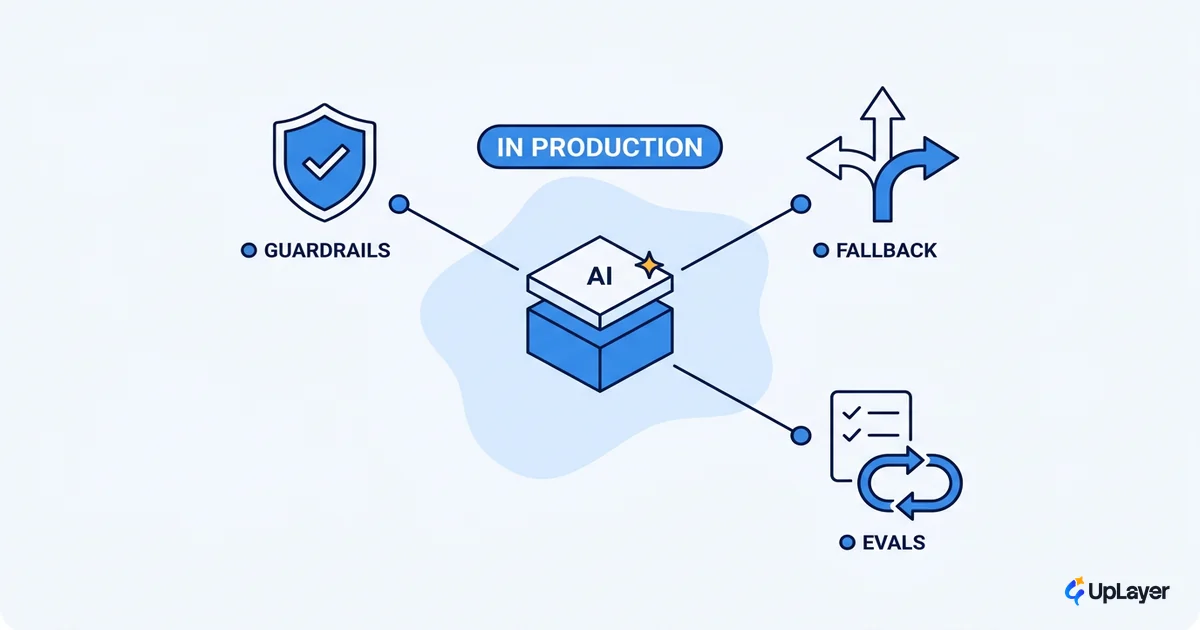
Most AI demos die the week real users arrive. The demo proved one thing: the model can answer once, on a clean question, with someone watching. Production is the part nobody screenshots. The fallback at 3 a.m. The eval that catches a regression before a customer does. The guardrail that stops a confident wrong answer from reaching a paying account.
That gap is where building SaaS with AI goes wrong. Teams treat it as a science project: wire up a model, get a response, ship the screenshot. Then the model changes, traffic spikes, an edge case lands, and the feature that demoed beautifully starts embarrassing the brand.
This piece is about the other 90 percent. Not whether to add AI, but how to build it so it stays live. The thesis is simple: building SaaS with AI is engineering, not a demo. Treat it like engineering and it ships. Treat it like a demo and it stays one.
Building SaaS with AI is an engineering problem, not a demo
A demo proves the model can answer once. Production proves it answers correctly, cheaply, and on time, after the model changes and a thousand users hit it at the same hour. Those are different problems, and only the second one keeps a feature alive.
The market is already paying for the difference. Gartner projects that over 40% of agentic AI projects will be canceled by the end of 2027, driven by escalating costs, unclear business value, or inadequate risk controls. Read that list again. None of those three killers is a model-quality problem. They are engineering and decision problems: cost you did not budget, value you never tied to a metric, and risk you never wrapped a control around.
Over 40% of agentic AI projects will be canceled by the end of 2027, due to escalating costs, unclear business value, or inadequate risk controls. (Gartner, 2025)
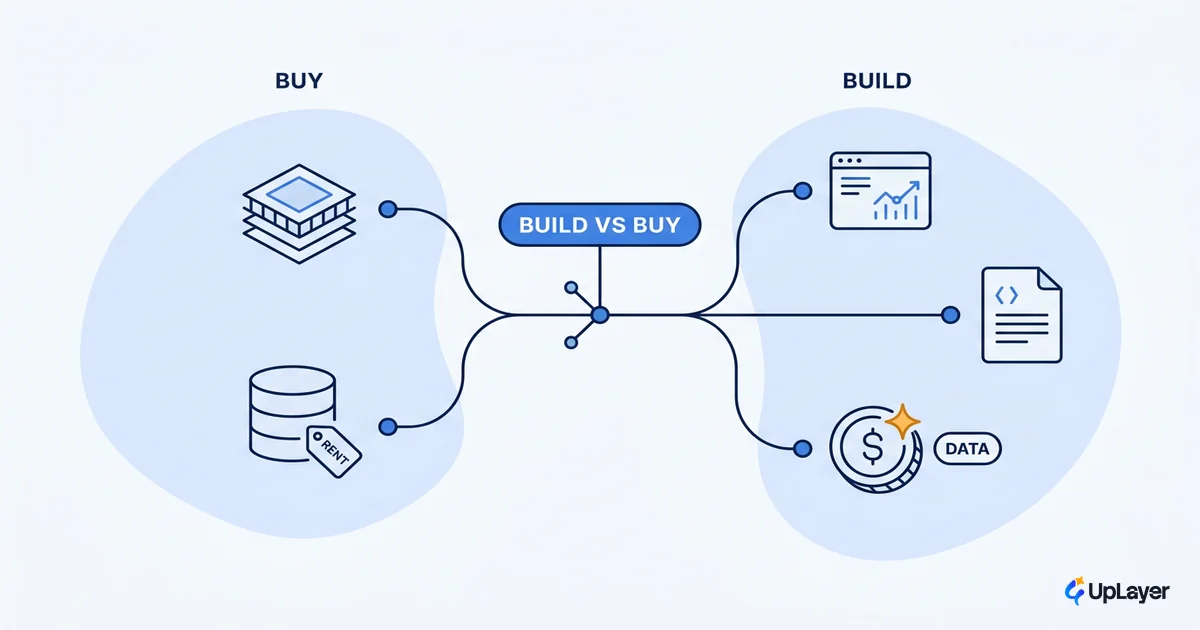
The fix starts with architecture. The reliable pattern is supportive AI sitting above a deterministic core, not AI as the whole engine. Your core SaaS still does the work it always did. The AI layer suggests, drafts, ranks, or summarizes on top of it. When the model has a bad day, the core keeps running and the product degrades to "no suggestion" instead of "broken." That single boundary is the difference between a feature that survives a model swap and one that takes the product down with it. We cover the full decision in our guide to add AI to your SaaS without betting the company.
What breaks when you build SaaS with AI
So what breaks when you build SaaS with AI? Not usually the thing teams fear. It is rarely a catastrophic outage. It is quiet, plausible wrongness at scale.
The hard part is that a model can produce a confident, well-formatted, completely wrong answer, and nothing in your stack flags it. AWS engineers put it plainly: LLMs can fabricate information even when given accurate source material. Retrieval helps, but it does not make outputs deterministic. The same input can return a different answer tomorrow, and one of those answers can be fabricated.
Here are the four failure modes that actually show up in production, and the guardrail for each.
| Failure mode | What the user sees | The guardrail |
|---|---|---|
| Non-deterministic output | Same question, different answer each time | Pin temperature, cache verified answers, snapshot the prompt |
| Hallucination on real data | A confident answer that is factually wrong | Ground in retrieval, validate output against source, confidence threshold |
| Latency and cost spikes | Slow responses, surprise invoice | Token and latency budgets, timeouts, a cheaper fallback model |
| Silent model drift | A quiet quality drop after a provider update | An eval suite re-run on every model or prompt change |
Notice that none of these are fixed by a better prompt alone. Each one needs a control around the model, not just a smarter call into it. That control layer is the actual product work.
Reliability guardrails that keep AI features live
Reliability guardrails are the tests that run before a model's response ever reaches the user. If the output fails a check, the user gets a safe fallback instead of a wrong answer. That is the whole idea, and it is what separates a production feature from a demo.
Think of it as four checks wrapped around every AI call: validate the input, constrain the output, score the confidence, and escalate the risky stuff to a human. In pseudo-config, the layer looks like this.
ai_feature: draft_reply
guardrails:
  input:
    max_tokens: 2000
    reject_if: [empty, injection_pattern]
  output:
    schema: { reply: string, citations: array }   # reject if shape is wrong
    must_ground_in: retrieved_docs                  # no source, no send
  confidence:
    min_score: 0.75                                 # below this, fall back
  human_in_the_loop:
    require_review_when: [refund, account_change, legal_text]
fallback:
  on_fail: return_template_reply
  on_timeout_ms: 4000
WARNING
A confident wrong answer is worse than no answer. It costs trust you cannot buy back, and trust is the metric every AI feature ultimately lives or dies on. Define the guardrail before you define the model.
The reason this matters to your numbers: the guardrail layer is what protects adoption. Users forgive a feature that says "I'm not sure, here's a draft to edit." They do not forgive one that confidently breaks their workflow. Adoption is the metric most AI features quietly fail, and guardrails are the cheapest insurance you can buy on it.
Fallbacks and the boring path that ships
Every AI call needs a deterministic fallback. When the model times out, returns garbage, or fails a guardrail, the feature should degrade to a known-good behavior, not a spinner or an error. That is how you de-risk an AI feature: you make its worst case boring instead of broken.
This is also the cheapest reliability you will ever buy, and it lines up with how the people building these systems actually work. Anthropic's engineering guidance is to start with the simplest thing that works and add multi-step complexity only when simpler solutions fall short. A single well-guarded model call with a template fallback beats a clever multi-agent chain that nobody can debug at 2 a.m. Simpler systems fail in simpler ways, and simple failures are the ones you can recover from.
TIP
The fallback is not a downgrade. It is the floor that lets you ship the AI at all. Build the boring path first, then let the model improve on top of it.
Concept Demo (projected). Picture a support-reply assistant wired this way: model drafts the reply, guardrails check grounding and confidence, and anything below threshold drops to a vetted template. Designed to keep the feature at roughly 99 percent successful responses even on a bad model day, because the fallback absorbs the failures the model would otherwise ship. The projected win is not a smarter model. It is a feature that is safe to leave on.
How do you keep AI features production-ready?
Here is the honest answer to how you keep AI features production-ready: you treat evals like regression tests and you run them every time anything changes. A model update, a prompt tweak, a new data source. Each one can silently move quality, and without an eval you find out from a churned customer.
The production-ready loop is short and unglamorous.
- Build a golden set: 30 to 100 real inputs with known-good outputs.
- Score every change against it before it ships. No green eval, no deploy.
- Set a latency budget and a cost-per-request budget, and alert when either is breached.
- Log every fallback trigger. A rising fallback rate is your early warning that the model is drifting.
- Keep a human review queue for the high-stakes actions your guardrails flagged.
This is also where the architecture pays off. Because the AI sits above a deterministic core, a failed eval blocks the AI layer without touching the rest of the product. That decoupling is exactly what makes a SaaS AI strategy that survives a model swap possible, and it is the same reason integrating AI into SaaS as a layer, not a rewrite is the lower-risk path. The model is replaceable. Your evals, guardrails, and fallbacks are the durable asset, and when you build them once as a shared internal layer they become what an AI SaaS platform gives every feature so the next one ships faster.
Adding AI to a SaaS product without the science-project tax
Pull the threads together and adding AI to a SaaS product stops being a science project. You start from a metric you already track, ship supportive AI above a core that still works without it, wrap every call in guardrails, keep a deterministic fallback, and gate every change behind an eval. None of that is exotic. It is the same discipline you already apply to the rest of your product, pointed at a non-deterministic dependency.
Reliability matters more here than in classic software for a structural reason. AI changes the interaction model itself. As Nielsen Norman Group describes it, intent-based interaction reverses the locus of control: the user states the outcome they want and the system decides how to deliver it. When the user hands you the "how," your output is the product. A wrong output is not a bug they can route around. It is the experience.
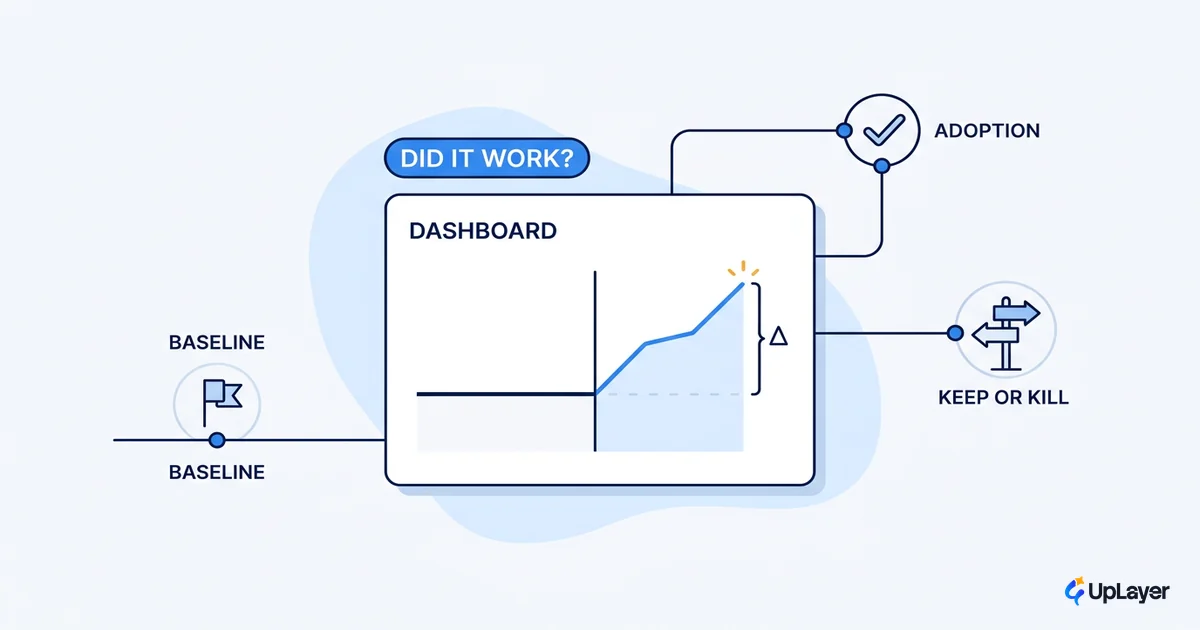
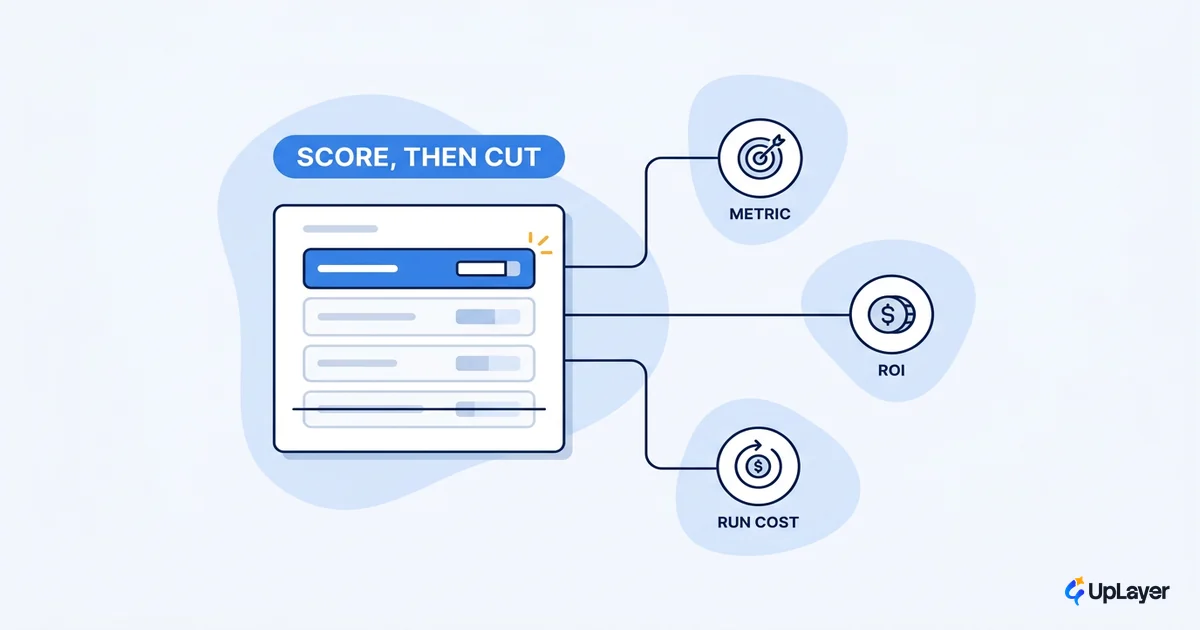
The decision underneath all of this is still an ROI decision. Before you build, you should be able to name the metric the feature moves and roughly how much, which is the whole point of learning to measure the ROI of an AI feature. Engineering keeps the feature alive. The metric is why it was worth keeping alive at all.
Building SaaS with AI rewards teams that treat it as engineering with a number attached, not as a demo chasing a trend. Define the metric, ship supportive AI above a core that stands without it, and let guardrails, fallbacks, and evals carry the weight. Do that, and the feature you demo in the morning is still standing when real users arrive in the afternoon.
TIP
Not sure which AI feature is worth the engineering, or whether the one you shipped is paying off? How the AX Audit works.