Will AI kill SaaS or just raise the bar
Will AI kill SaaS? No, but it commoditizes the undefended layers. Here is what gets eaten, where a product still wins, and what to ship in response.
 Sohanur RahmanAI for SaaS & Features7 min read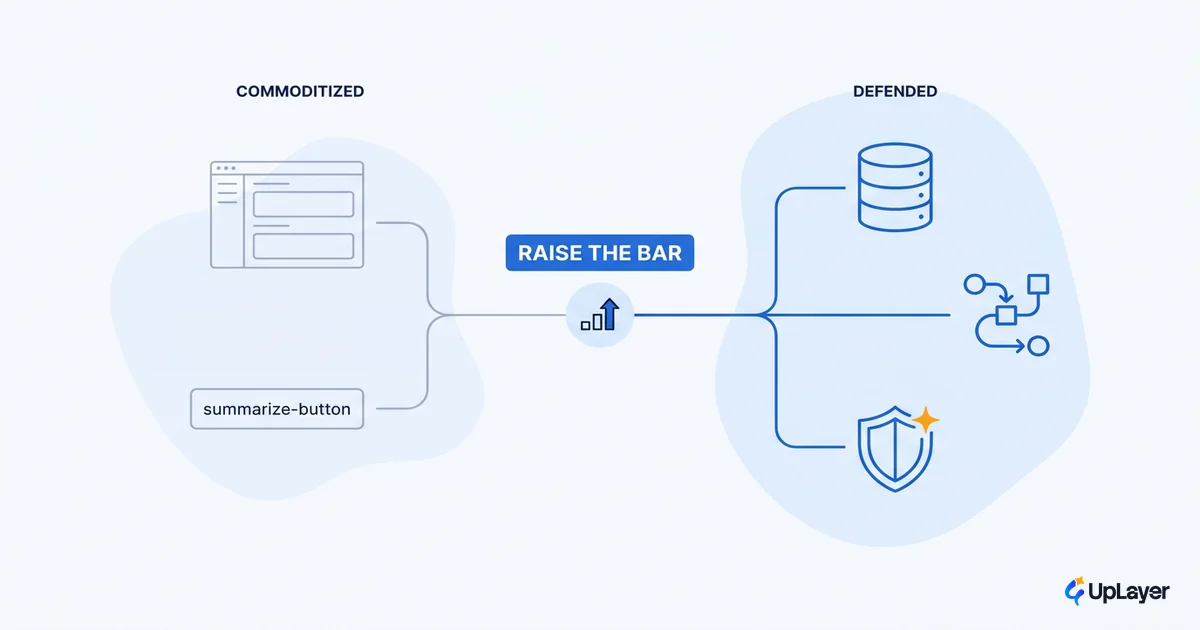
You have read the headline. Software is dead. The chat box eats your product. A prompt replaces the feature you spent two years building. So you are asking the honest question: will AI kill SaaS, and is your business one of the casualties?
The binary is the problem. "Yes" sells fear and "no" sells comfort, and neither helps you decide what to do on Monday. AI does not kill SaaS as a category. It kills the undefended parts of SaaS, and the difference between those two sentences is the entire decision. This piece covers what genuinely gets commoditized, where a product layer still wins, and what to ship in response so the answer for your product is "we raised the bar," not "we got eaten."
The honest answer to "will AI kill SaaS"
No. AI does not kill SaaS. It raises the bar and commoditizes the layers that were never defensible to begin with.
The evidence cuts against the doom take. In its State of the Cloud 2024 analysis of Vertical AI versus legacy software, Bessemer found that new AI-native players are mostly complementary to incumbent SaaS rather than replacing it, and are already commanding roughly 80% of the ACV of the traditional core systems in their verticals. That is not a category dying. That is a category expanding, with the spend moving toward whoever ships real utility.
Vertical AI upstarts are "already commanding ~80% of the ACV of the traditional core vertical SaaS systems," and they are "just getting started." (Bessemer Venture Partners, State of the Cloud 2024)
The threat is real, but it is specific. A generic CRUD app with a thin UI and no proprietary data was always one good competitor away from irrelevance. AI just shortened the timeline. A product that owns a workflow, a dataset, and a customer's trust is harder to displace now, not easier.
What AI actually commoditizes (and what it can't)
The "saas vs ai" framing is a category error. AI is not a competitor to SaaS. It is an input that lowers the cost of certain features to roughly zero and leaves the rest untouched. The useful question is not which side wins. It is which layer of your product just got cheap. We unpack why you should treat SaaS vs AI as the wrong question in its own teardown, but here is the short version.
| Layer | Commoditized by AI | Why |
|---|---|---|
| Generic chat / summarize / autocomplete | Yes | A wrapper anyone can build in a weekend on the same base model. |
| Thin CRUD and forms | Yes | No proprietary data or workflow to defend. |
| Boilerplate content generation | Yes | The model does it; the feature adds nothing on top. |
| Proprietary data and the labels around it | No | The model cannot reproduce data it has never seen. |
| The workflow and the integrations | No | Owning where the work happens is distribution, not a feature. |
| Trust, guardrails, and reliability | No | A model can be copied; a track record of not breaking cannot. |
Andreessen Horowitz makes the same point from the investor's seat. In its economic case for foundation models, a16z argues that the model layer is not where defensibility lives, and that the durable moat actually sits in data, distribution, and the application layer on top. The moat moves. It does not vanish. Your job is to know which side of that table your product sits on, and to build toward the right column.
Is SaaS dead because of AI?
No. SaaS is not dead because of AI. The thin wrapper is exposed; the product with a real workflow is not.
Spending patterns back this up. Menlo Ventures reports that the application layer is now growing faster than the foundation-model layer, with enterprises moving generative AI into permanent budgets rather than treating it as a one-time experiment. When a buyer shifts AI from an innovation line item to a standing budget, they are not planning to stop buying software. They are planning to buy more of the software that uses AI well.
What dies in that shift is the feature that demos well and moves nothing. The summarize button nobody clicks twice. The chatbot that deflects the easy tickets and forwards the hard ones to the queue anyway. Those were never a moat. Losing them is not the death of SaaS. It is the market correcting for theater.
Will AI replace SaaS products, or change the moat?
AI will not replace SaaS products wholesale. It changes where the moat sits. The defensible line moves from "we built the software" to "we own the data, the workflow, and the trust."
That distinction matters because the software itself is no longer scarce. Base models keep getting cheaper and more capable, but capability at the model layer is not the same as a working product. As Sequoia puts it, the messy real world requires significant domain and application-specific reasoning that cannot be efficiently encoded in a general model. The general model is a commodity input. The system you build around it, with your data and your domain logic, is not.
Here is the moat, restated for a post-AI product:
post-AI SaaS moat =
    proprietary data you own
  + the workflow you sit inside
  + integrations competitors have to rebuild
  + a reliability track record a model can't copy

NOT:
    "we wrote software that does X"
    (the model now does X for free)
Reliability is the underrated line in that formula. When the feature is AI, a wrong answer is not a bug; it is a trust withdrawal. Guardrails, human-in-the-loop, and an anti-hallucination posture stop being engineering hygiene and start being an ROI lever, because they are what keep the feature in daily use instead of abandoned after the first bad output.
Supportive AI vs the AI-native rewrite
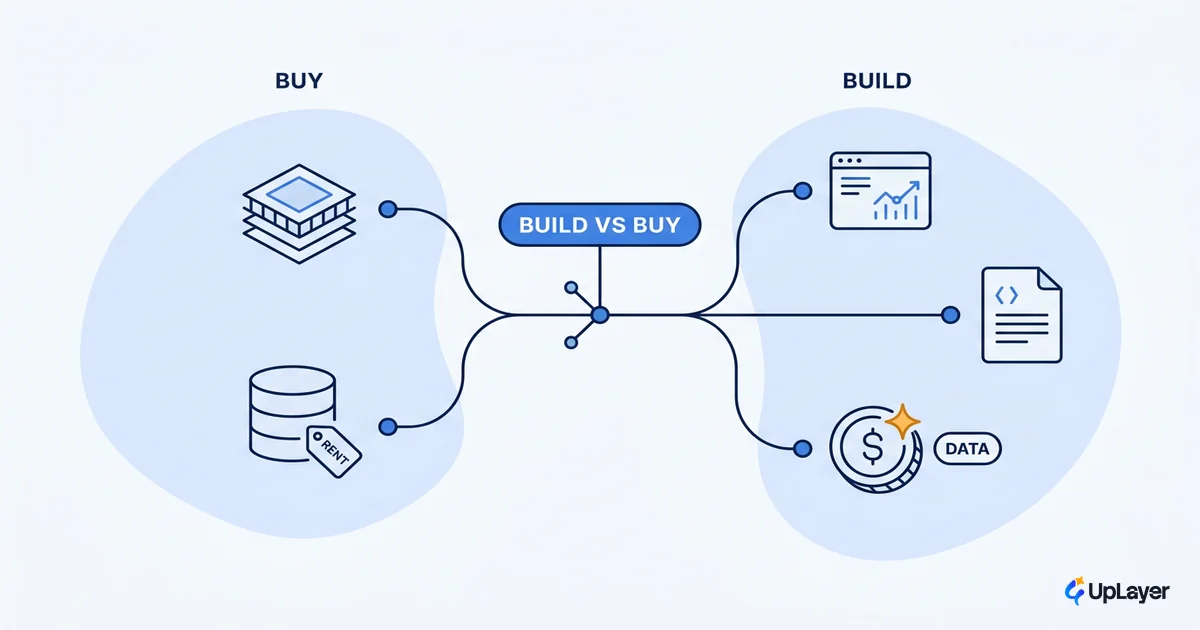
The loudest pitch in the market right now says the answer is to go AI-native: tear down what you built and rebuild from scratch on a model. For a product with customers, revenue, and a working core, that is rarely the move. It trades a known business for a science project.
The lower-risk play is supportive AI: a layer that sits above the core engine you already own, where the model assists the workflow instead of becoming the workflow. If the model degrades or you swap providers, the product still runs, because the engine underneath was never the model. We cover how to add AI to your SaaS without betting the company as a full playbook, and the choice between supportive AI layered above your core engine versus core-engine AI deserves its own decision. The same goes for whether to go AI-native or add a layer to what you already built.
WARNING
The most expensive mistake is rebuilding what already works to look modern. Gartner projects that at least 30% of generative AI projects will be abandoned after proof of concept by the end of 2025, citing poor data quality, escalating costs, and unclear business value. A rewrite with no metric attached is a project that dies in that 30%.
Supportive AI is not the timid choice. It is the one that keeps your existing moat intact while you add a new capability on top of it. You defend the data, the workflow, and the trust, and you let the model do the one job it is genuinely good at.
Where the AI opportunity actually is for SaaS
The ai opportunity for most SaaS is not "add AI." It is to find the single feature that moves a metric you already track, and ship it reliably enough that people keep using it.
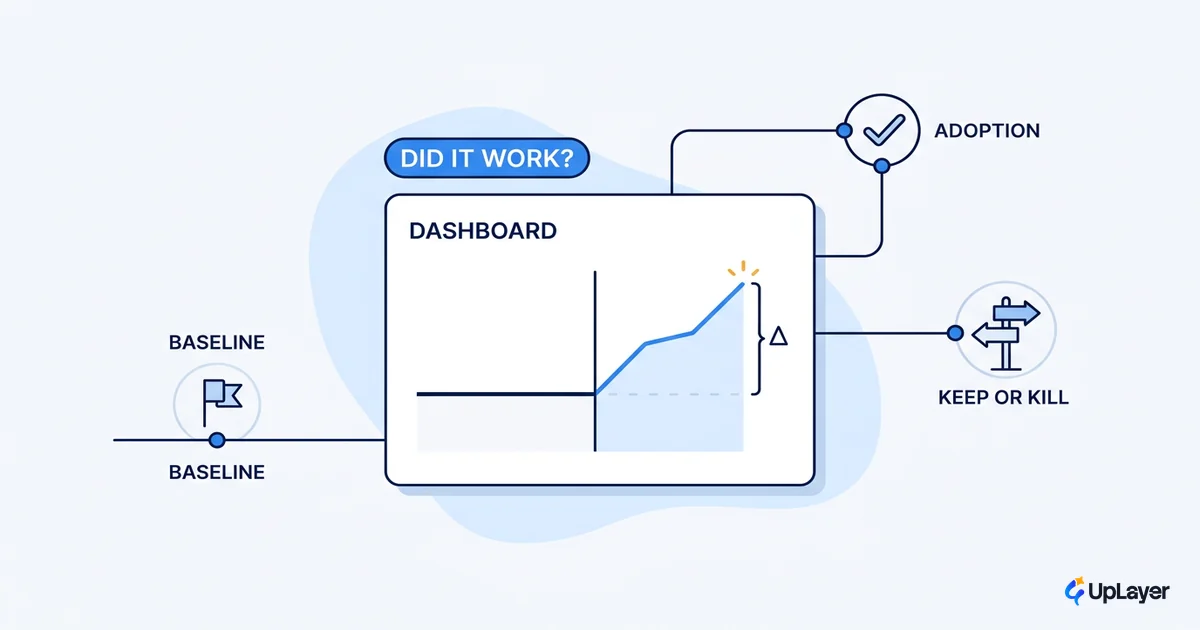
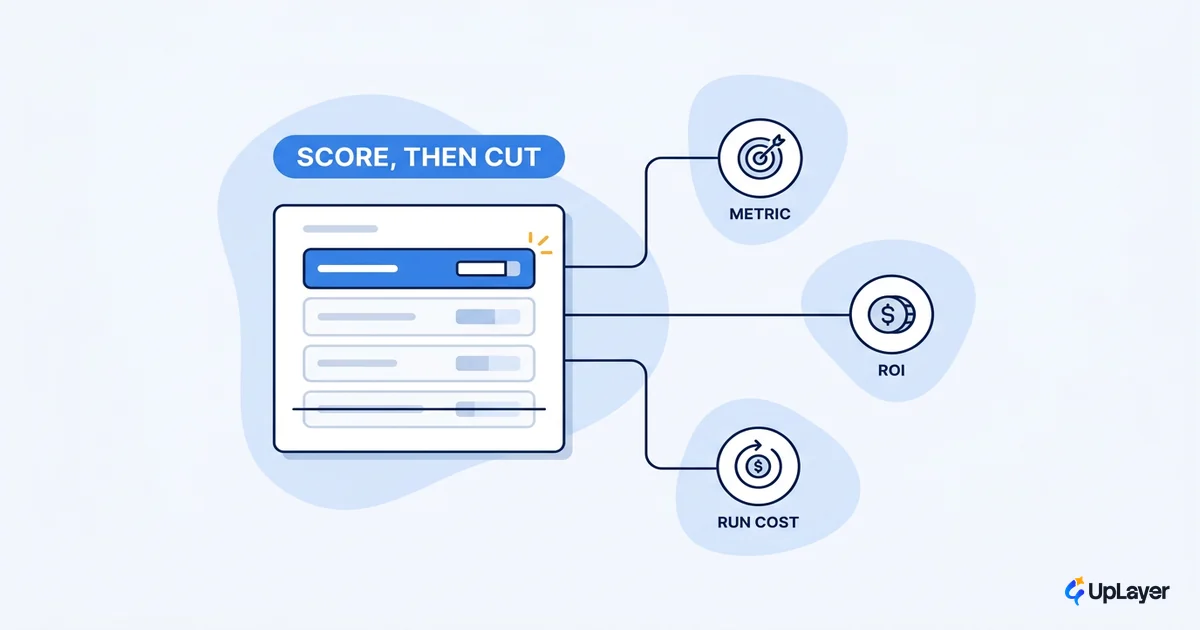
Start from the number, not the roadmap. Pick the metric you already report to your board: activation, churn, expansion, time-to-value. Then ask which AI feature has a projected line to moving it, and which ones are theater. This is the same test that defines what an AI SaaS really is, past the label: not the model in your stack, but whether the AI moves a number users already care about. Most of the demo-friendly ideas will not survive that question, and saying no to them is the point. The discipline of tying every feature to a metric you already track is what separates a defensible product from a pile of abandoned proofs of concept.
IMPORTANT
A useful test: if you removed the word "AI" from a feature's pitch, would anyone still ask for it? If the answer is no, it is theater. Build the ones that survive without the buzzword.
So will AI kill SaaS? It kills the undefended parts and rewards the rest. The products that win the next few years are not the ones that bolted on a chatbot or rebuilt from zero. They are the ones that knew which layer was exposed, defended the data and the workflow, and shipped supportive AI tied to a number that already mattered. The question to carry forward is not whether AI kills SaaS. It is which layer of your product is exposed, and what you will ship to defend it. The way to answer it is to put a projected ROI on the one feature that moves your metric, then build only that.
TIP
Not sure which layer of your product is exposed, or which AI feature actually pays off? How the AX Audit works. We rank the opportunities by projected return on a metric you already track, and tell you what not to build.